Sesame seeds (from Sesamum indicum) are one of the oldest cultivated seeds in the world—and they’re still a modern super-pantry staple because they’re:
- Nutrient-dense (protein, fiber, minerals)
- Rich in healthy fats (mostly unsaturated)
- Packed with plant compounds like lignans (sesamin, sesamolin) and antioxidants
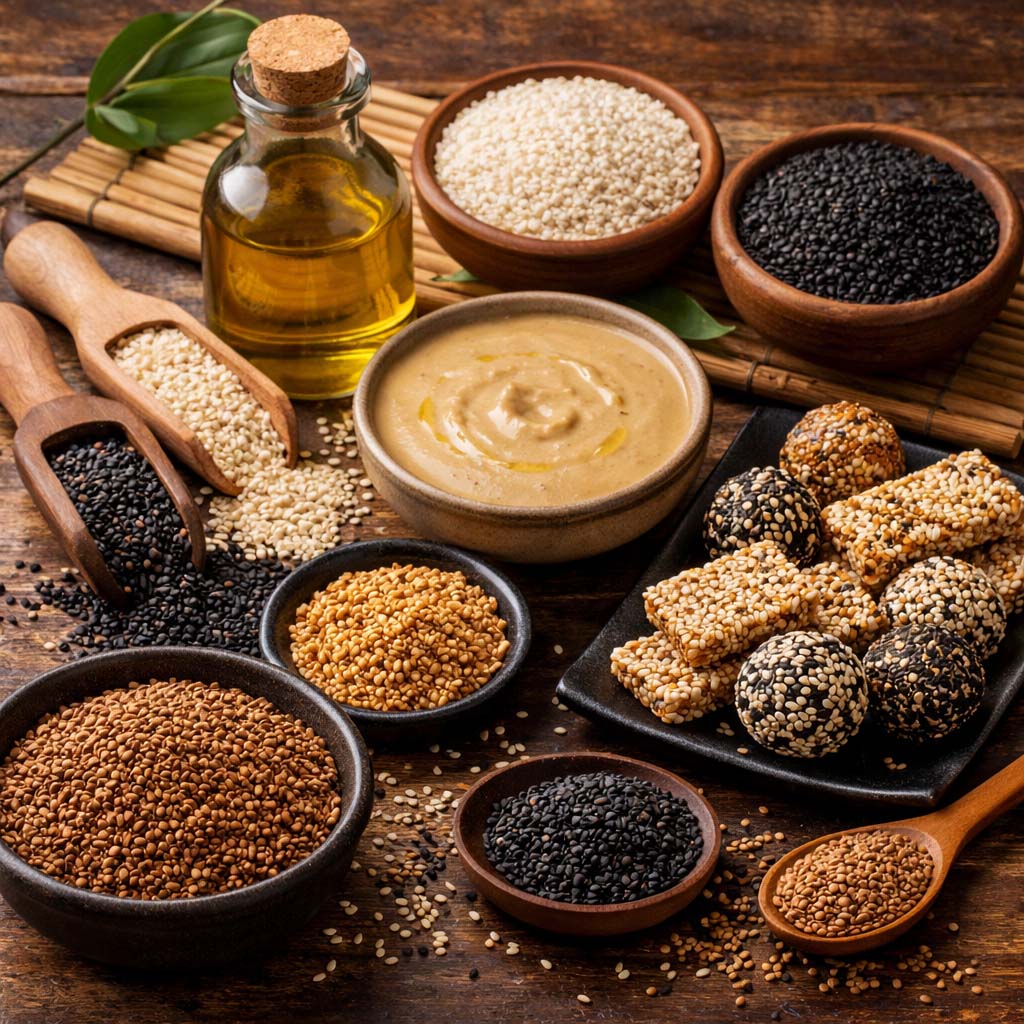
You’ll see them on breads, in stir-fries, blended into tahini, and pressed into sesame oil—and each form has slightly different strengths.
Key Nutrients in Sesame Seeds (What You’re Actually Getting)
Sesame seeds typically provide:
- Healthy fats: mostly polyunsaturated + monounsaturated fats
- Plant protein: helpful for satiety and muscle maintenance
- Fiber: especially higher in unhulled seeds
- Minerals: commonly calcium, magnesium, iron, zinc, copper, manganese, phosphorus
- Antioxidants + lignans: support against oxidative stress and may help heart/metabolic health
Quick note: Sesame seeds are calorie-dense (because they’re fatty—in a good way). A little goes a long way.
Benefits of Sesame Seeds (Evidence-Informed, Real-Life Useful)
1) Heart health support
Sesame’s unsaturated fats + lignans may help support healthy cholesterol levels as part of a balanced diet.
2) Bone and teeth support (especially if you choose the right type)
Sesame seeds can contribute calcium + magnesium + phosphorus, all important for bones—but the type matters (hulled vs unhulled—explained below).
3) Better digestion + steadier energy
The fiber and fat combo can help you feel fuller and may support steadier energy compared to refined snacks.
4) Skin and hair-friendly nutrients
Zinc, copper, and healthy fats support skin barrier function and normal hair pigmentation/strength (nutrition helps, but it’s not an overnight miracle).
5) Metabolic support
Some studies associate sesame intake with markers related to blood sugar and inflammation—most meaningful when paired with overall healthy eating habits.
How Many Types of Sesame Seeds Are There?
In everyday cooking, you’ll mainly see 4 practical “types”—two by color, and two by processing:
Type A: By color
- White sesame
- Black sesame
- (Sometimes you’ll find golden or brown sesame—often variations of white/unhulled with a deeper color.)
Type B: By processing
- Hulled sesame (outer hull removed)
- Unhulled sesame (hull left on)
These categories overlap, so you might buy black unhulled, white hulled, etc.
White Sesame Seeds: Benefits + Best Uses
What they’re like: Mild, nutty, “clean” flavor. Common in baking and as a topping.
Best for:
- Breads, bagels, buns
- Salads and roasted veg
- Coating for chicken/fish/tofu
- Sesame brittle, bars, energy bites
Why choose white sesame?
- Easier to use daily because the flavor is gentle
- Often used for tahini (especially when hulled)
Black Sesame Seeds: Benefits + Best Uses
What they’re like: Deeper flavor—earthier, slightly bitter, more “toasty” even when raw. Popular in Asian desserts.
Best for:
- Rice bowls, noodles, sushi
- Black sesame paste (desserts, fillings)
- Smoothies/porridge topping (stronger taste)
- Garnish for dramatic color contrast
Why choose black sesame?
- Often associated with higher antioxidant activity compared to white (varies by variety and processing)
- Strong flavor means you can use less and still taste it
READ: Sesame Seeds: One Tiny Food, Four Big Goals
Hulled vs Unhulled Sesame: Which Is Healthier?

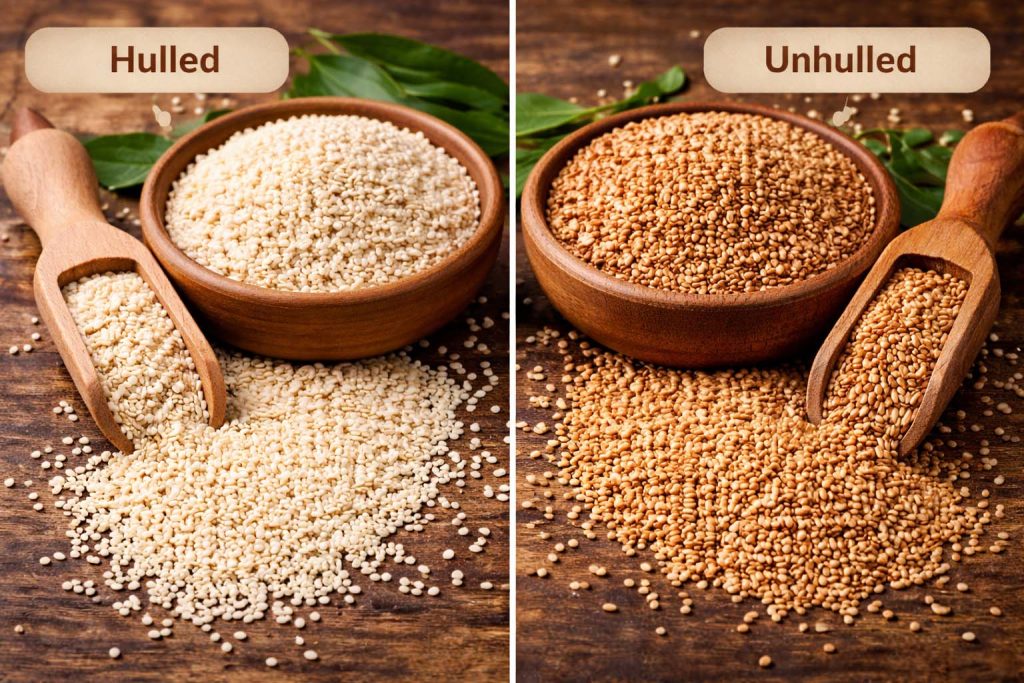
Unhulled sesame
Pros:
- Typically more fiber
- Often more minerals (the hull contains nutrients, including calcium)
Cons:
- Can taste slightly more bitter
- Texture can be a bit tougher
Best for: sprinkling on salads, granola, savory dishes, adding to bread dough, “seed mixes.”
Hulled sesame
Pros:
- Milder taste
- Softer texture
- Blends smoother into tahini and sauces
Cons:
- Usually less fiber and can be lower in certain minerals compared to unhulled
Best for: creamy tahini, hummus upgrades, dressings, baking where you want a delicate crunch.
Simple rule:
- Want more fiber/minerals? Choose unhulled.
- Want smooth, mild, versatile? Choose hulled.
Toasted Sesame Seeds: Not a “Type,” But a Game-Changer
Toasting boosts aroma and flavor fast.
Best for: finishing stir-fries, noodle dishes, salads, soups, roasted veg, avocado toast.
How to toast (2 minutes):
- Dry pan, medium heat
- Add seeds, stir constantly
- Remove when golden and fragrant (they burn quickly)
Tahini vs Sesame Seeds vs Sesame Oil (Which One Should You Use?)
Tahini (ground sesame paste)
Great for: sauces, dressings, dips, sweet spreads
Bonus: easy way to eat sesame consistently.
Whole seeds
Great for: texture + topping + quick nutrition boost.
Sesame oil
- Toasted sesame oil: best as a finishing oil (strong flavor)
- Regular sesame oil: better for cooking (higher smoke point than toasted)
Tip: If your goal is nutrients + fullness, whole seeds or tahini usually beat oil (oil is mostly fat, not fiber/protein).
How Much Sesame Should You Eat Per Day?
A practical, food-based range is:
- 1–2 tablespoons a day (sprinkled on meals or mixed into yogurt/porridge/salads)
or - 1 tablespoon tahini in a dressing or sauce
If you’re new to higher-fiber seeds, start smaller to see how your digestion reacts.
Easy Ways to Add Sesame Seeds Daily (No Fancy Recipes)
- Add to salad + olive oil + lemon
- Mix into yogurt with honey + berries (white) or with banana (black)
- Stir into porridge/oats
- Sprinkle on eggs, avocado toast, soups
- Make a quick dressing: tahini + lemon + garlic + water + salt
Buying + Storage Tips (So They Don’t Taste Bitter)
- Buy in smaller quantities if you don’t use them weekly
- Store in an airtight jar, away from heat/light
- For long storage: keep in the fridge (or freezer) to protect the oils from going rancid
FAQs
Are sesame seeds good for weight loss?
They can help with satiety (fat + fiber + protein), but portions matter because they’re calorie-dense.
Which sesame has more calcium?
Often unhulled has more, but absorption varies. If calcium is a priority, use sesame as one part of a wider calcium plan.
Is sesame safe for everyone?
Sesame is a common allergen. If you’ve had reactions to seeds/nuts, be cautious and check labels.
Bottom Line
- White sesame = mild, everyday versatile
- Black sesame = bolder flavor, often higher antioxidant reputation
- Unhulled = more fiber/minerals (stronger taste)
- Hulled = smoother, best for tahini and gentle baking
- Toasted = maximum flavor, perfect finishing touch
Safety note: If you have allergies, are pregnant, have kidney stone history, or take regular medication (especially blood thinners), check with a GP/medical professional before significantly increasing sesame or tahini intake.