Slime mold ‘intelligence’ might just be physics after all
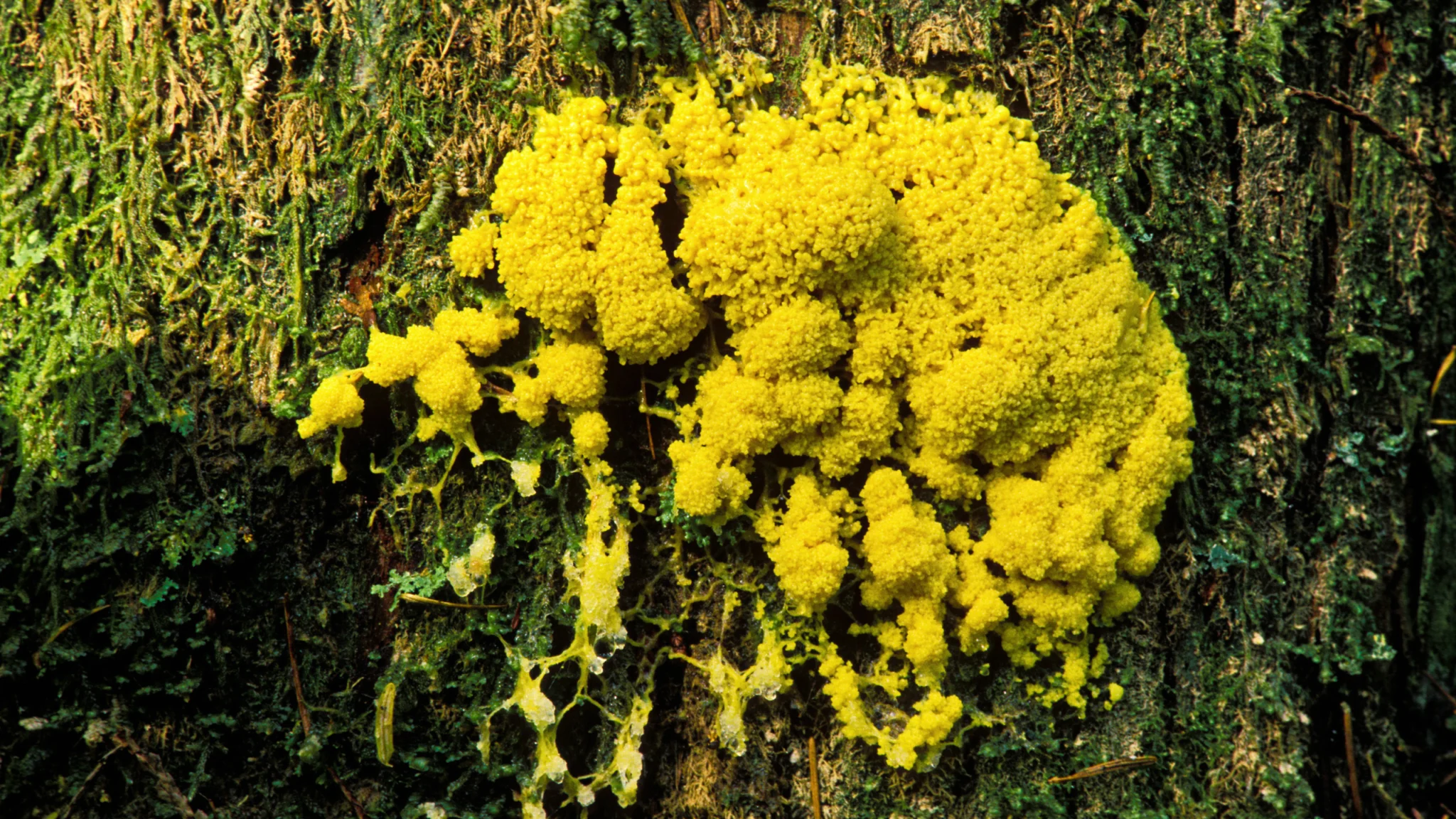
Slime molds have long fascinated scientists. They solve mazes without brains or nerves. These organisms aren’t true molds or fungi. They form networks that connect food sources in labyrinths. Their behavior often looks like decision-making.
What Happened
A new study shows slime mold behavior isn’t about intelligence. It’s driven by energy efficiency. Researchers from Pompeu Fabra University in Spain studied how fluid moves through slime mold tubes.
They found that when two tubes link the same points, the lowest energy cost occurs when only the shorter tube remains. The longer tube gradually disappears.
How It Works
Slime molds spread through networks of tubes. These tubes carry fluid. The organism contracts rhythmically, pushing fluid back and forth.
Tubes with high flow widen. This reduces resistance and helps fluid move. Tubes with little flow shrink. They eventually vanish.
The researchers modeled a ring with two paths. Each path linked the same endpoints. They calculated energy costs for different tube widths and lengths.
Friction increases in narrow tubes. Wider tubes reduce friction but cost more to maintain. The lowest total energy always came from all flow going through the shorter tube.
When both tubes were equal in length, any flow split could reach the same minimum cost. As long as initial widths matched the final split. Starting conditions influenced the outcome.
Testing the Model
The model matches real slime mold behavior. A 2000 Nature study placed food at two maze points. Over time, the mold withdrew from dead ends. It formed a single, efficient path between food sources.
When fluid must reach multiple endpoints, connecting branches stay. This shows the model works in complex networks.
Scientists can now test the model. They set up identical mazes with different starting tube widths. They watch how flow distributes over time. This allows direct comparison with real behavior.
Limitations and Open Questions
The study doesn’t explain how slime molds find food or explore new areas. It doesn’t cover learning or habituation — a weakened response to repeated stimuli.
The maze layout is human-designed. The mold responds to a fixed structure. The model only applies after a network is already formed. It doesn’t explain how that network is built.
Why It Matters
This research changes how we see slime mold behavior. Instead of ‘intelligence,’ it points to energy conservation. This principle appears in ant colonies and neural networks.
Simple physical laws can produce complex-looking behaviors. These behaviors happen without brains or centralized control.
The study was published in the Journal of the Royal Society Interface. It offers a clear, testable explanation for a known phenomenon. It avoids needing to assume cognition or consciousness.
Slime molds remain a powerful example of nature using efficiency. More research is needed to understand how they explore new environments or adapt. For now, the answer to ‘intelligence’ may lie in physics, not thought.
Source: ScienceAlert
Sources & further reading
Featured image: Slime Mold 'Intelligence' Might Just Be Physics After All. Via original publisher. Image source