New York’s iconic Thanksgiving Parade faces disruption due to a powerful storm approaching the East Coast. Source: bbc.co.uk.
Storm Threatens Parade for First Time Since WWII
A potent Nor’easter is moving northward from the Gulf of Mexico. It brings strong winds and heavy rain to the eastern United States.
The storm has deepened into a major area of low pressure. It generates sustained winds and gusts that could impact the Macy’s Thanksgiving Day Parade on Thursday.
The National Weather Service has issued a high wind warning. It covers New York City, Long Island, and northeastern New Jersey.
The warning runs from 10:00 local time on Thursday to 01:00 on Friday. Wind gusts could reach 60mph (97km/h).
The strongest gusts are forecast to peak in the evening. This means they will occur after the parade ends.
Parade Conditions and Balloon Safety Rules
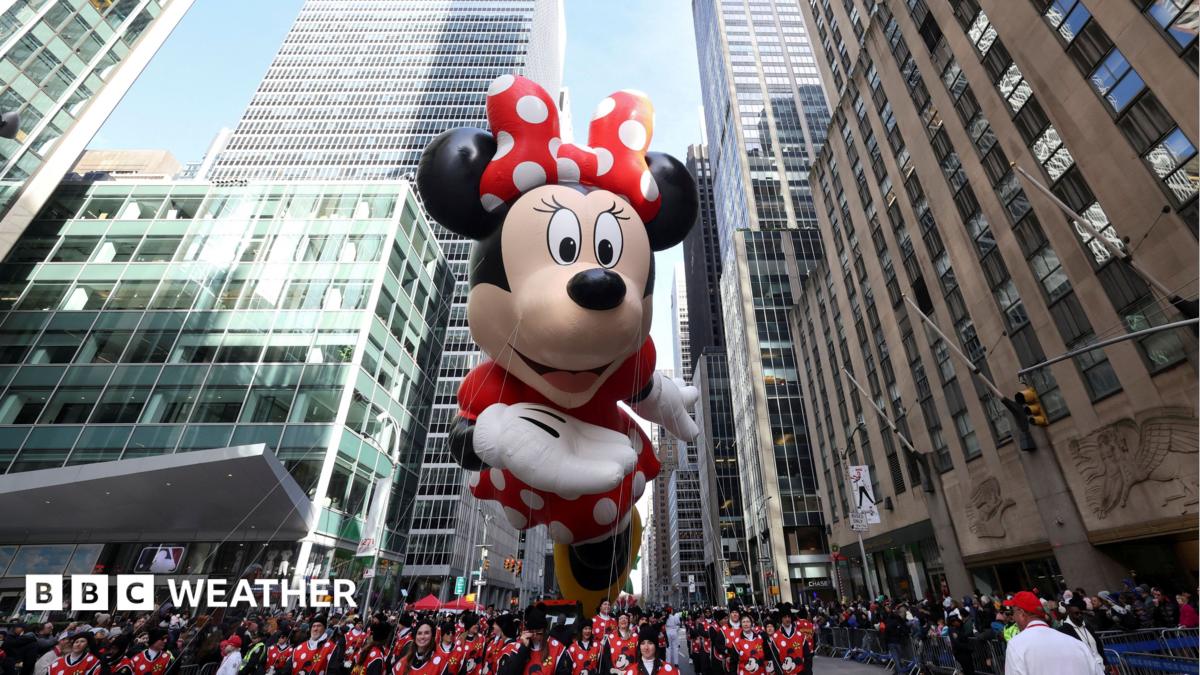
The parade starts at 08:30 local time and ends around 12:00 (17:00 GMT). It includes marching bands, street performers, floats, and 100 brightly-colored balloons.
City rules forbid full-size balloons from flying. This happens when sustained winds exceed 23mph (37km/h) or gusts go over 35mph (56km/h).
These limits protect public safety. Unsecured balloons can become loose and endanger pedestrians and vehicles.
While the worst winds come after the parade, there’s still a risk gusts could hit these limits. Officials will monitor wind data closely throughout the day.
Historical Precedents for Wind-Related Challenges
In 1997, record wind gusts made the route a no-fly zone. The giant balloons were tied to golf carts that year.
This ensured they stayed safe and visible. It showed how the parade adapts to extreme weather.
In 1989, a snowstorm delayed balloon handlers. Cheer and dance teams pulled the balloons along the route instead.
This proved the parade can adjust without losing its spirit.
Weather Patterns and Regional Impacts
- Large waves and high sea levels threaten coastal erosion and damage. Shoreline areas are especially at risk.
- Western U.S. regions face travel issues from Pacific storms and coastal flooding.
- Some inland areas may get snow. This adds to holiday travel challenges.
Background: The Parade’s Origins and History
The parade began as the Macy’s Christmas Parade in 1924. It was started by department store employees to boost holiday sales.
It has only been officially cancelled during the Second World War. That was between 1942 and 1944.
This year marks the 100th anniversary of the event. It is a major cultural milestone.
What to Watch Next
Officials will monitor wind conditions all day. They will decide if balloons will fly.
If gusts exceed safety limits, the parade may keep only non-balloon elements. These include marching bands and street performers.
Residents in coastal and inland areas should prepare for travel delays, power outages, and flooding.
Emergency services are on alert for any weather-related incidents.
For a similar storm impact in the UK, see Storm Beolo Hits Scotland with 85mph Winds.
For more on travel disruptions from strong weather, see Storm Austen Brings Power Cuts and Travel Disruption.
The original report is available at BBC Weather.
Sources & further reading
Featured image: A huge balloon depicting Minnie Mouse floats above a crowd of people in a parade, surrounded by skyscrapers in the New York cityscape.. Via original publisher. Image source