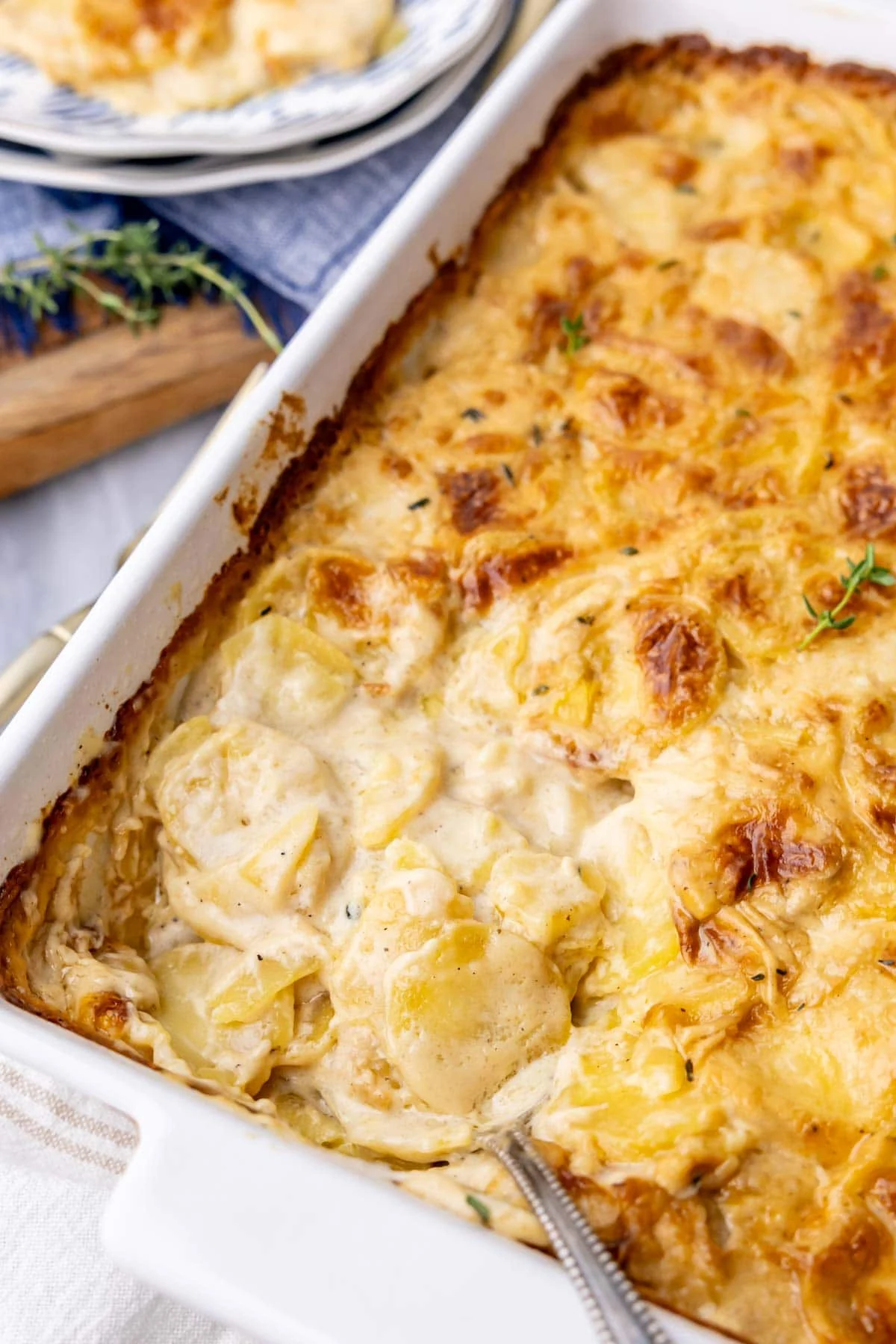
Sam Merritt shares a detailed recipe for homemade scalloped potatoes, developed through months of testing and refined over years of culinary experience. This recipe is designed not only to deliver consistent, rich, and creamy results but also to be adaptable to various kitchen environments and time constraints—making it ideal for both everyday meals and holiday gatherings.
What Makes This Recipe Work?
The recipe starts on the stovetop, which softens the potatoes and thickens the sauce. This early step ensures even texture and flavor during baking. The sauce builds a stable base that holds up under oven heat without separating or breaking down.
A butter, onion, and garlic base adds deep flavor. Onions bring earthy sweetness, while garlic adds a warm aroma. A small amount of Dijon mustard adds subtle tang and complexity, outperforming ground mustard in taste tests. Fresh thyme adds a bright, herbal note. Nutmeg, though optional, adds a warm, sweet depth that enhances the dish.
The sauce uses equal parts heavy cream and whole milk. This blend delivers rich texture without heaviness. Heavy cream adds luxurious mouthfeel, while whole milk adds body and balance. All cream would be too rich; all milk would be too thin and unstable.
Key Ingredients and Their Roles
- Potatoes: Yukon Golds are best for their buttery flavor and creamy texture. They hold up well during baking without becoming mushy. Russets are less ideal due to their high starch and fibrous structure, which leads to faster breakdown and a less tender result.
- Peeling: Peeling removes surface starches that can oxidize and produce an earthy taste. This step preserves the clean, refined flavor of the dish.
- Cream and milk: Equal parts create a balanced, rich sauce. All cream or all milk would change the consistency and affect the final texture.
- Flour: A few tablespoons of all-purpose flour thicken the sauce and stabilize it during baking. It forms a roux with butter and onions, preventing separation during long cooking.
- Spices: Black pepper, nutmeg, and thyme form the core blend. Fresh thyme is preferred for its vibrant flavor, but dried works in a pinch. Black pepper cuts through richness, while nutmeg adds warm, sweet depth.
- Dijon mustard: Adds nuanced flavor and balances the sauce. Its complex, aromatic profile outperforms ground mustard, preventing the sauce from becoming cloying.
- Cheese (optional): Traditional scalloped potatoes don’t include cheese. Gruyere, mild cheddar, or fontina are recommended. Gruyere melts smoothly; mild cheddar is milder. Sharper cheddars may not melt well and can make the sauce grainy or separate.
Step-by-Step Preparation
- Cook onions in butter over medium heat until soft and translucent. Stir often to prevent burning. Add broth if needed to avoid scorching. This builds flavor and softens the onions.
- While onions cook, slice potatoes into even ⅛-inch slices. Do not rinse—starch is essential for texture. Uniform slices ensure even cooking.
- Add garlic to onions and cook until fragrant. Stir in flour and toast for about one minute. This builds a nutty, toasty flavor through the Maillard reaction.
- Add potatoes, salt, mustard, spices, cream, and milk. Stir well to combine. The mixture should be smooth and lump-free.
- Simmer over medium-high heat until sauce thickens. It should coat the back of a spoon and hold a finger trail without flowing back. This ensures stability during baking.
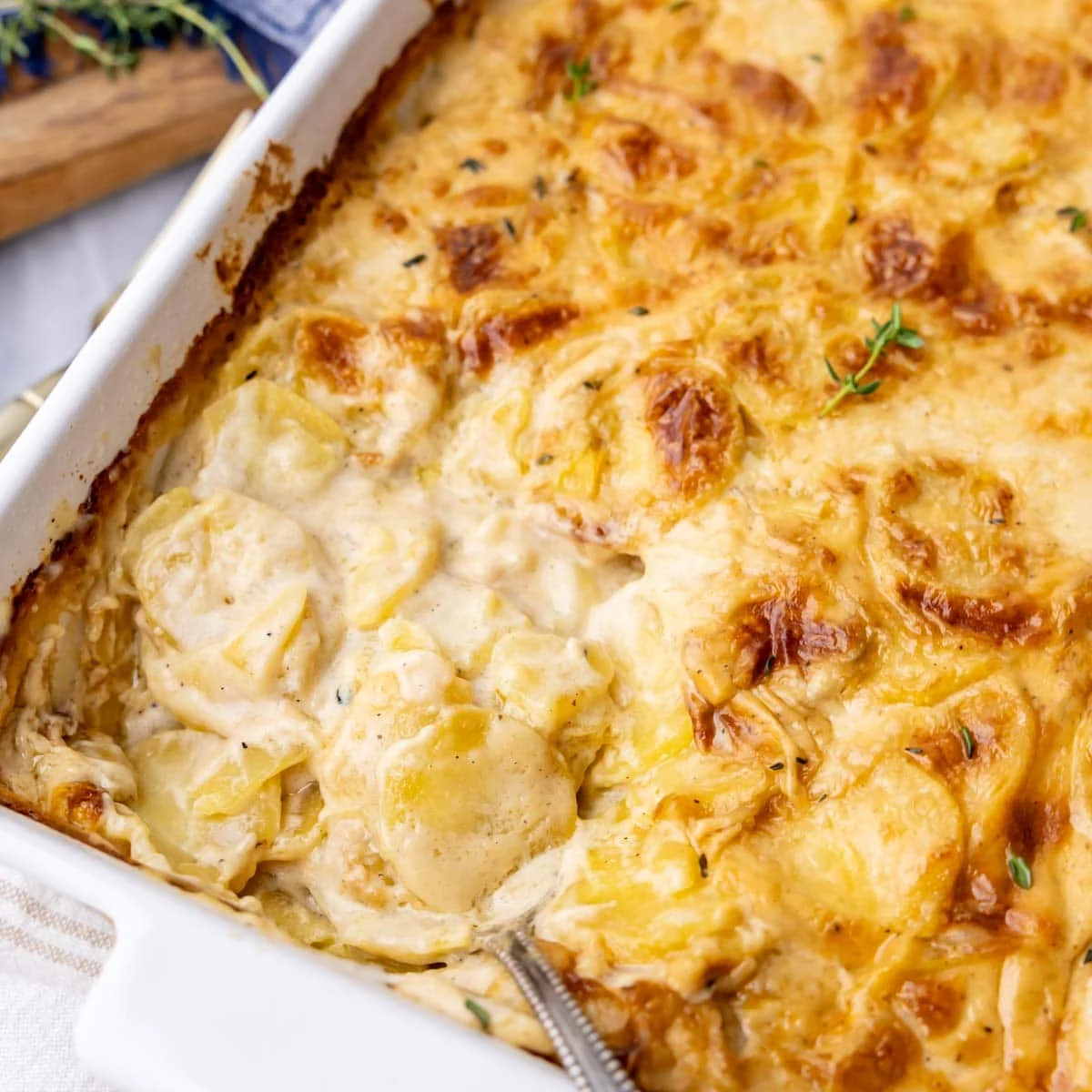
- Transfer mixture to a buttered baking dish. Bake until potatoes are tender and top is golden, about 45 minutes.
Preventing Common Issues
Gray potatoes result from oxidation after cutting. Slice them while onions are cooking to reduce exposure time and keep them fresh-looking.
Uneven slices cause inconsistent cooking. Uniform thickness ensures all parts cook evenly—too thick leads to undercooked centers; too thin causes brittle edges.
Adding cheese directly on top during baking causes oiliness. The cheese melts and absorbs fats. Instead, add cheese inside the dish or sprinkle it on only in the last 5–10 minutes of baking.
Make-Ahead Instructions
After stovetop cooking, pour into a greased baking dish and let cool 15–30 minutes. Cover with foil and refrigerate up to 48 hours. This makes it ideal for holiday planning.
Before baking, remove from fridge and let sit at room temperature for 30 minutes. Bake covered for one hour. Afterward, uncover and bake another 10–15 minutes until potatoes are fork-tender and sauce bubbles. Let rest 15 minutes before serving.
Differences Between Scalloped and Au Gratin Potatoes
Traditionally, scalloped potatoes are made without cheese. The dish relies on a creamy sauce and buttery potatoes. Au gratin includes a cheese topping, often with a melted layer. This distinction is preserved in the recipe to honor the original versions.
Today, the terms are often used interchangeably. Sam plans to release an au gratin version in the future, offering a cheese-rich alternative for fans of that style.
Common Mistakes to Avoid
- Cutting potatoes in advance causes gray color. Oxidation begins immediately after slicing. Slice them as soon as possible, ideally while onions cook.
- Uneven or thick slices lead to undercooked centers or overcooked edges. Slice uniformly for even doneness.
- Rinsing potatoes removes starch, harming sauce texture. Starch is key to binding the sauce to the potatoes.
- Not cooking the sauce long enough results in a runny sauce. It must simmer until it thickens and holds a finger trail.
- Serving immediately makes the sauce appear thin. A 15-minute rest allows the sauce to thicken and settle.
Why This Recipe Matters
It offers a reliable, hands-on method for making a classic dish without canned mixes. The recipe emphasizes ingredient quality, technique, and time management—accessible to all skill levels.
By using stovetop prep and balanced ingredients, it delivers consistent results in any kitchen. Whether for a weekday dinner or holiday side, the dish stays flavorful and intact.
Its make-ahead capability supports busy schedules. Preparing it days in advance and baking with minimal effort makes it practical for families and hosts.

Limitations and Open Questions
The recipe does not include gluten-free or dairy-free options. A gluten-free version could work with a tested flour blend, but it hasn’t been tested here.
Storage beyond refrigeration is not addressed.
Sam does not confirm if the recipe works with potatoes beyond Yukon Golds or Russets. No testing results are provided for red or baby potatoes.
What to Watch Next
Sam plans to release an au gratin version. This would include a cheese layer, offering a richer, indulgent option for cheese lovers.
Future versions may explore slow cooker or air fryer methods. These would require testing to preserve texture and flavor.
The recipe is available on the original source site: Sugarspun Run.
For similar baked comfort foods, try stuffed sticky toffee muffins or homemade dark chocolate with dried fruits.
Sources & further reading
Featured image: Close-up view of a pan of scalloped potatoes with a golden brown crust and creamy interior.. Via original publisher. Image source