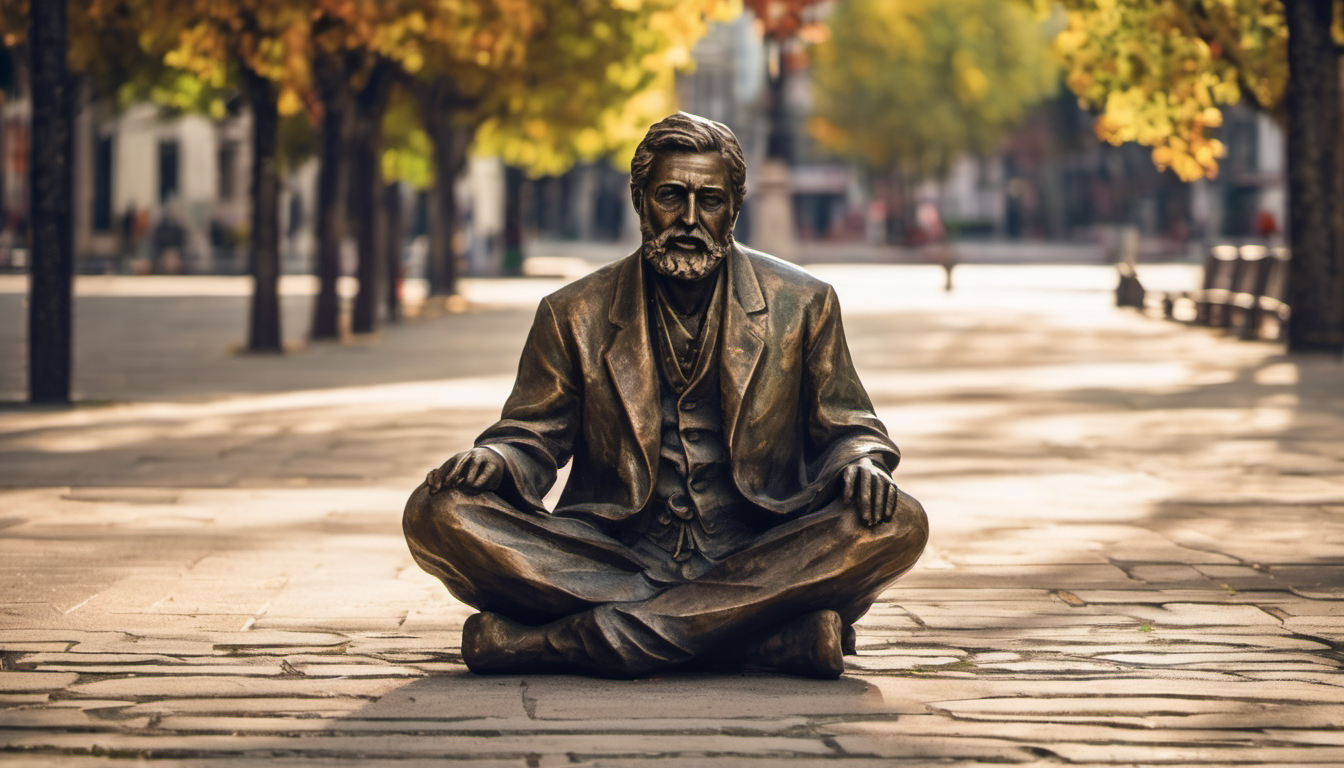
Featured image: A bronze statue of a man seated in a lotus position, wearing a suit and tie, with a beard. AI-generated image; not a photograph of the reported event.
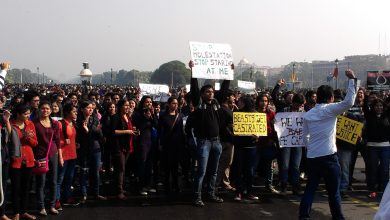
During the 1990 protests, thousands of Kosovo Albanians gathered peacefully in Pristina to oppose the Serbian regime. The demonstration was peaceful, organized to show public opposition to authoritarian rule.
What Happened
Among the protesters was Faik Rexhepi, a chemical engineer from Presheva. He joined the crowd after learning of a U.S. delegation’s visit. Rexhepi believed the publicity might amplify the Albanian cause.
When Serbian police moved in to disperse the crowd with batons, everyone fled except Rexhepi, who remained seated and was brutally beaten.
Photographer Hazir Reka captured the defining moment: Rexhepi sitting peacefully surrounded by unfriendly policemen. The photograph soon appeared in national and international newspapers, becoming a symbol of Kosovo Albanian resistance.
Key Facts
- Rexhepi was a chemical engineer from Presheva, not a political activist.
- He stayed in place because he believed the protest was peaceful and deserved attention.
- The photo was published in national and international newspapers within weeks.
- It became a widely recognized symbol of Kosovo Albanian resistance.
Background
At the time, Kosovo was under Serbian rule. Albanians faced systemic discrimination and suppression. Public protests were rare and often met with force.
The 1990 protest in Pristina was one of the first large-scale demonstrations by Kosovo Albanians. It highlighted growing public dissent and the desire for greater autonomy.
Rexhepi’s decision to remain seated was not a political act, but a personal one. He did not expect violence. His calmness in the face of aggression became symbolic.
Why It Matters
The photo of Faik Rexhepi has endured as a cultural touchstone. It represents peaceful resistance in the face of state violence.
Following Kosovo’s independence, by November 2022, Pristina Mayor unveiled Këmbëkryq (“Crossed Legs”), a bronze sculpture by local artist Eliza Shala depicting Rexhepi seated on the floor in a pose identical to the iconic photo.
Located in what is now Zahir Pajaziti Square, the sculpture immortalizes the scene that took place there more than three decades earlier.
As Kosovo continues to shape its national identity, public memory of resistance events remains vital. The story of Rexhepi may inspire future civic actions.
The sculpture, named Këmbëkryq (Crossed Legs), stands in Zahir Pajaziti Square. It mirrors the original photo exactly.
It was unveiled in November 2022 by the Pristina Mayor. The piece was created by local artist Eliza Shala.
The sculpture is not just art. It is a public monument to a moment of courage and quiet defiance.
It reminds visitors that resistance can take many forms—some quiet, some unheralded.
For those who see the sculpture, it is a reminder of a moment when one person chose to stay seated, even when violence loomed.
It is a testament to the power of stillness in the face of oppression.
The original photo and the new sculpture both reflect a simple truth: resistance does not always require shouting or violence. Sometimes, it is as simple as sitting still.
More information about the protest and its legacy can be found at Atlas Obscura.