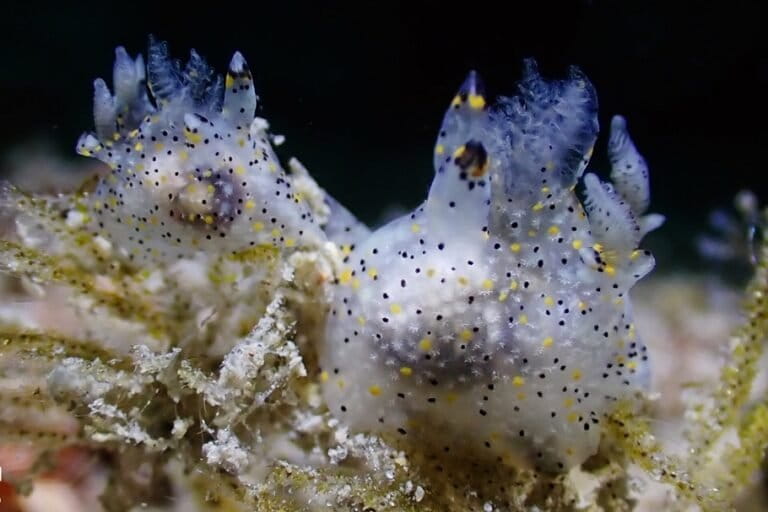
Researchers have found a new-to-science species of a tiny sea slug with black and yellow spots resembling “scattered sesame seeds.”
Measuring just three millimeters long (0.1 inches long), the researchers have named it Thecacera sesama, according to a recent study.
Study lead author Ho-Yeung Chan first spotted the sea slug during a recreational dive in the coastal waters of Keelung, northern Taiwan, in 2019. At the time, he was still an undergraduate student and did not realize the animal was unknown to science until he consulted an expert on Facebook, according to a statement.
To formally identify the species, researchers collected six specimens of the sea slug during diving expeditions conducted between May 2021 and June 2025. Between May and September, typhoons can make diving risky.
The research team then examined the specimens’ structure and appearance and analyzed their DNA to confirm that it was a new-to-science species.
T. sesama is the seventh Thecacera species to be described, and the first one to be named in the genus in nearly three decades.
Despite its small stature, T. sesama is visually striking, the researchers wrote. It has a translucent white body covered in small black and yellow spots that look like sesame seeds. While the species looks similar to another sea slug Thecacera pennigera, which has black and orange spots, T. sesama is significantly smaller and genetically distinct.
The researchers found that T. sesama lives on and feeds exclusively on bryozoans, small aquatic invertebrates known as “moss animals” that live in colonies.
The discovery of T. sesama highlights the hidden biodiversity of the Western Pacific, a recognized marine hotspot where many smaller organisms remain “poorly documented,” the authors said. They added that research in Taiwanese waters is particularly challenging due to environmental constraints; seasonal typhoons and low water temperatures limit suitable diving conditions to only a few months each year.
The authors also noted that many more cryptic species of sea slugs, also called nudibranch, may still be waiting to be discovered in the region’s overlooked marine habitats.
“Nudibranchs are one of the key players in the marine food web,” the researchers said in the statement. “They are extremely colourful and can be spotted on coral reef ecosystems. However, many nudibranchs are very small in size and are extremely difficult to spot underwater with the naked eye.”
Banner image: Two individuals of Thecacera sesama sp. nov. feeding on a bryozoan; Image credit to Ho-Yeung Chan, via ZooKeys.
Credits