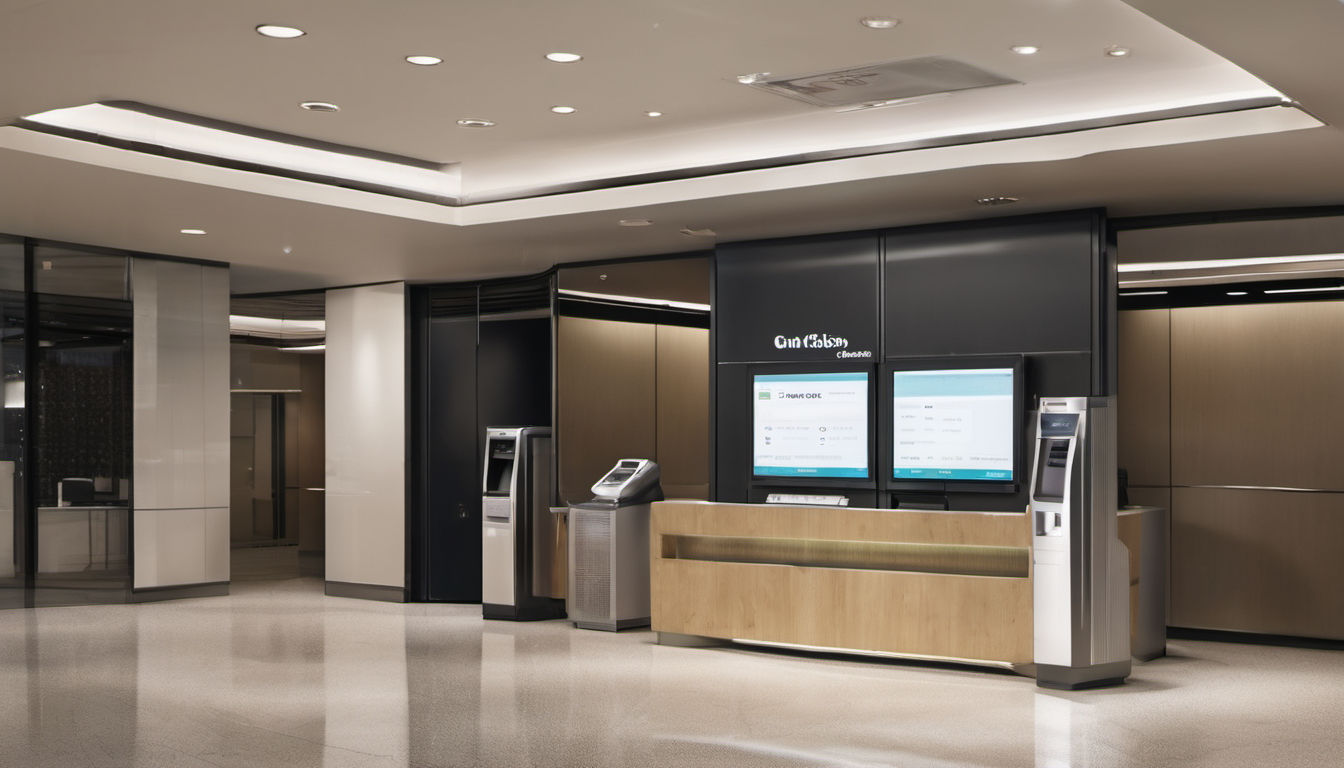
Featured image: The main foreground subject is a modern bank teller station with a dark gray countertop and a wooden front panel. AI-generated image; not a photograph of the reported event.
Major U.S. banks are embracing tokenization—not as a risk to their core businesses, but as a path to new growth. Source: coindesk.com.
What Is Tokenization?
Tokenization turns real-world assets—like real estate, bonds, or commodities—into digital tokens on a blockchain.
These tokens represent ownership and are recorded on a secure, transparent ledger.
Tokenized assets can be traded globally with little to no geographic limits. This reduces delays and opens access to new investors.
Goldman Sachs: Trading Grows, Not Shrinks
Goldman Sachs sees tokenization as a growth driver, not a threat to its trading business.
CEO David Solomon said emerging tech like DeFi and prediction markets might actually boost, not hurt, trading revenue.
He compared it to electronic stock trading nearly 50 years ago—when concerns arose, but the firm adapted and grew.
Goldman launched GS DAP in 2022, a platform for tokenized assets. It has tested bonds, money market funds, and real estate.
In July, it joined a DTCC trial. DTCC handles trillions of U.S. securities transactions annually.
The trial showed tokenization can cut settlement times from days to hours and lower counterparty risk.
Currently, activity is small. Solomon said it’s still at the margin and not a major revenue source.
Wells Fargo: Faster Cross-Border Payments
Wells Fargo runs a tokenized deposit system for cross-border payments. It’s in production and handles payments in two minutes or less.
Volume is low, but the system is live. This helps global trade by speeding up payments.
Wells Fargo lacks a large international branch network. Tokenized deposits let it offer global services without building physical branches.
The bank is also exploring tokenized securities, real-world assets, and crypto trading for wealth clients. No timeline has been given for these services.
Morgan Stanley: Advice Still Needed
Morgan Stanley believes faster asset transfers don’t replace the need for financial advice.
CFO Sharon Yeshaya said: ‘The tokenized world means it is faster and easier to move assets around, and you will need advice.’
Technology can move assets quickly. But clients still need human guidance on risk, goals, and long-term planning.
The firm has invested in digital tools for wealth management and institutional clients. These include automated rebalancing and real-time performance dashboards.
No new tokenization product has launched. But the bank sees it as a way to grow advisory demand, especially among younger investors.
How Banks Are Using Tokenization
Each bank focuses on a different area. Goldman expands trading. Wells Fargo improves payments. Morgan Stanley grows advisory services.
This shows a broader trend: banks aren’t rejecting blockchain. They’re using it to enhance existing services.
Challenges Remain
Tokenization is still in early stages.
Activity is small. No bank has reported revenue from tokenization.
Regulations are unclear. It’s not yet known if tokenized securities are traditional securities or need new rules.
Real-world assets face issues in valuation, governance, and legal compliance—especially with property or environmental rights.
What to Watch For
Investors and regulators should track:
- How banks scale tokenized services beyond pilots.
- Whether regulators set clear rules for tokenized assets—like disclosure and investor protection.
- How tokenization changes roles of brokers and advisors.
- Whether tokenized assets deliver real cost savings or just efficiency, and if clients feel the benefits.
For more on tokenized U.S. treasuries, see BNY and Citadel’s test of tokenized U.S. treasuries.
For insights into how banks may influence stablecoin growth, see Banks Could Slow Stablecoin Growth by Raising Deposit Rates.
These developments show banks are not rejecting blockchain. They’re integrating it carefully, seeing tokenization as a natural evolution—not a disruption.