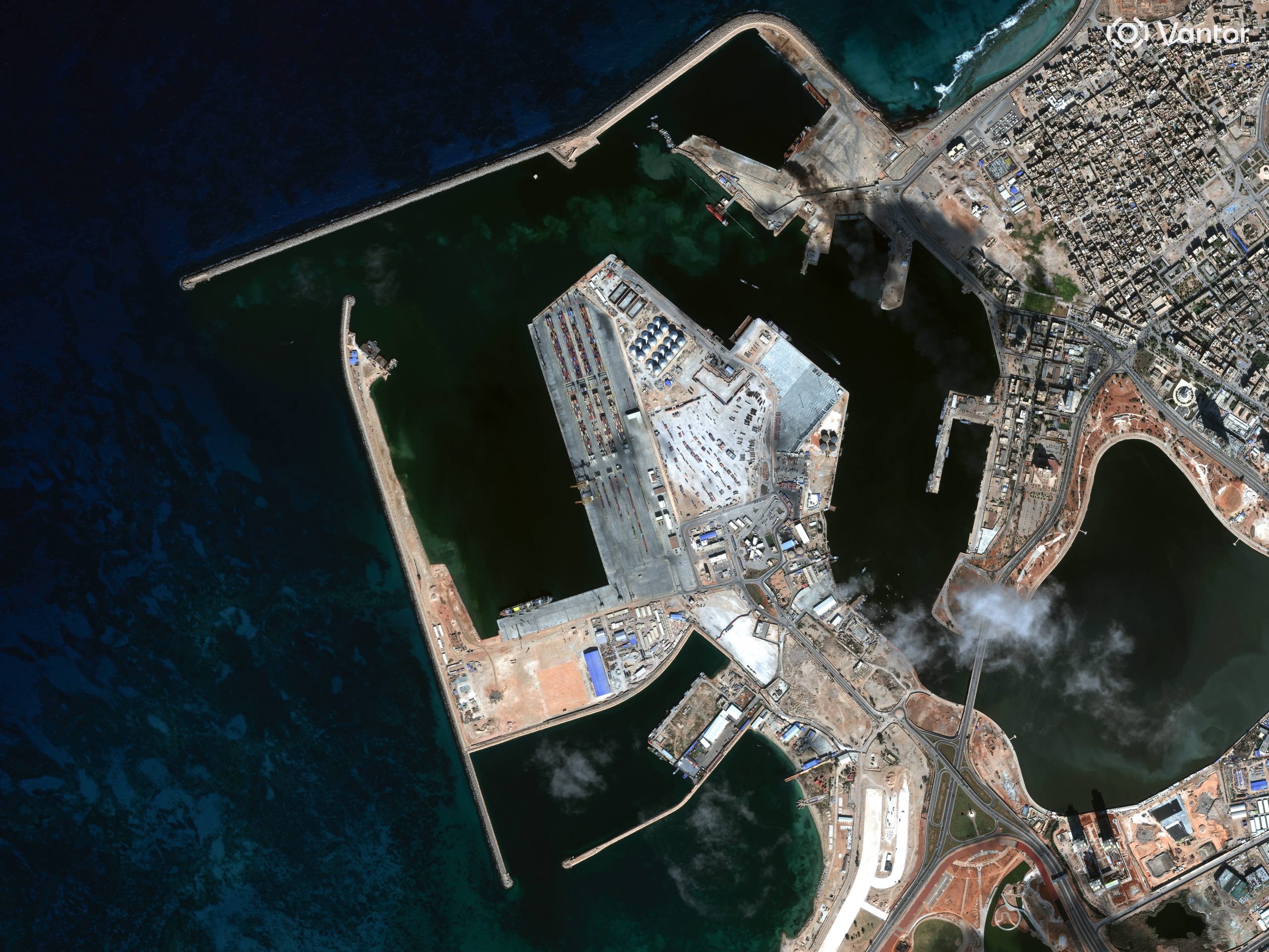
Ukraine confirms drone strikes on Russian vessels in Libya’s Benghazi port, describing the operation as an ‘exemplary’ effort involving multiple naval drones. The attacks occurred on Sunday, with satellite images showing the Russian Navy corvette Merkury sunk in the port.
What happened in Benghazi
Ukrainian officials identified two targets: the corvette Merkury and the dry cargo vessel MV Angara.
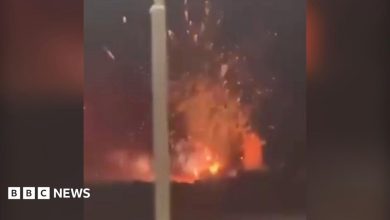
Satellite images show the Merkury capsized and sunk, with only its bow visible above water. Smoke rises from the site, indicating a major explosion.
The corvette, commissioned in 2023, is one of Russia’s newer naval assets. It was designed for coastal operations and littoral zones. Its sinking marks a significant development in the conflict, showing Ukrainian forces can strike beyond Ukraine’s borders.
Volodymyr Zelensky said a Russian combat helicopter was destroyed during the sinking. In a statement on X, he said: ‘We continue our operations in designated waters. We are responding to Russia’s aggression.’
The loss of a combat helicopter disrupts Russian operations. Such aircraft are used for reconnaissance, strikes, and air defense. Its destruction may have weakened coordination between Russian vessels in the region.
The MV Angara, a dry cargo vessel, sustained damage. While full details are not public, dry cargo ships carry supplies and equipment. Targeting such vessels may aim to disrupt Russian logistics in the Mediterranean.
Libya’s response and international concern
Libya’s eastern government requested an international investigation. Prime Minister Osama Hamad said the incident raises suspicions about where the vessels were launched and whether Ukrainian experts were present in Libya.
He called for verification of Ukrainian personnel and formal explanations from Kyiv about activities in Benghazi.
The UN Support Mission in Libya expressed ‘grave concern’ over the attacks. It stressed that Libya’s sovereignty, territorial integrity, and citizen safety must be respected.
The mission said Libya must not become an ‘arena for external conflicts.’ This reflects growing global worry about regional instability.
The UN called for an immediate, independent, and transparent investigation. It urged all parties to avoid spreading unverified claims or escalating tensions.
Libya’s fragmented government struggles to control coastal areas. Foreign military activity in Libyan waters could weaken public trust and hinder efforts to build national unity.
Response from Russia and Ukraine
That same day, Russian forces attacked energy facilities in Izmail. The defence ministry said a vessel near Odesa carried military cargo — a claim not yet verified.
These strikes suggest a pattern of reciprocal attacks, with both sides targeting adjacent regions to assert dominance and disrupt supply lines.
Perm region governor Dmitry Makhonin said an industrial site in the Urals was damaged by a Ukrainian drone. Two others were injured. The facility was not named.
Perm hosts an oil refinery that has been repeatedly targeted by Ukrainian drones. This pattern raises concerns about critical infrastructure vulnerability.
Human cost in Ukraine
A Russian airstrike on Dymer killed at least 11 people. A seven-year-old boy was pulled alive from the rubble 14 hours after the attack, according to Zelensky.
A 79-year-old woman was also found alive under debris and taken to hospital. Search operations continued for more survivors.
The death toll rose on Monday after another body was pulled from a residential building. The incident occurred during a period of high tension.
The rescue of the child is rare and hopeful. It reflects the resilience of individuals facing extreme violence.
Broader regional implications
Drone attacks have repeatedly entered NATO countries’ airspace. On Friday, three objects entering Polish airspace were identified as Russian Kh-101 missiles.
These incidents have raised alarms about the conflict possibly spilling beyond Ukraine. The presence of such weapons in NATO airspace fuels fears of wider escalation.
These developments have renewed calls for diplomatic efforts and de-escalation. The UN and regional actors urge all parties to act responsibly to avoid triggering broader conflict.
While the attacks are confirmed by Ukrainian officials and supported by satellite imagery, the origin of the drones and full command chain remain unverified. The presence of Ukrainian experts in Libya has not been confirmed. There is no official confirmation that Ukrainian forces launched the attacks from Libya. Lack of transparency continues to fuel speculation and concern.
The situation remains fluid. The international community continues to monitor developments closely. The Benghazi incident, combined with strikes in Ukraine and Russia, shows the conflict now extends beyond Ukraine into the Mediterranean and Europe.
For more on the Ukraine-Russia war and its global impact, see our coverage at Ukraine-Russia War Latest: Attacks, Talks, and Nuclear Risks.
For details on the drone attack in Libya, visit Drone Attack on Russian Ship in Libya Port.
For updates on the conflict, follow our original source.
Sources & further reading
Featured image: original publisher image. Via original publisher. Image source