The National Gallery in London has curated a major exhibition titled Van Eyck: The Portraits, bringing together all of Jan van Eyck’s known portraits for the first time. This comprehensive display offers a rare opportunity to witness the full scope of one of the most influential figures in the history of Western art. Source: theguardian.com.
Van Eyck’s Masterful Portraiture
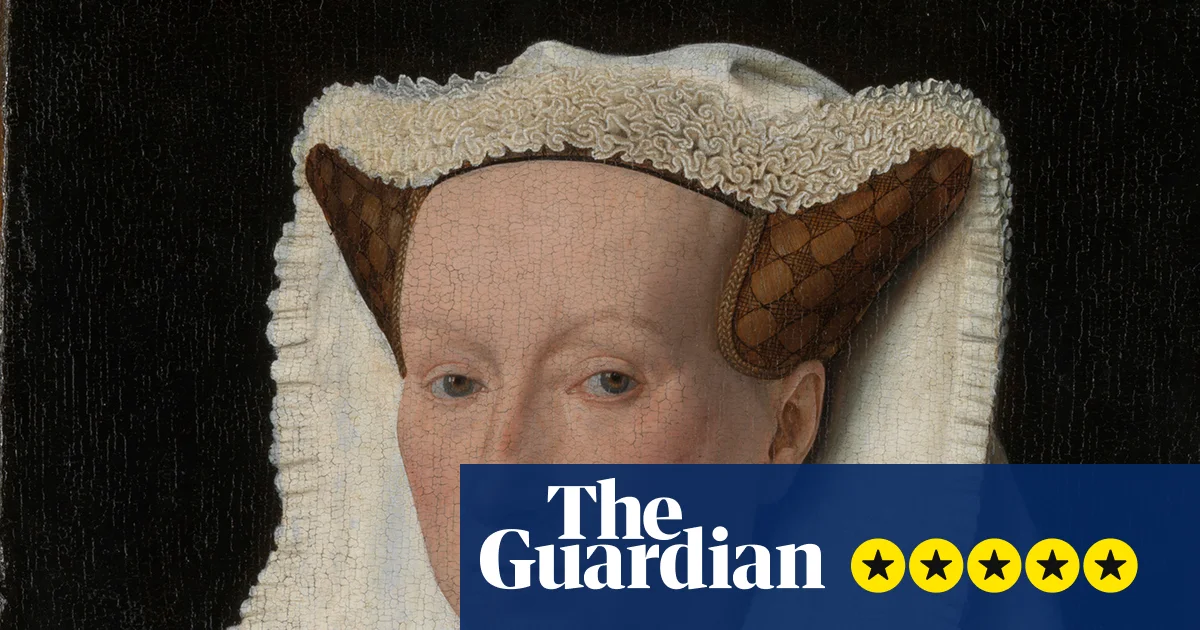
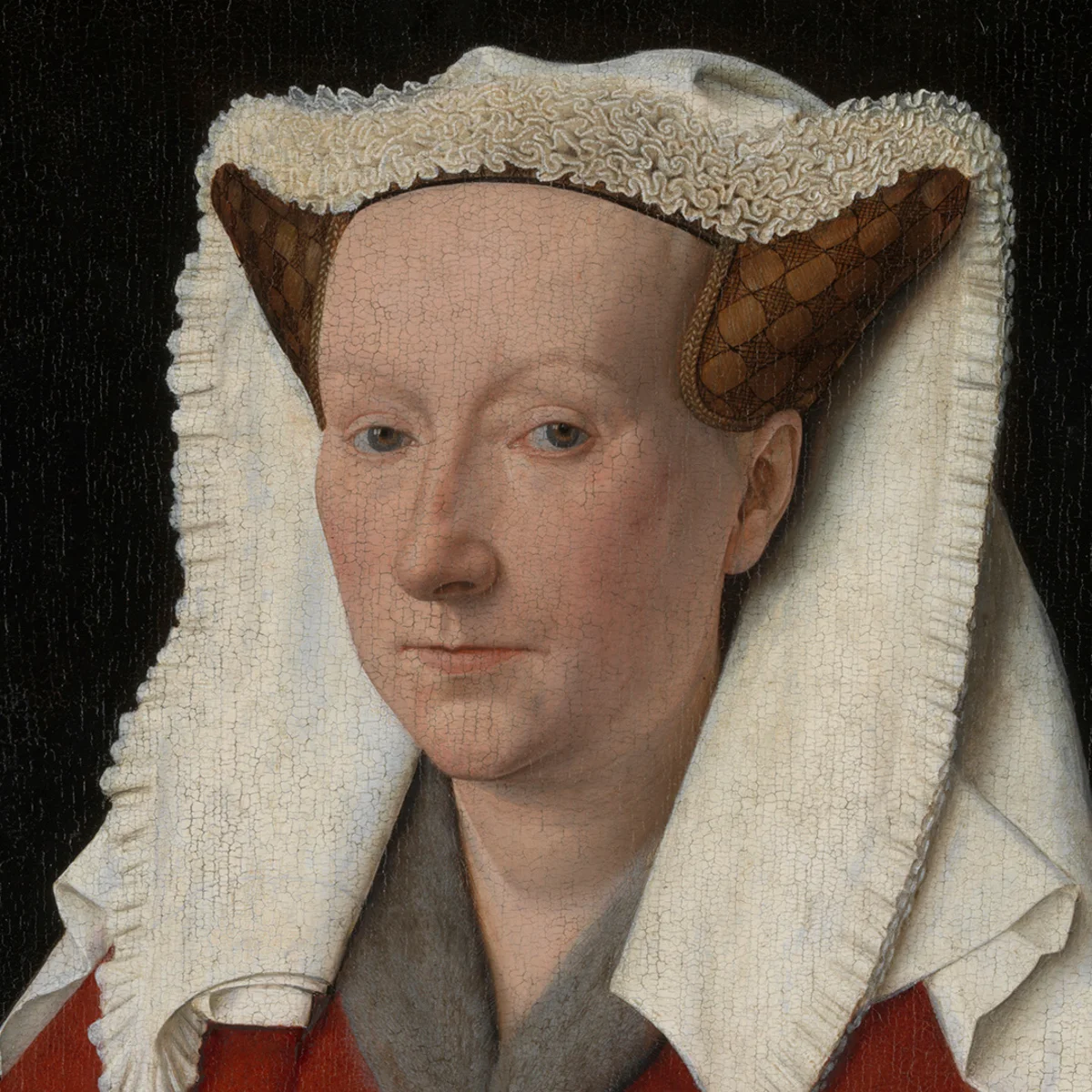
Jan van Eyck, a Flemish painter active in the late 15th century, revolutionized portraiture with his unparalleled attention to detail. His works do not merely depict individuals—they capture the texture of skin, the subtle variation in hair, the depth of a gaze, and the physicality of aging.
In one portrait, an unknown old man is rendered with such precision that the stubble on his chin appears silver-sharp and almost tangible. The hairs on his scalp are individually rendered, varying in paleness and lankness. The sagging skin of his throat forms natural folds and gulleys, resembling geological formations.
Van Eyck’s portraits reveal a profound duality: the ordinary person as both a marvel and a reflection of universal humanity. The man in the painting is banal in his existence yet extraordinary in his physical detail. This duality speaks to a broader human condition—our simultaneous awareness of our fragility and our capacity for beauty and complexity.
Portraits as Acts of Preservation
At the heart of Van Eyck’s work lies a powerful act of preservation. In a world where death was inevitable and memory was fleeting, his portraits functioned as time capsules. Behind each wrinkle, each hairline, each shift in facial expression lies a desperate attempt to freeze time and resist mortality.
This is especially evident in portraits of individuals who appear monstrous or unremarkable—such as the Italian merchant in the Arnolfini Portrait. His face is half in shadow, his eye droopy and rheumy, suggesting illness or fatigue. His sickly appearance contrasts sharply with the pearly beauty of his wife, creating a visual tension that evokes the duality of life and death.
Yet a later portrait of the same man shows him with bright eyes. This shift raises a critical question: is the Arnolfini Portrait a flattering image of a man in good health, or a subtle critique of his physical and emotional state? Van Eyck does not operate as a passive recorder of reality. His paintings are imbued with imagination, whimsy, and emotional depth. He interprets the world through a lens of personal observation and artistic invention.
Van Eyck’s Artistic Legacy and Techniques
Van Eyck did not invent oil painting, but he was the first to fully exploit its potential. He developed a technique of building up layers of paint—what art historians call glazing—creating a mirror-like surface that reflects light and depth with astonishing realism.
This method allowed him to render skin with a lifelike sheen, capturing the way light interacts with flesh. In his portrait of Jan de Leeuw, a Bruges goldsmith, a ring is depicted with such vividness that it appears to be a real nugget of gold. This detail is not merely decorative—it suggests a magical quality, echoing the Renaissance belief in alchemy, the idea that art and nature could be transformed through skill.
According to the 16th-century art historian Giorgio Vasari, Van Eyck was an alchemist who discovered oil painting instead of gold. While this account is likely a romanticized interpretation, it captures a deeper truth: the idea that painting can create something that seems to defy nature. The modern artist Willem de Kooning once stated that oil painting was invented to depict human flesh—Van Eyin, in his portraits, reveals the mystery of flesh simply by painting a face. No earlier artist had looked at the world with such intensity or precision.
One of the most compelling portraits in the exhibition shows a man with his head wrapped in crimson cloth. He gazes directly at the viewer, his expression both guarded and intimate. The painting captures laughter lines in his gold-tinted skin, a pink flush in his cheeks, and the early signs of age. Van Eyck died around age 50, making this portrait a poignant reflection of his own mortality. While not explicitly labeled as a self-portrait, the composition, gaze, and physical details strongly suggest it is a deeply personal representation of himself.
Artistic Context and Limitations
Van Eyck was not only a portraitist. He also collaborated on the Ghent Altarpiece with his brother Hubert, one of the most significant religious works of the Northern Renaissance. These paintings contain portraits of real people—courtiers, merchants, and family members—placed in uncanny proximity to supernatural beings.
This context of prayer, faith, and spiritual devotion is absent in the current exhibition, which focuses exclusively on his portraits as standalone works. Some critics have noted that the show ‘cheats’ by removing this spiritual framework. By isolating Van Eyck’s portraits from their religious and devotional context, the exhibition risks oversimplifying his artistic vision.
The exhibition includes Van Eyck’s only surviving drawing—a study of the stubbly old man. When compared to the finished painting, the drawing is more restrained and respectful. The final work, however, exaggerates the folds of skin and the structure of the ear, introducing a sense of chaos and wildness. This evolution anticipates the style of Hieronymus Bosch, known for his surreal, brooding, and psychologically complex imagery.
Van Eyck’s portraits are not just accurate—they are brooding creations of northern European melancholy. Entering his world feels like stepping into winter—a quiet, introspective, and deeply reflective atmosphere. The viewer is not simply observing a face—they are immersed in a mood of quiet contemplation, a meditation on time, mortality, and human identity.
It is a significant opportunity to see Van Eyck’s work in a unified context. His portraits remain powerful not because of their technical mastery alone, but because of what they say about humanity—its fragility, its beauty, and its enduring desire to preserve the past.
- The exhibition features all of Van Eyck’s known portraits.
- It includes his only surviving drawing, a study of an old man.
- Van Eyck’s portraits are seen as acts of time preservation.
- His work anticipates later artists like Hieronymus Bosch.
- The show omits the religious context of his major works.
For a deeper look at Van Eyck’s religious contributions, see the Ghent Altarpiece at the Sint-Baafskathedraal in Belgium.
Van Eyck’s legacy continues to shape how we understand the human form in art. His portraits remain a testament to the power of detail and the human need to remember.
Sources & further reading
Featured image: original publisher image. Via original publisher. Image source