What does it mean when older people say they are tired of life?
Understanding Tiredness of Life in Older Adults
Sam Carr, Ph.D., a researcher in aging and mental health, explores a complex phenomenon: the feeling that life has lost its value in later years.
It is not a sign of depression or illness. Older people may express this feeling without suicidal intent or emotional distress. Instead, it reflects a shift in how life is experienced.
One woman, Nina, aged 72, described seeing a sunrise and saying she didn’t care if she saw another. She explained that life had become less appealing than its alternative—death.
Her words reveal a deeper truth: some older people are not losing interest in life, but rather, they are letting go of its attachments. This does not imply a loss of love or warmth, but a recalibration of values—where the emotional weight of being alive diminishes in favor of peace and release.
Why Does This Happen?
Research suggests tiredness of life is not caused by one factor. It emerges from the interaction of personal experiences and social conditions.
Personal changes—such as the loss of a partner, a career, or physical abilities—can profoundly alter how someone views their place in the world. These changes are not uniform. One person may lose a job and feel a sense of purpose fade, while another may lose a friend and feel isolated. Yet, over time, these losses accumulate, forming a pattern of emotional erosion.
At the same time, social conditions shape how older people are perceived and treated. In many societies, aging is associated with decline, dependency, and irrelevance. When older people are seen primarily as burdens or as people who no longer contribute, it can deeply affect their self-worth and sense of belonging.
For instance, a study of 26 nursing-home residents found that tiredness of life was closely tied to a threatened sense of self—specifically, losses in agency, connection, mattering, and hope. These are not abstract concepts. Agency refers to the ability to make choices and influence one’s environment. Connection refers to the feeling of being part of a community or shared experience. Mattering means being recognized and valued by others. Hope for the future is the belief that things can improve or that life still holds promise.
When these elements are eroded, even in the absence of illness, a profound sense of disconnection emerges. This disconnection is not just about physical health—it is about emotional and relational well-being. It is about how individuals feel seen, heard, and part of something larger than themselves.
The Gradual Turnout of the Lights
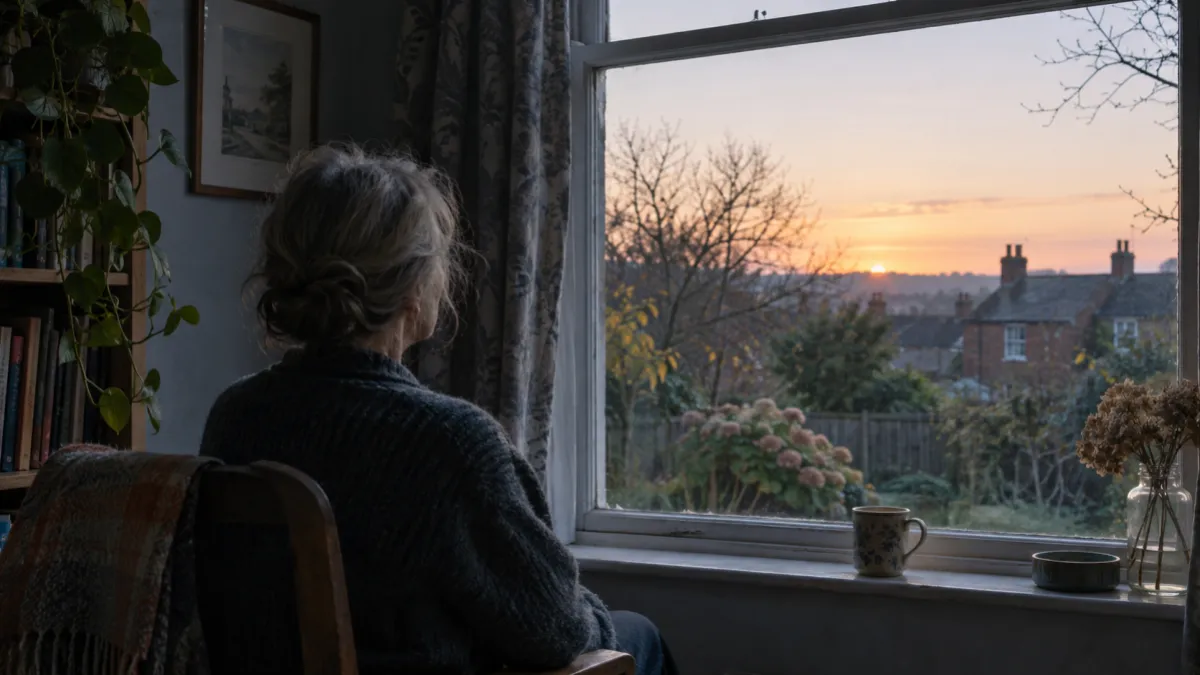
Professor Helena Larsson and colleagues have described a process they call the ‘turning out of the lights.’ This concept suggests that some people gradually loosen their emotional ties to life—not in response to a crisis, but over time, like a slow dimming of lights in a room.
It may reflect a readiness to face death—not as an end, but as a release from the world’s demands and expectations. This is not a sudden decision, nor is it a sign of despair. Rather, it may be a natural progression of emotional maturity, where the person recognizes that the world has moved on and that their role in it has ended.
For example, someone who once had a vibrant career may now find that their days are filled with quiet routines. They may no longer feel the need to perform, to achieve, or to be seen. This shift does not mean they are indifferent—it means they have found a different kind of peace.
However, this process is not inevitable. Many older people remain deeply attached to life, even in the face of serious loss. Their resilience is not diminished by time—it is transformed. They may still care deeply about loved ones, about the world, or about the legacy they leave behind.
Medicine and the Long, Slow Fade
Atul Gawande has described how medicine can create a ‘long, slow fade.’ Medical advances extend biological life—allowing people to live longer, even when they face chronic illness or disability.
Yet, these advances often prioritize survival over quality of life. Treatments may extend life by years, but they may not address emotional needs, social isolation, or the loss of purpose. As a result, older people may live longer—but feel less connected to meaning, purpose, or hope.
The concern is not longevity itself. It is whether society supports the conditions that make life feel worth living. If medical care focuses only on survival, it may unintentionally contribute to a sense of emotional emptiness.
Place in Society and the Value of Aging
Many cultures celebrate longevity. Yet, older people are often seen as declining, dependent, or irrelevant. When society imagines old age only as decline, it shapes how individuals see their future.
For instance, in some communities, older adults are expected to retire early, to withdraw from public life, or to accept roles that emphasize dependence. These expectations can lead to a sense of being unvalued or unseen.
When older people are not given opportunities to contribute—whether through mentoring, volunteering, or community leadership—they may begin to see themselves as obsolete. This perception can fuel a sense of disconnection and diminished self-worth.
Chronic Disconnection and the Loss of Self
A study of 26 nursing-home residents found that tiredness of life was linked to a loss of:
- Agency—the sense of control over one’s life.
- Connection—feelings of belonging to others.
- Mattering—the belief that one is valued.
- Hope—for a meaningful future.
These losses combine to produce a profound sense of disconnection. When relationships, roles, and freedoms fade, rebuilding meaning becomes difficult. The emotional cost of these changes is not always visible, but it is real.
Family Responses and Emotional Barriers
Family members may avoid discussing this topic. One relative said: ‘I didn’t want to discuss it. Every time he brought it up, I didn’t want to hear it.’
This silence is understandable. It reflects fear, discomfort, or a lack of understanding. Many families grow up with the idea that discussing death or emotional withdrawal is taboo. But this silence also means that older people’s inner experiences remain unheard.
These feelings are not signs of failure. They are part of a human experience shaped by time, change, and social context. Recognizing them as valid and natural can help families and caregivers respond with empathy and openness.
What This Means for Society
As societies extend life, they must also support the conditions that give life meaning. That includes:
- Valuing older people in public and private life.
- Providing opportunities for contribution and connection.
- Supporting emotional and social well-being in later years.
Without these, longer lives may feel empty—even if the body continues to function. The goal is not to eliminate tiredness of life, but to understand it as a natural, human response to change—and to respond with compassion, not fear.
Understanding tiredness of life helps us see aging not just as decline, but as a complex, evolving experience. It calls for deeper attention to how we live with older people—not just in health, but in meaning.
Original source: What Does Tiredness of Life in Older People Really Reflect?
For more on how aging shapes identity, see In Life, as in the Navy, He Knew How to Change Course.
Sources & further reading
Featured image: original publisher image. Via original publisher. Image source