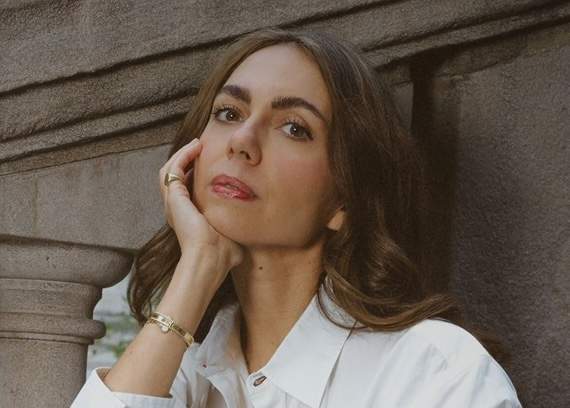
Wonder is often seen as a fleeting emotion—something we feel when we see a sunset or hear a bird sing. But poet Maya C. Popa suggests it might be more than that. Wonder, she argues, is a way of paying attention—one that resists certainty and invites openness.
What Is Wonder?
Popa defines wonder not as a reaction to beauty or awe, but as a mode of attention. It emerges when we slow down and stop assuming we know what we’re seeing or experiencing.
She explains that poetry, with its emphasis on ambiguity and silence, offers a path to cultivating this kind of wonder. Poems don’t always offer clear answers. They leave room for interpretation, uncertainty, and emotional resonance.
How Poetry Builds Wonder
Popa’s collection Wound Is the Origin of Wonder explores wonder beyond traditional forms of awe. It examines how pain, loss, and vulnerability can be sources of wonder—moments when we confront what we cannot explain.
Her latest work, If You Love That Lady, focuses on how attention shapes our experience. It questions how we perceive others and how assumptions about people or situations can distort reality.
Through these works, Popa shows that wonder is not passive. It requires active engagement—looking closely, listening deeply, and accepting that some things may never be fully understood.
Wonder and Mindfulness
Popa links wonder to mindfulness. Both practices involve turning attention away from constant thinking and toward the present moment.
She notes that mindfulness often focuses on breath or body sensations. Wonder, by contrast, turns toward the unknown—what we don’t understand, what feels unfamiliar or unsettling.
For example, when someone sees a child laughing in a crowded street, mindfulness might help them notice the detail of their smile. Wonder, she says, would invite them to ask: Why is that child laughing? What does that moment mean?
This kind of questioning doesn’t demand answers. It simply opens space for curiosity.
Why Wonder Matters
Popa believes wonder strengthens our connection to the world. When we remain open to uncertainty, we become more attuned to the complexity of human experience.
It helps us see beyond assumptions—about people, places, or even our own emotions. In a world of rapid information and constant judgment, wonder offers a counterbalance.
It doesn’t require grand events. A quiet moment, a small gesture, or a fleeting thought can spark wonder if we choose to pay attention.
Popa emphasizes that wonder is not about achieving a state of bliss or enlightenment. It’s about staying present, even when things don’t make sense.
Limitations and Open Questions
Popa acknowledges that wonder is not universally accessible. Some people may feel uncomfortable with ambiguity or uncertainty.
She doesn’t claim that poetry or mindfulness will automatically lead to wonder. It requires practice, patience, and a willingness to sit with discomfort.
There is no clear path or checklist for cultivating wonder. It emerges through repeated acts of attention—reading a poem, watching a scene, or simply noticing a detail in daily life.
Still, Popa sees it as a vital skill. In a world that often values certainty and efficiency, wonder offers a different kind of intelligence—one that values mystery and openness.
Her work invites readers to consider: What if wonder is not something we find, but something we practice?
For those interested in deeper exploration of mindfulness and creative expression, read the full interview on Mindful’s website.
Sources & further reading
Featured image: Image provided courtesy of Maya C. Popa. Via original publisher. Image source