On October 23, 2026, the supernatural horror series Yaga premiered. It blends dark Slavic folklore with the intensity of a true crime story. Source: mentalfloss.com.
Who Is Baba Yaga?
Baba Yaga does not appear in Hans Christian Andersen or the Brothers Grimm tales. She is central to Russian, Ukrainian, and Belarusian folklore.
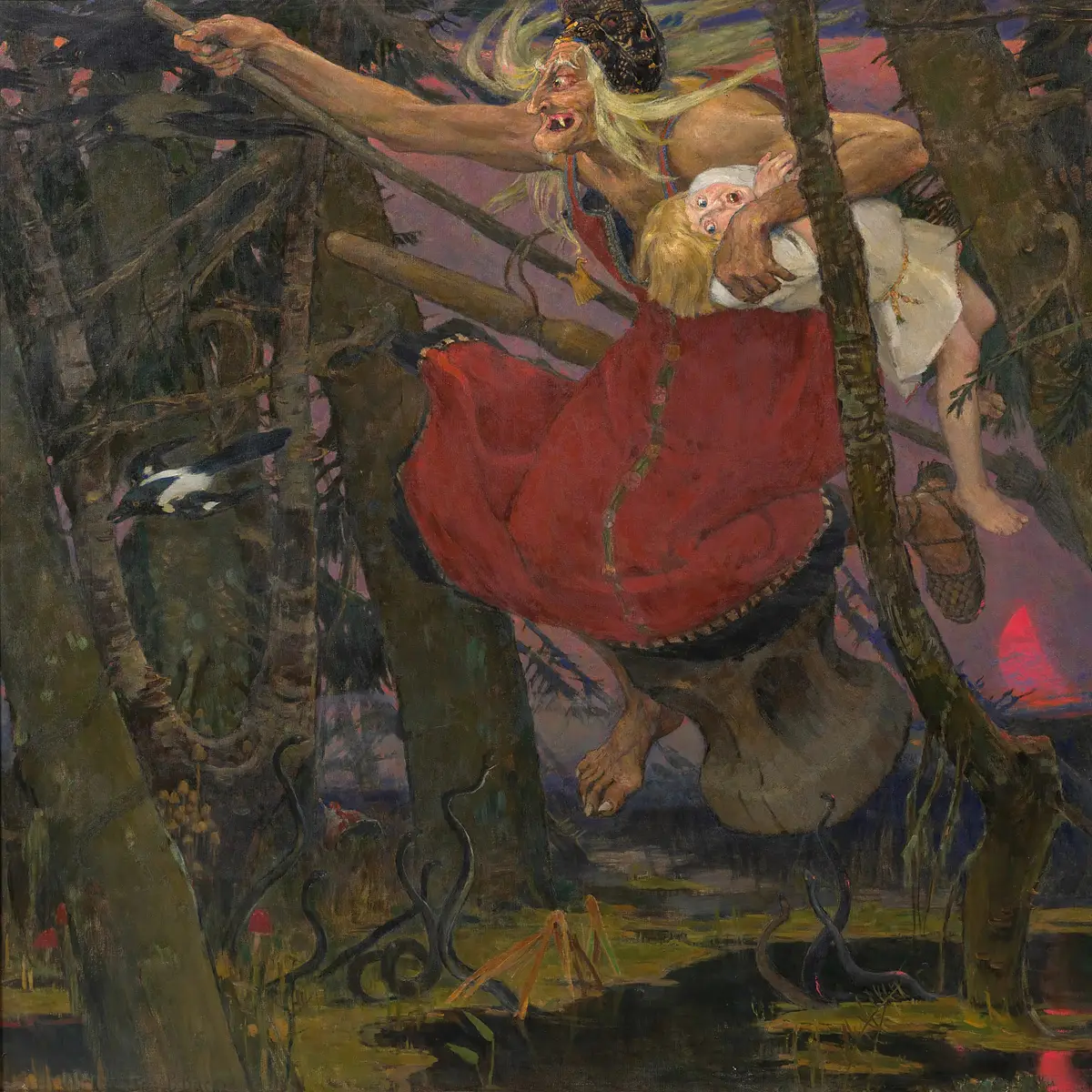
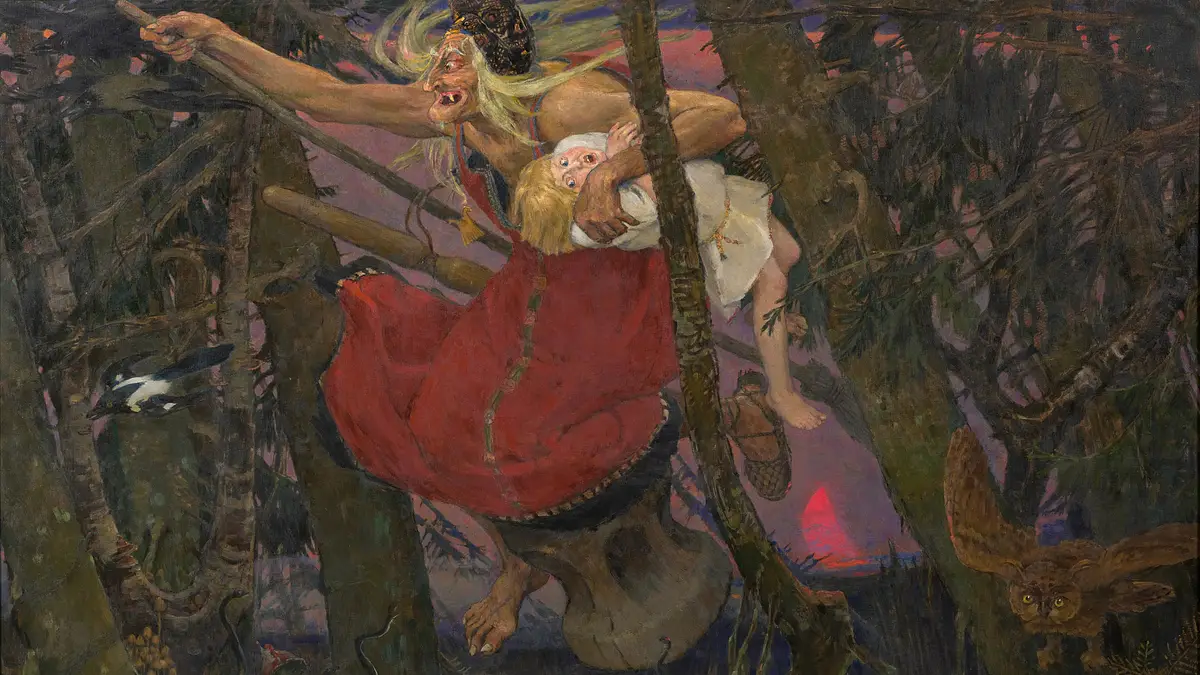
She appears as an old woman with a large nose—wide enough to rake her fire’s coals. One leg is made of bone, clay, iron, or wood. This single leg allows her to move between the living world and the underworld.
How She Travels
Baba Yaga does not fly. She hovers in a giant mortar, using a pestle as an oar. Her home is a hut that walks on chicken legs. To speak to her, the hut must turn toward you.
Her hut stands in the forest. The fence is lined with skulls of her victims. In some tales, she travels with Death, retrieving souls. This shows her role as both guardian and destroyer.
Symbolism and Cultural Meaning
Baba Yaga does not fit neatly into hero or villain roles. She resembles trickster figures like Loki and Coyote—cunning, unpredictable, and rule-breaking.
Some myths describe three sisters: one who helps, one who harms, and one who stays neutral. Baba Yaga most often helps women and girls. When the main character is male, she is seen as a villain.

This reflects a cultural tension: her presence stands against male dominance and female suppression. She symbolizes feminine power and resistance.
Historians believe she may be linked to Persephone, the Greek goddess of nature and death. Others see her as Mother Nature—wild, untamed, and powerful.
Her Influence in Modern Media
Baba Yaga appears in Studio Ghibli’s Spirited Away and Neil Gaiman’s The Books of Magic. These portrayals show her evolution from regional myth to global symbol.
The series Yaga adapts her myth into horror. It mixes supernatural elements with real-world crime. It blurs the line between fact and folklore.
As the story unfolds, a central question emerges: how many people will be eaten before the case is solved?
The show does not offer a clear ending. It leaves this question open. This mirrors the ambiguity of the myth itself.
Baba Yaga represents both protection and danger. She is a symbol of feminine strength and nature’s wild power. The series is fictional, but rooted in centuries-old traditions.
Sources & further reading
Featured image: original publisher image. Via original publisher. Image source