For 43 days in 2025, 42 million lower-income families, including children and elderly, wondered where their next meals would come from. The nation’s largest anti-hunger program, Supplemental Nutrition Assistance Program (SNAP), was canceled during the fall’s government shutdown, the first time these benefits have ever been paused since it was implemented in 1964.
But new SNAP guidelines expand the requirements of who needs to work to prove their eligibility, like veterans, the homeless, and adults ages 54 to 65, all of whom were previously exempt. Mandatory 20-hour weekly work requirements will also disproportionately impact people who work in fields that have been hit hard by unemployment as well as caregivers and the disabled.
Social scientists in the food security space say the stricter requirements will cause greater food insecurity, take money out of neighborhoods, and force state governments to figure out how to bear the costs while keeping their own budgets trimmed.
Keith McHenry has been working on food equity since 1980 and the challenges he faced back then are startlingly similar to those today. He cofounded Food Not Bombs, a volunteer-run mutual aid organization with around 1,000 chapters across 60 countries; as a volunteer-run organization, that number could be considerably higher. Each chapter provides free food for communities, no questions asked, partnering with food banks, farms, and local grocers.
He believes the issue is at critical mass because Americans who weren’t previously impacted can no longer look away from the challenges in our food systems. “We’re at such a catastrophe that almost everyone has friends or family facing food insecurity,” McHenry says.

Why Community Is Our Best Safety Net
But there’s plenty of food for everyone. This country boasts 45,575 supermarkets and a robust restaurant industry hitting $1.5 trillion in sales in 2025, but access to food has only gotten more difficult. Despite earning $260 billion in revenue from its grocery business alone, Walmart is one of the top employers of SNAP and Medicaid beneficiaries in the country; some people who work at Walmart can’t afford to buy groceries from their employer. In 2023, 18 million US households suffered from food insecurity, up from 17 million in 2022. In September, the government decided to stop the annual food insecurity survey altogether.
According to Feeding America, 92 billion pounds of food goes to waste each year: 38% is unsold or uneaten, and over 51% comes directly from the food service industry. Twelve percent of the American population receives help from SNAP to buy produce, meat, and other uncooked grocery items with their benefits, but it isn’t enough.
To help SNAP recipients make ends meet, charities and community pantries try to fill the gap. Deliveries of pantry staples and even hot meals are available for lower-income families through 501c3 organizations like Meals on Wheels. But these organizations are fighting for government grants that aren’t guaranteed. When Trump’s Agriculture Department cut $500 million dollar to the Emergency Food Assistance Program (a.k.a. TEFAP) last year, food banks across the country received fewer deliveries of US-produced vegetables, meat, and dairy.
Even on a good day, these avenues don’t provide everything people need, like hot meals, vitamins, and meal supplements. Some states restrict items seen as luxuries, like candy and soda. They are also confusing programs to maneuver, with hours of paperwork to file to prove you deserve access to food.
“Food is a right, not a privilege,” McHenry says, noting that more people have been asking him what they can do to help every day—and not just during a SNAP emergency. Mutual aid groups, like Food Not Bombs, are taking it upon themselves to make sure there is food in their communities every day and everyone can join in.
Mutual Aid in Practice
“How do you know if someone deserves food?” asks Kathryn Nolan of South Philadelphia Community Fridge. “There’s nothing you should do to earn it. There’s no morality test. If you’re a human being, you deserve it all the time.” Nolan is often found driving early mornings to areas of food surplus and delivering it to one of the org’s fridges and pantries, stocked with groceries for anyone in need. “The truth is, more than half of Americans are one emergency away from homelessness.”
SPCF and similar mutual aid groups want to teach people how to stock for their local pantries all the time, not just when SNAP benefits might run dry. Recently, SPCF organizers have been considering how to keep the community fridges safe spaces for people while tensions over grocery basics run high. Additionally, many locals in need are afraid to come out due to immigration enforcement.
Through a shoppers program, SPCF reimburses volunteers who fill the community fridges, up to $150 per week; encourages them to maintain and clean fridges; and educates neighbors to consider how they’d potentially use a fridge. “What would you want to share with people?” says Nolan. “It’s a regular fridge for everyone and not a charity fridge.”
McHenry agrees that the most simple way to start is with your own grocery list. “Do it with your neighbors to get to know them,” he advises. Does it look like someone at a food kitchen is picky? They might have a severe allergy. Are they asking a lot of questions about what’s in a free meal? Religious restrictions are invisible. Does it seem like someone is taking too much? Many food insecure people live in multigenerational households.
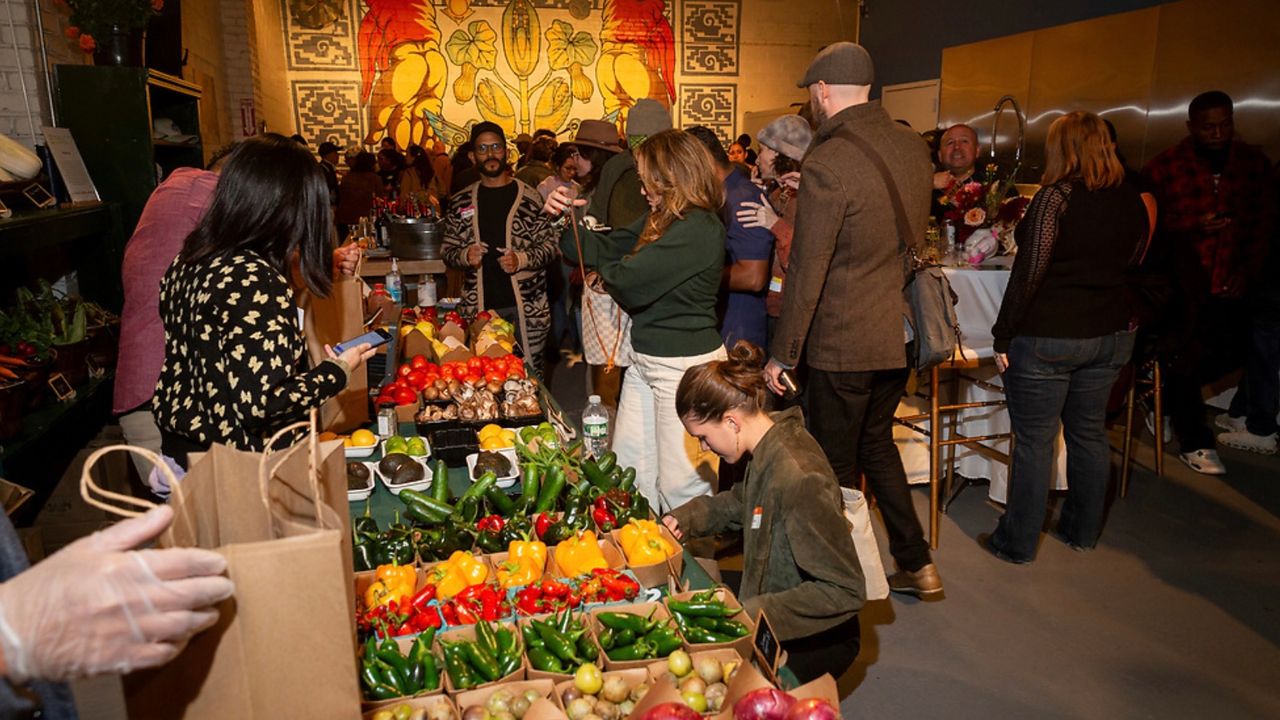
Karina Vasquez Greenberg is the director of communications for Connected Chef, a New York City organization that provides fresh produce on a sliding payment scale to ensure everyone in their neighborhood can afford a healthy meal. During the COVID pandemic, Connected Chef offered meal packages to local Queens families who weren’t eligible for benefits. That Lifeline Grocery Initiative has grown into a full farmers market with a pay-what-you-can model that encourages shoppers to create a new relationship with food, no matter their economic hardships.
Through listening events, Connected Chef asked neighbors what kind of programs would benefit them most and put that into action, building the Lifeline Grocery Initiative into a CSA-style program that delivers “solidarity boxes” of fresh produce to people in need. Listening and constantly changing according to need is a key, Vasquez Greenberg says. “It’s a constant dialogue. [Without listening] it can diminish people’s power of what shows up in their community.”
Likewise, McHenry believes the SNAP cuts are a wake-up call. “The people in charge are out of touch with the human spirit,” he says. “Community is missing. Meeting the people who need the food most removes these barriers.”
Want to Get Involved Locally? Here Are Ways to Build Your Community
Fresh food access is a basic need denied to so many of our neighbors, but there’s work you can do every day to help the organizations and mutual aid groups working on this challenge:
– Locate your neighborhood community fridge or pantry or start one. Food Not Bomb’s McHenry believes hyper-local neighborhood food drives build camaraderie and understanding among neighbors.
– Set up a monthly donation, even a small one. A one-time donation is great, too, but recurring funds make it easier for mutual aid organizations to plan ahead and feed more people.
– Whatever your skillset, there’s a volunteer opportunity for you. Grant writers, box packers, child care, pantry cleaning, and appliance repair are all necessary to getting people fed.
– If you have a car, delivery programs like Meals on Wheels request volunteers to serve hot meals to seniors, deliver meals, or pick up bulk items. You may be the only person these seniors speak to all day; getting to a pantry might not be possible for some people, either for safety reasons, transportation access, or health issues.
– Understand what the organizations you’re donating to actually need. One box of pasta isn’t going to do a food kitchen much good because they cook in bulk, but that would be a great addition to a local pantry. South Philadelphia Community Fridge’s Nolan has memorized a list of foods that are always requested:
Foods in pop-top cans
Flour, olive oil, and things to bake with
Salt and pepper
Coffee and tea are little luxuries
Beans
Ramen noodles
Utensils, food packaging, plastic bags, and cleaning supplies are often overlooked as donations, but pantries and fridges need them to maintain safe, dignified spaces.
“If you’re out shopping, buy a little extra,” suggests Connected Chef’s Vasquez Greenberg. If you like something, chances are other people do too, a great way to begin to understand how to shop for pantries.
Above all, take on a volunteer shift serving food to really get to know what hunger looks like. “Take a good look at your memorable food moments. How would you recreate that for someone else?” Vasquez Greenberg suggests.