Winter doesn’t have to end your composting season. With a few key actions, your compost pile can stay active through the cold months. Source: gardeningknowhow.com.
Harvest Finished Compost
Before winter sets in, remove any finished compost from your pile. Use it as mulch in garden beds to protect soil and retain moisture. Finished compost is typically dark, crumbly, and has a rich, earthy smell. It’s no longer actively breaking down and is ready to be used in your garden.
Give your pile one final turn with a garden fork or a compost aerator tool. This helps aerate the pile, introducing oxygen to the microorganisms that need it to decompose materials. It also distributes moisture and materials more evenly throughout the pile, which helps prevent clumping and ensures consistent microbial activity.
After turning, inspect for wet clumps or large undecomposed pieces. If you notice a sour or rotten smell, it may indicate anaerobic conditions—where oxygen is low and bacteria are producing harmful byproducts. In such cases, add more dry, brown materials like shredded paper, dry leaves, or cardboard to restore balance and improve airflow.
It’s important to note that this final turn should be done before the pile begins to freeze. Once temperatures drop below freezing, turning the pile releases stored heat and can actually slow down the decomposition process. So, this is your last opportunity to adjust the pile’s composition and prepare it for winter.
Build Up the Pile to Retain Heat
Larger compost piles retain heat better than smaller ones. This is because they have more volume relative to their surface area, which reduces heat loss to the cold air. The greater the mass of organic material, the more heat it can generate and retain through microbial activity.
For optimal performance, aim for a pile that is three feet wide, deep, and high. This size helps maintain a warm center during winter, where temperatures can remain above freezing even when the outside air is cold.
Green materials, such as food scraps, provide nitrogen and fuel microbial growth, while brown materials provide carbon and help stabilize the pile. Adding enough dry, coarse material—like shredded paper or dry leaves—absorbs excess moisture and prevents compaction, which could block airflow and slow decomposition.
A long-probe compost thermometer, such as the Vivosun Compost Thermometer, allows you to check the internal temperature without disturbing the pile. This tool helps you verify whether the center remains warm enough to support microbial activity.
Stockpile Brown Materials
Brown materials like dry leaves, twigs, cardboard, and untreated paper are essential for balanced compost. These materials provide carbon, which slows decomposition and helps maintain a stable environment. Carbon-rich materials act as a buffer, preventing the pile from becoming too wet or too fast-moving in decomposition.
Green materials—like kitchen scraps—keep coming throughout winter, but brown materials are harder to find. Stockpiling them now ensures you have a consistent supply to maintain the ideal carbon-to-nitrogen ratio. A balanced ratio is critical because too much nitrogen can lead to rapid decomposition and odors, while too much carbon can slow the process.
Keep a bin or pile of fall yard waste, shredded paper, and cardboard indoors. These materials can be stored in a dry, ventilated space such as a garage or pantry. Use a countertop compost caddy, such as the Oxo Good Grips Easy-Clean Compost Bin, to collect kitchen scraps easily and keep them separate from the compost pile until you’re ready to add them.
It’s also helpful to note that some brown materials, like dry grass clippings, can be added in small amounts if they are not too wet. However, avoid using grass clippings that have been treated with chemicals or fertilizers, as these can harm the microbial ecosystem.
Insulate Your Compost Pile
Surround your compost pile with insulating materials to reduce heat loss. Straw bales or bags of leaves work well as barriers on all sides. These materials act as a thermal buffer, trapping heat and preventing cold air from penetrating the pile.
If you don’t have straw, full-sized bales can be purchased at stores like Tractor Supply. A layer of straw or leaves on top adds extra protection. The insulating layer should be thick enough to create a barrier that minimizes conduction and convection of cold air.
Wood chips and finished compost are also effective insulators. Wood chips, especially those that are dry and coarse, provide excellent thermal resistance. Finished compost, being already decomposed, can be used as a top layer to both insulate and enrich the surface of the pile.
If you have a compost bin or tumbler, wrap it with insulating materials such as burlap, old blankets, or foam wraps. Just ensure you still have easy access to add new materials throughout winter. Avoid sealing the bin completely, as this can trap moisture and prevent airflow.
Protect Your Compost from Rain and Snow
Winter precipitation can saturate a compost pile, leading to compaction and reduced airflow. Moisture can also wash away the valuable nutrients you’re trying to collect. If you have an open compost pile, cover it with a tarp that allows precipitation to run off and away from the compost. A heavy-duty Everbilt tarp from Home Depot is durable and easy to secure.
If you have a bin, keep the lid on. Make sure it has drainage holes and air vents. These prevent the pile from becoming waterlogged or sealed off. Clogged vents or blocked holes can lead to poor airflow and the development of anaerobic conditions, which may result in unpleasant odors and reduced microbial activity.
Never completely seal the pile. Airflow is essential for microbial activity, even in winter. Microorganisms need oxygen to break down organic matter, and without it, decomposition slows or stops entirely. A properly ventilated cover allows moisture to escape while still protecting the pile from snow and rain.

Check Moisture Levels Before Freezing
Moisture balance is critical. The compost should feel damp when squeezed in your hand—without excess moisture running out. This is known as the ‘squeezable’ test: if the material holds moisture and doesn’t drip, it is at the right moisture level.
If it feels too wet, add more dry, brown materials to absorb excess moisture. If it’s too dry, you can add a small amount of water before freezing begins. This helps maintain the ideal environment for microbial activity.
Even in winter, continue to monitor moisture levels. Adjust as needed, especially after rain or snow. A dry pile may seem inactive, but it can still be viable if it’s not too dry. However, a consistently wet pile may become compacted and lose its structure.
Does Compost Actually Break Down in Winter?
Microorganisms in compost remain active as long as the pile doesn’t freeze. Their activity slows in cold weather, but they don’t die. This means that even during winter, decomposition continues at a reduced rate, especially in larger, well-insulated piles.
Larger, well-insulated piles are more likely to stay warm and active. Smaller piles or uninsulated bins tend to lose heat faster and slow down decomposition. For example, a three-foot pile with proper insulation can maintain a stable internal temperature, allowing microbial activity to persist.
For vermicomposting, extra care is needed. Worms require consistent warmth and moisture. Keep the bin indoors where temperature can be controlled. Avoid placing it in cold basements or near exterior walls where temperatures fluctuate.
These steps are effective for all composting methods—open heaps, bins, and tumblers. They help preserve organic material, reduce household waste, and prepare your garden for spring.
Winter composting isn’t just possible—it’s practical. A little preparation now leads to richer soil and a head start on next season’s garden.
- Final turn: Aids aeration and moisture distribution before winter.
- Size matters: A three-foot pile retains heat better than smaller ones.
- Brown materials: Stockpiled for winter use to balance green waste.
- Insulation: Straw, leaves, or wood chips reduce heat loss.
- Moisture checks: Essential to avoid compaction and ensure microbial activity.
For more on compost basics, see our guide on winter composting. Learn about compost types at composting types.
Author Mary Ellen Ellis has over 20 years of gardening experience and holds degrees in Chemistry and Biology. Her work focuses on native plants, herbs, and flowers.
Sources & further reading
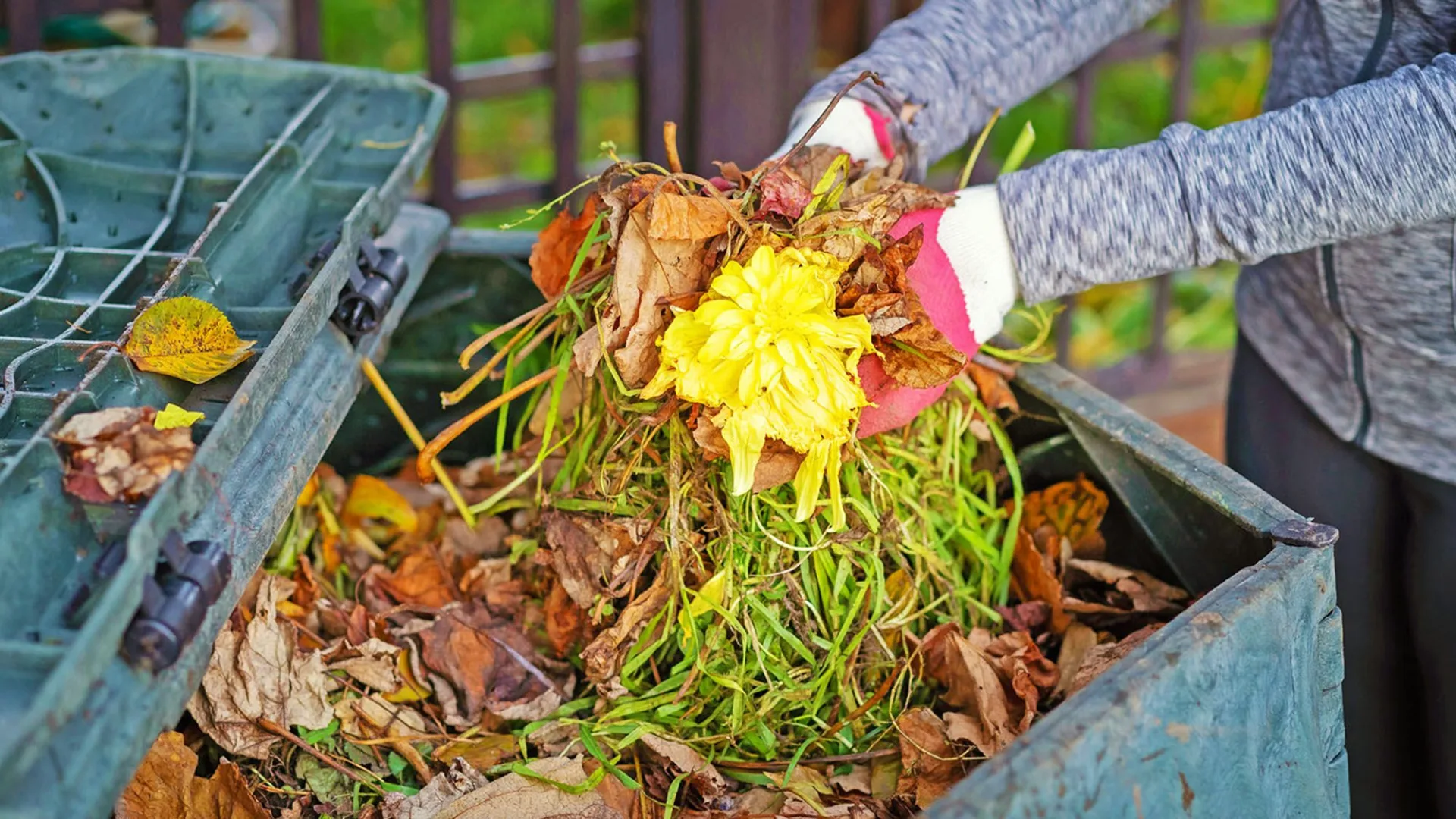
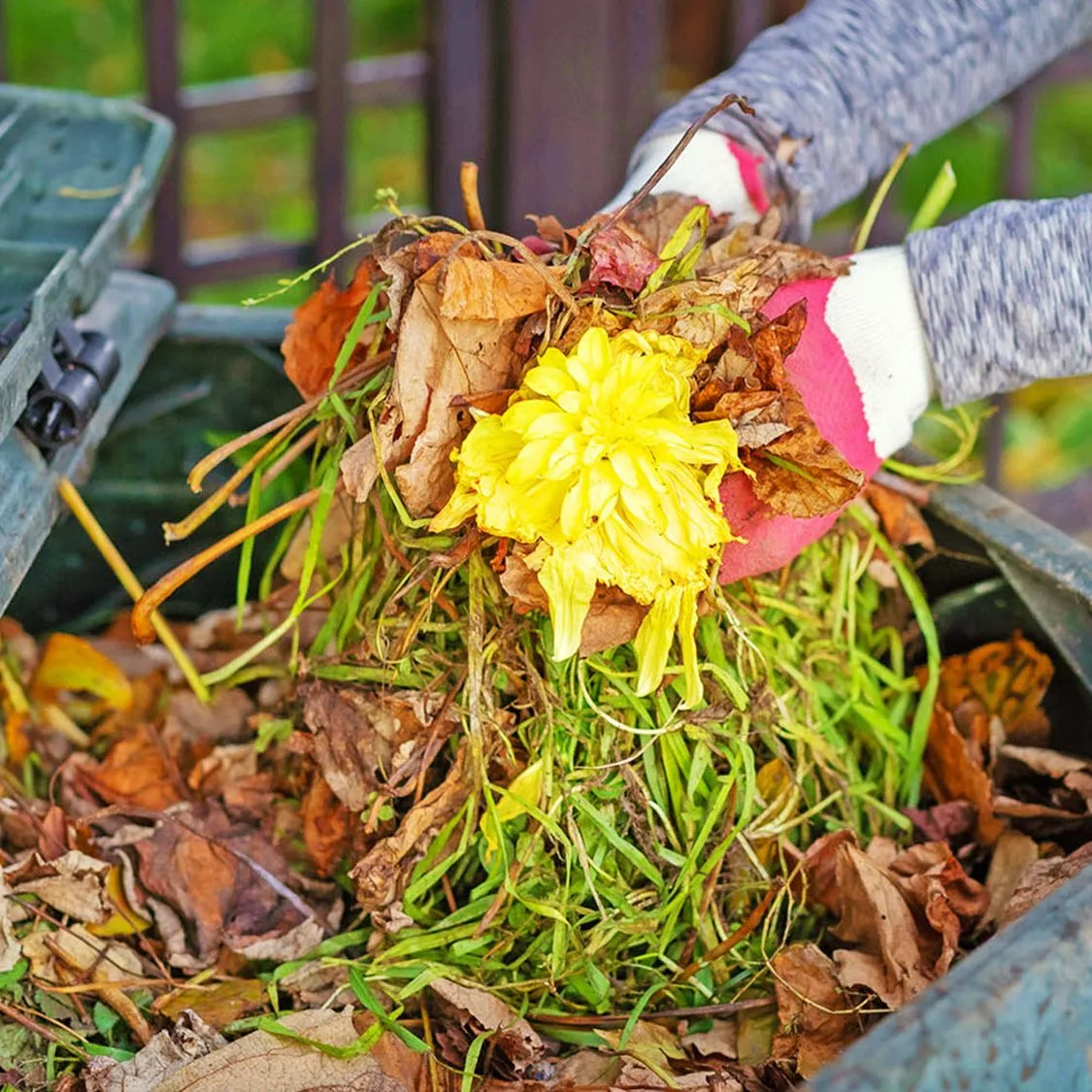
Featured image: Close-up view of a woman throwing garden waste into a compost bin in the garden.. Via original publisher. Image source