When people search for “world war news this week,” they usually do not mean one single global war. They mean the biggest armed conflicts shaping the world right now. In the week from March 15 to March 22, 2026, the main flashpoints were the Russia-Ukraine war, the widening Israel-Iran conflict and its overlap with Gaza and Lebanon, the catastrophic Sudan war, and continuing instability in eastern Congo. Across all of them, one pattern stood out: military escalation kept moving faster than diplomacy, and civilians continued to pay the highest price.
Why the world felt more unstable this week
This was not a week of peace breakthroughs. It was a week of simultaneous pressure points. Ukraine saw continued Russian attacks and damage to power infrastructure while talks with the United States moved forward without a decisive result. In the Middle East, the Iran-Israel war kept spreading economic shock through oil and gas markets, while Gaza remained fragile even as Rafah partially reopened for medical evacuations. Sudan suffered another devastating blow after a hospital strike, and eastern Congo showed how even a diplomatic de-escalation can sit on top of a still-dangerous regional conflict.
Ukraine war this week: what provoked it
In Ukraine, the immediate trigger for this week’s headlines was the continued Russian push along the front and a fresh wave of attacks on civilian areas and infrastructure. Reuters reported on March 16 that Russia’s top general said Russian forces had taken 12 settlements in the first two weeks of March, showing that Moscow was still trying to turn battlefield pressure into negotiating leverage. Ukraine, meanwhile, has continued resisting those advances and insisting it will not surrender disputed territories, especially around the Donbas.
Another reason Ukraine dominated the week’s war news was the contrast between diplomacy and violence. Even while Ukrainian and U.S. negotiators opened a new round of talks in Florida, Russian attacks continued to hit the ground reality. That gap — peace language in one place, missiles and drones in another — remains one of the defining features of this war.
Ukraine war this week: what were the results
The direct result was more civilian suffering and more infrastructure disruption. Reuters reported on March 21 that Russian attacks killed four people and knocked out electricity in Chernihiv, while damage was also reported in southeastern regions including Zaporizhzhia and Dnipropetrovsk. Associated Press separately reported that the renewed attacks came as peace talks were being described as constructive, but without any major breakthrough.
So the result of the week in Ukraine was clear: the war remained active, diplomacy remained incomplete, and ordinary people were still living with blackouts, damaged infrastructure, and the constant risk of attack. That is why Ukraine remained one of the biggest global conflict stories of the week.
Israel-Iran, Gaza and Lebanon: what provoked the Middle East escalation
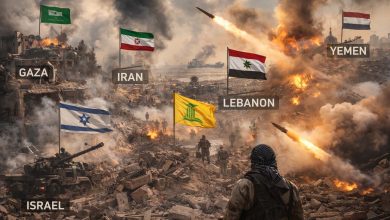
The Middle East was arguably the most globally disruptive war story of the week. Reuters reported that the current Iran war began on February 28, 2026, and by this week its effects were being felt far beyond the battlefield because of its impact on shipping, oil, gas and food systems. One of the biggest triggers was the pressure around the Strait of Hormuz, a route Reuters said carries about 20% of the world’s oil and LNG. Once conflict reaches a corridor that important, the consequences stop being regional and start becoming global.
At the same time, the conflict was no longer limited to Israel and Iran alone. Reuters reported continued strikes linked to Hezbollah in Lebanon, showing how regional alliances were helping turn the confrontation into a wider multi-front crisis. Gaza also remained tied to the same regional instability, because ceasefire and reconstruction efforts were repeatedly being overtaken by broader military developments.
Israel-Iran, Gaza and Lebanon: what were the results
The biggest result was a sharp economic shock layered on top of military escalation. Reuters reported that the war had driven benchmark oil prices above $110 per barrel, with some Middle Eastern crudes nearing $164, while governments in several countries were already moving into emergency energy-saving measures. Reuters described it as the worst energy disruption in history according to the International Energy Agency. That immediately turned the conflict into a story about inflation, fuel costs, shipping and food security, not only missiles and airstrikes.
On the humanitarian side, there was one limited opening in Gaza: Reuters reported that Rafah reopened on March 19 for a small number of wounded Palestinians and family members to cross into Egypt for treatment. But the same report also said violence resumed the very same day, underlining how fragile the truce remained. In other words, the result was not peace. It was partial access, continuing mistrust, and a conflict that still had the power to spread.
Sudan war this week: what provoked the worsening crisis
Sudan remained one of the world’s most devastating wars, even if it received less daily attention than Ukraine or the Middle East. This week’s deterioration was driven by direct attacks on civilian infrastructure and by the knock-on effects of the wider regional crisis. Reuters reported that a strike on Al Deain Teaching Hospital in East Darfur killed at least 64 people and put the facility out of service. AP reported the dead included children and that the hospital was left non-functional.
Sudan’s crisis was also worsened by events outside Sudan. Reuters reported on March 17 that clinics could run out of supplies within weeks because the Middle East war had disrupted shipping routes and airspace, with critical medical goods stalled in Dubai and delivery costs rising sharply. That makes Sudan an example of how one war can intensify another without a single extra soldier crossing the border.
Sudan war this week: what were the results
The result was a deeper humanitarian emergency. A hospital was destroyed as a functioning medical center, civilian casualties climbed again, and the supply situation became more fragile. In practical terms, this means more untreated injuries, less access to care, and a greater risk that preventable illness and trauma deaths will keep rising even away from the front lines.
For search readers looking for the simple truth behind Sudan this week, it is this: the war was provoked by an ongoing armed struggle inside the country, but the week’s worsening conditions were also caused by global disruption. Sudan is no longer only a national tragedy. It is increasingly tied to wider regional instability.
Eastern Congo this week: what provoked tension and what changed
Eastern Congo remained a major conflict zone because fighting around the M23 rebellion and accusations involving Rwanda continued to threaten a broader regional spillover. Reuters reported that the United States had already sanctioned the Rwanda Defence Force and senior officers on March 2, accusing Rwanda of backing M23, which Rwanda denies. That pressure helped set the stage for the week’s diplomatic developments.
The main result this week was diplomatic rather than military. Reuters reported on March 19 that Rwanda and Congo agreed in Washington on coordinated steps to de-escalate tensions and advance peace efforts. That was an important development, but it did not mean the conflict was solved. It meant there was finally movement toward lowering the temperature after a period of dangerous escalation.
What really provoked the world’s biggest conflicts this week
If you step back from the headlines, the week’s wars were provoked by four deeper forces. First, unresolved territorial disputes, especially in Ukraine and eastern Congo. Second, regional power struggles, most obviously in the Middle East. Third, proxy or alliance dynamics, where local conflicts are fed by outside backers or partners. Fourth, the collapse of trust in ceasefires and negotiation frameworks.
That matters because it explains why these wars keep continuing even when peace talks happen. Talks are not enough when the military logic on the ground still rewards pressure, territory, deterrence, or economic disruption. This week showed that clearly. Diplomacy existed, but escalation still had momentum.
What were the real results of the past week’s wars
The military results were mixed and mostly local. The humanitarian results were broad and immediate. Ukraine saw more deaths and power outages. Gaza saw a small medical access opening but no durable calm. The Iran-Israel war caused global energy shock. Sudan suffered a hospital catastrophe and worsening supply shortages. Congo got a diplomatic opening, though not yet a stable peace.
The biggest overall result was that these wars did not stay contained inside their borders. They affected energy prices, shipping, aid logistics, international diplomacy and global risk sentiment. That is why “world war news this week” keeps trending as a search phrase: people can feel that today’s separate wars are producing connected global consequences.
What to watch next week
The next week will likely turn on three questions. Will Ukraine-U.S. talks produce anything more concrete than prisoner exchanges and diplomatic language? Will the Israel-Iran war widen further through shipping routes, Lebanon, or attacks on energy infrastructure? And will Sudan and Congo show real civilian protection measures rather than only reactive statements after violence has already happened? Based on this week’s reporting, all three remain unresolved.
FAQ
Is there a literal world war happening right now?
No. “World war news” is a popular search term, but the more accurate description is a roundup of the world’s biggest current wars and conflict zones. These conflicts are separate, although they increasingly affect one another through economics, diplomacy and regional alliances.
What was the biggest conflict story of the week?
The Middle East conflict centred on Iran and Israel had the widest global effect this week because it was tied directly to oil, gas and shipping disruption through the Strait of Hormuz.
Why was Ukraine still one of the top war stories this week?
Because Russian strikes continued to kill civilians and damage energy infrastructure even while fresh diplomatic talks with the U.S. were underway.
Why was Sudan so important this week?
Because the strike on a major hospital and the warning about near-term medical stock-outs showed how far the humanitarian crisis has deepened.
Did any conflict move closer to peace?
Eastern Congo showed the clearest diplomatic movement this week, with Rwanda and Congo agreeing on steps to de-escalate tensions in Washington. Ukraine also saw talks continue, but without a breakthrough.