Watermelon, cantaloupe, and honeydew are easy to find at grocery stores year-round. But during summer, farmers markets and roadside stands start filling up with other types of melons—varieties with floral aromas, honey-sweet flesh, and textures that range from crisp and refreshing to soft and almost custardy. Many belong to the muskmelon family, which also includes cantaloupe and honeydew, though each one has its own distinct flavor and personality.
Some are perfect for eating ice-cold in thick wedges over the kitchen sink; others pair especially well with salty cheese, cured meat, fresh herbs, chiles, or citrus. And while all of them make excellent snacks, most can also be swapped into recipes calling for cantaloupe or honeydew. Here are a few of our favorite melon varieties to hunt down this summer.
Charentais Melon

Also known as: Cavaillon melon, French cantaloupe
Honeyed, tender Charentais is a small, spherical melon with greenish-gray ribbing, slight netting (like a cantaloupe with stripes), and deep orange flesh. It’s sometimes called a “true cantaloupe” since the American cantaloupe is closely related, but actually different type of muskmelon. The flavor is floral with warm spice notes, and intensely fragrant when fully ripe.
Try it: Go sweet with granita or savory with a chilled summer soup.


Canary Melon

Also known as: Spanish melon
Named for its bright yellow skin, this football-shaped melon is sugary, lightly tangy, and subtly tropical in taste. Its ripe flesh is pale green, with a texture often compared to a ripe pear. Canary melon is especially good in cold soups and salads, particularly when paired with herbs like basil, mint, and cilantro.
Try it: Swap out the honeydew in this salad of crisp shaved fennel, chile flakes, and torn fresh basil.

If you have a perfectly ripe melon—great! If you don’t, no worries. The salt, acid, and a bit of heat here will give life to lackluster specimens.
Galia Melon

Also known as: Sarda
A cantaloupe-honeydew hybrid with aromatic pale green flesh and yellow-orange, netted skin. It bears the best attributes of its parents, with a honeyed, warm-spiced flavor and a succulent, juicy texture. This one is extra delicious served chilled with just a sprinkling of sea salt.
Try it: In a salad with sweet summer tomatoes, crisp cucumbers, and creamy burrata cheese.

The flesh immediately surround-ing the seeds is the most succulent part of any melon; if you haven’t tried eating the crunchy seeds before, hold on to your hat.
Casaba Melon

This wrinkly, acorn-shaped melon has bright yellow skin with deep ridges running all the way around. Its flavor is refreshing and subtly sweet, more reminiscent of cucumber than floral muskmelons, and its flesh stays pleasantly crisp even when ripe. Because it’s especially juicy, Casaba works particularly well in puréed soups and smoothies.
Try it: In this bold take on gazpacho that’s spiked with kimchi.

Let this sweet n’ spicy gazpacho take your tastebuds on a ride with notes of tangy kimchi and fruitiness of summer melons.
Crenshaw Melon

Illustration by Grace Chen
Also known as: Cranshaw melon
This cross between the Casaba and Persian melons comes in both white and green varieties. The green version resembles a medium watermelon, while the paler white variety has a faint yellow cast. At peak ripeness, the salmon-colored flesh is buttery, floral, exceptionally juicy, and just a little peppery. Use it anywhere you’d use cantaloupe.
Try it: In a salty salad with fresh jalapeños and briny feta cheese.

A simple combination of shallots, chile, and loads of acid, fat, and salt transforms any mediocre melon into something juicy and joy-inducing. Feta helps too.
Persian Melon

Also known as: Odessa melon
This particularly fragrant melon is a close relative of cantaloupe. Some people may find its aroma a little musky, but the stronger the scent, the sweeter the pale orange flesh is likely to be. Persian melons can grow quite large—up to 10 pounds—though smaller ones are common too. Look for melons with tan skin and pronounced fragrance; if the rind is too green, the flavor likely hasn’t fully developed yet.
Try it: In a savory-sweet salad based on Chinese smashed cucumbers.

Inspired by traditional Chinese smashed cucumber salad, this sweet and salty version features crunchy Hami melon.
Sprite Melon

This petite (about the size of a grapefruit), smooth-skinned melon is Japanese in origin, but has been considered a specialty crop in North Carolina for almost half a century. It resembles a miniature honeydew, with skin that ranges from pale green to pearlescent white. That rind also develops brown markings known as “sugar cracks” at the blossom end as it ripens. The uniquely crisp, apple-like flesh has notes of honeydew, watermelon, and pear. Because of that unique texture, it’s particularly suitable for chopping and tossing into salsas, chutneys, and other relishes.
Try it: Swapped for the watermelon in an Italian-inspired salad with prosciutto, almonds, and an orange vinaigrette.

Watermelon and prosciutto may seem like an unlikely pair, but the salty-sweet mix will make this your new go-to fruit salad.
Santa Claus Melon

Also known as: Christmas melon, Toad Skin melon
This football-shaped melon has a late harvest and is often available into December. Its dark green skin is streaked and mottled like a watermelon rind; as it ripens, the skin turns more yellow while the flesh becomes sweeter and juicier. The flavor is mild and refreshing, while the texture falls somewhere between ripe honeydew and crisp pear. Since the thick rind traps its aroma, look for heavy melons rather than fragrant ones. Serve at room temperature alongside cured meats and cheeses.
Try it: Dressed in a gingery Vietnamese-inspired dressing with cucumbers and peanuts.

Just the side your barbecue ribs are looking for, this all-green salad gets a kick from serrano, ginger, and just a hint of fish sauce.
Sharlyn Melon

Also known as: Ananas melons, Pineapple melons
This netted melon resembles an oblong cantaloupe on the outside and transitions from a dark green to golden yellow skin as it ripens. The flesh is a creamy green color but may feature a brighter orange ring around the seed cavity. This is a highly perishable variety with a floral, tropical flavor—almost like a combination of honeydew and cantaloupe, but subtler—so use it quickly after buying. It’s excellent with tangy ingredients like yogurt or for balancing spicy dishes.
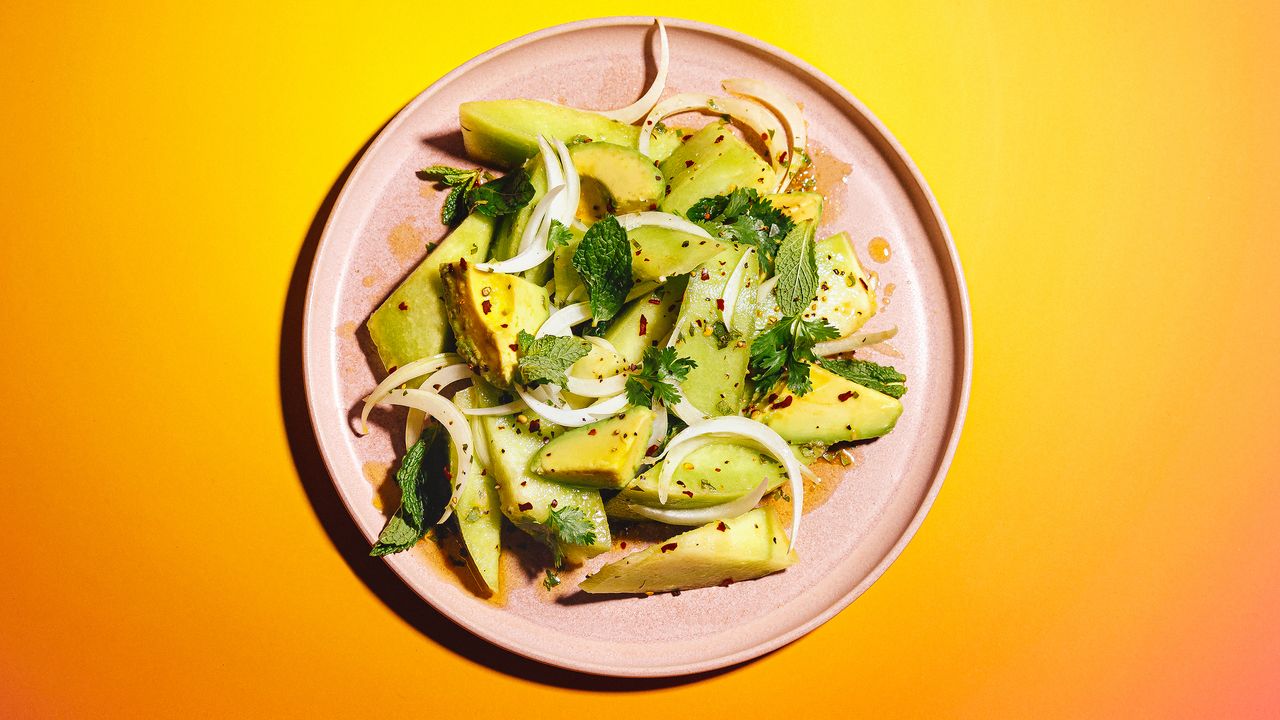
Try it: In a chile-flecked crudo with crisp white onion, anchovy, and avocado.

No seafood? No problem. This summery fruit “crudo” hits all the right notes of bright, savory, sweet, and umami in one vibrant dish.
How to tell if a melon is ripe →
The best summer melons smell sweet and floral, feel heavy for their size, and give slightly at the blossom end. Whether you’re shopping for Charentais, Canary, or Crenshaw melons, many of the same clues apply: Skip melons with mushy spots or little aroma—though, as noted above, a few thick-rinded varieties are less fragrant even when ripe. You can also look for a pale spot, where the melon touched the ground while being allowed to fully ripen on the vine.
Read our full guide to picking a perfectly ripe cantaloupe before your next market haul.
Melon seeds are completely edible, though most people scoop them out before eating. Like pumpkin seeds, they can be rinsed, seasoned, and roasted for a crunchy snack, or blended with their membranes to make a horchata-like drink, then strained.