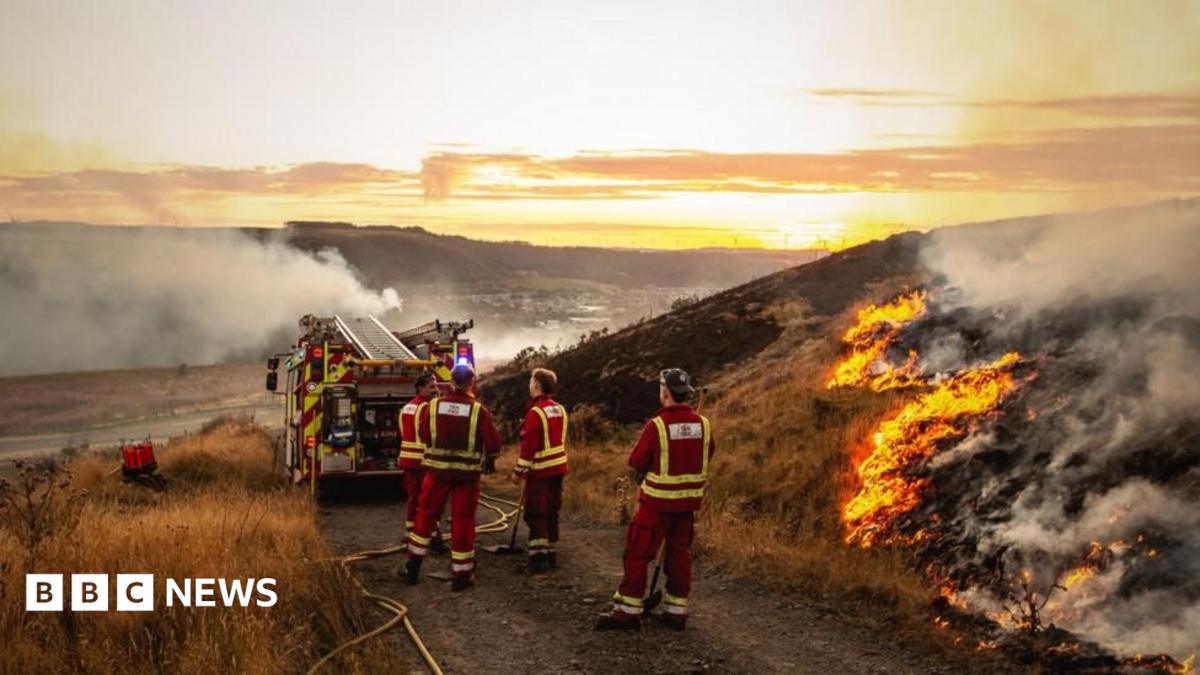
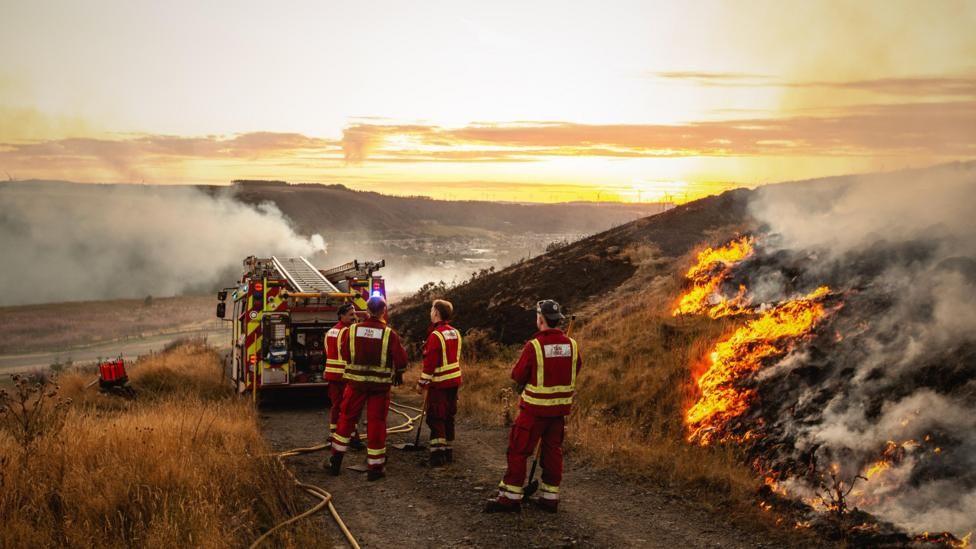
Firefighters in Wales say they were repeatedly put at risk during summer wildfires due to chronic underfunding, inadequate equipment, and a lack of preparedness — a situation that left both frontline crews and the public exposed. Source: bbc.co.uk.
What Happened
This summer’s wildfire season in Wales reached unprecedented levels. Firefighters in South and Mid Wales reported being overwhelmed by the scale, intensity, and frequency of the fires.
In north Wales, crews managed six wildfires at once — more than ever before. This level of activity stretched emergency resources beyond their limits.
The South Wales Fire and Rescue Service control centre recorded nearly 2,000 calls on one day. Staff worked through the night and into the next day with little rest.
Crews saw category three wildfires — the most severe — in every direction. These fires spread quickly, linked by dry conditions and high winds. They created a cascading effect that overwhelmed response capacity.
On the Ground: Injuries and Inadequate Kit
Sean Cayford, a firefighter in Bridgend, said crews were told in mid-August there were no pumps or fire appliances across the entire region. He called the revelation ‘startling’ and said it repeated during later parts of the season.
At a Tredegar mountain incident, crews saw six to seven category three fires in all directions. Despite help from other UK fire brigades, support was still insufficient.
Firefighters used boots and clothing meant for house fires — not for outdoor, high-heat, high-wind conditions. These items are not breathable and offer little protection.
One firefighter said, ‘We were wearing gear meant for a house fire, not for a wildfire. It’s like trying to fight a storm with a kitchen towel.’
Lower limb injuries and heat illness were common. Many firefighters still can’t return to full duty. The physical toll is worsened by mental strain from repeated trauma.
At the Control Centre: Mental and Physical Strain
Gemma Thomas, a control centre operator, said the psychological toll was immense. The control room is the first point of contact for people in crisis — often terrified or disoriented.
On peak days, staff couldn’t respond to all incident requests. To manage stress, some took breaks of just ten minutes — a brief relief for only a few.
Many staff left work mentally shattered. They couldn’t process the day’s events. There was no work-life balance. Free time was used for rest, not leisure.
Despite the pressure, Gema said team support was strong. Both control staff and on-the-ground firefighters showed empathy and understanding.
Key Facts and Concerns
- Firefighters reported a shortage of equipment, including boots and breathable layers.
- 69% of firefighters in a Fire Brigades Union (FBU) survey said they felt significantly under-equipped.
- Only 8% said they felt fully equipped.
- Nearly half reported welfare facilities during deployments were insufficient.
- The FBU claims there is a shortfall of 400 firefighters in Wales.
- Specialist crews, such as water teams, were redirected to wildfires, leaving no backup in some areas.
- At one point, there was zero crew back-up for vast parts of south Wales.
Government Response and Accountability
The Welsh government has acknowledged the concerns. It does not provide core funding but says it recognises the severity of the situation.
It says fire and rescue authorities must now consider this summer’s events when setting budgets and staffing.
Executive council member Gareth Tovey said poor preparation was evident. Water teams were redirected to fires. At times, no crew was available to respond.
He said, ‘We redirected water teams to the fires, and in some areas, there was no crew to respond when the next call came. That’s not just a failure of planning — it’s a failure of responsibility.’
He added that the military can assist with logistics but lacks firefighting training and equipment. ‘The army can help with logistics, but they can’t fight a wildfire like a trained firefighter,’ he said.
What’s Next
First Minister Rhun ap Iorwerth is hosting a climate change and resilience summit in Merthyr Tydfil. It will bring together fire services, police, local government, farmers, and climate organisations.
South Wales Fire and Rescue Service is engaging with unions to discuss needed investment. It will be a key voice at the summit.
Mid and West Wales Fire and Rescue Service’s chief fire officer, Craig Flanney, said climate-related emergencies are already affecting communities, the environment, and public services. ‘We’re not just responding to fires anymore,’ he said. ‘We’re responding to a climate emergency that’s changing how we operate every day.’
Broader Context and Recommendations
A new report from the UK’s Environment, Food and Rural Affairs Committee found firefighters worked in extreme conditions. They had limited gear, rest, and support. The report found serious weaknesses in the UK’s wildfire resilience and preparedness.
It recommends a UK government-funded national wildfire prevention campaign with clear messaging. It also calls for wildfire risk indicators in weather forecasts.
North Wales Fire and Rescue Service is applying for emergency assistance to cover £500,000 in wildfire-related costs. This highlights growing financial strain on fire services.
The situation shows a systemic issue: fire services are underfunded, under-resourced, and operating beyond capacity. While the Welsh government says it supports action, urgent, coordinated investment is needed.
Firefighters say they are not just fighting fires — they are responding to a growing climate emergency with limited tools and support. Without immediate action, public safety and firefighter wellbeing remain at serious risk.
Sources & further reading
Featured image: Firefighters stand behind a truck on a mountain, with fire and smoke visible.. Via original publisher. Image source