Natalia Kopiszka, a Polish jewelry designer, created her own wedding dress for her 2026 ceremony in Poland. She couldn’t find a vintage-inspired dress that met her vision, so she designed one from scratch. This personal journey reflects a growing trend in modern weddings—where individuals increasingly turn to self-created or custom-designed garments to express authenticity and individuality. Source: vogue.com.
Designing a Dream Dress from Scratch
Natalia first visited Paris to shop for a vintage wedding dress. She returned empty-handed. She said she didn’t find anything that matched her aesthetic. The experience highlighted how difficult it is to source authentic, high-quality vintage materials in major fashion hubs, especially when seeking specific textures and sheens.
She then turned to fabric sourcing. She searched local shops and silk wholesalers in Warsaw without success. Her search led her to a New York-based seller on Etsy. She ordered the silk taffeta immediately. The fabric’s delicate, subtle sheen was a key factor in her decision—its visual quality matched the soft, romantic tone she wanted in her wedding attire.
When she received the fabric, it exceeded her expectations. It had a delicate, subtle sheen that matched her vision perfectly. This moment underscores how online marketplaces are now vital for artisans and designers seeking rare or specialized materials not available locally.
Antique Lace for the Bodice
During a weekend trip to Amsterdam, Natalia visited a vintage store. There, she found a small piece of 20th-century lace—rare and authentic. The lace had been preserved in a dry, climate-controlled environment, which helped maintain its original texture and color integrity.
She used this lace to detail the bodice of her dress. The piece was just large enough to trim the front. It fulfilled the traditional wedding ritual of ‘something old’—a meaningful nod to heritage and continuity. The selection of such a rare material demonstrates how personal history and cultural traditions can be woven into modern design.
Natalia sketched her design and shared it with a dressmaker who sewed it into a finished garment, blending vintage and modern elements. The process required precision and patience, especially in handling fragile vintage textiles that needed careful handling to avoid damage.
How the Couple Met and Built a Relationship
Natalia and her future husband, actor Aleksander ‘Olek’ Kaleta, first met in February 2021 at a house party in Warsaw. They instantly connected. Natalia recalls locking eyes with Olek as he walked in. He started the conversation, and they began seeing each other daily after that.
After a year of dating, they moved in together in Warsaw. In 2024, Olek proposed during a trip to Polignano a Mare, Italy. It was a moonlit evening. Natalia says she didn’t expect it. They both laughed, remembering the surprise. The proposal took place on a quiet coastal path, where the sea breeze carried the scent of salt and wildflowers, adding to the romantic atmosphere.
Wedding at Pałac Pstrokonie
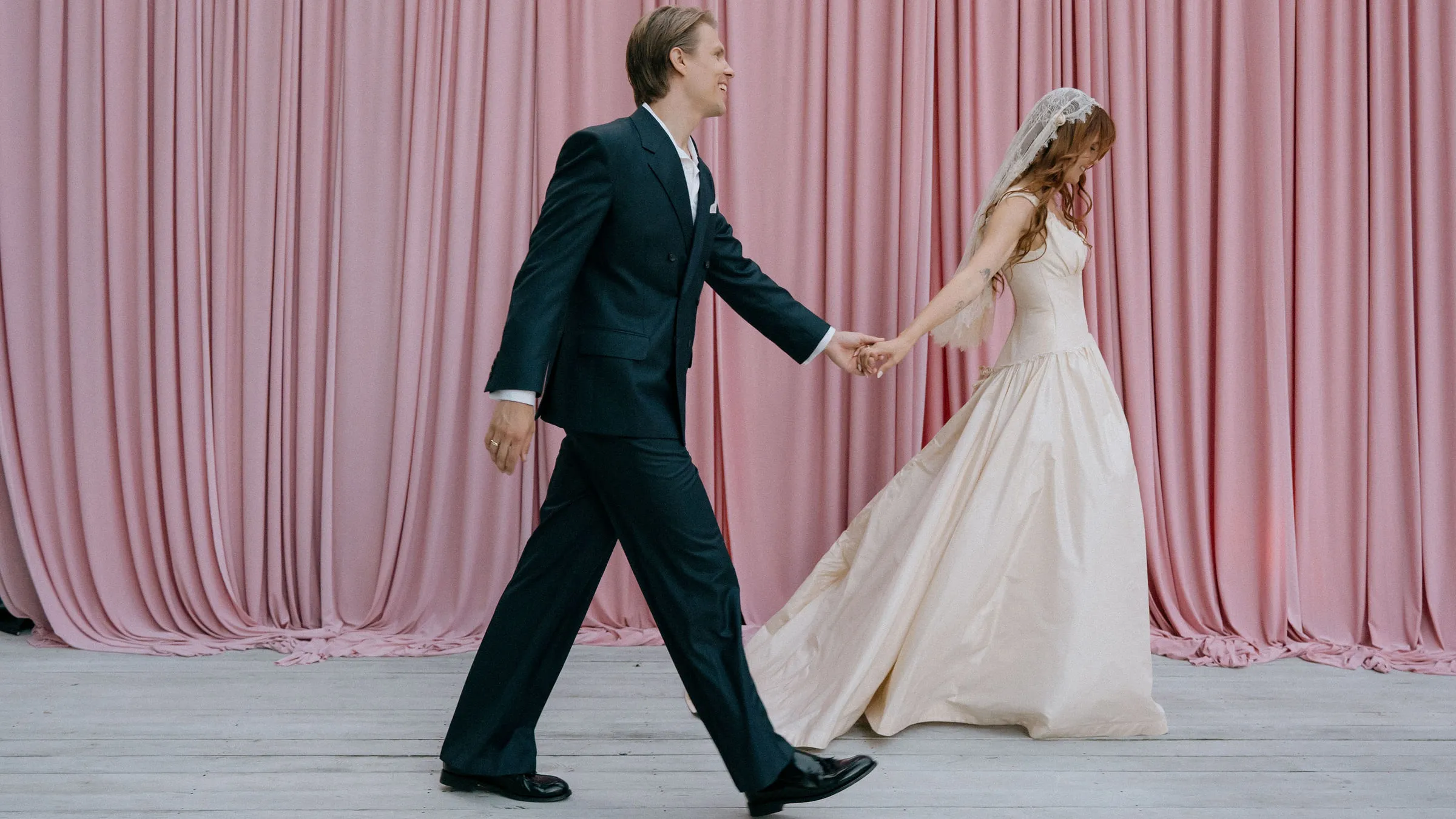
The wedding took place on August 8, 2026, at Pałac Pstrokonie—a 19th-century palace outside Warsaw. The venue itself offered a rich historical backdrop, with ornate arches and grand halls that echoed the elegance of bygone eras.
Natalia worked with wedding planner Kasia Fastyn to bring her vision to life. Fastyn emphasized the importance of storytelling in event design—ensuring every element, from floral arrangements to lighting, contributed to a narrative of romance and personal significance. The event studio MyBigDay designed the floral arrangements and draped the dancing tent in pink fabric, creating a whimsical, romantic ambiance.
Personal Touches in Accessories
Natalia, a jewelry designer, paid close attention to every detail. She rejected a traditional floral bouquet. Instead, she chose a silk bag shaped like a bouquet from New York designer Camille Albertine. She found the designer’s work on Instagram. Albertine custom-made the bag in the same silk as her dress. The bag is now a wearable accessory, usable in daily life, reflecting Natalia’s philosophy of design as both functional and meaningful.
At the reception, Natalia wore a silk dress by Polish designer Magda Butrym. She paired it with a crochet veil cap made by her sister. The cap was bedazzled with gold-plated charms and Swarovski crystals. Each charm had a lobster clasp, allowing users to clip them to the crochet work. The design reflects Natalia’s signature style—combining historical inspiration with modern craftsmanship.
The cap also included blue stones—honoring the tradition of ‘something blue’ in weddings. This design is now available as part of Kopi’s ‘I Do’ bridal line, offering other women a way to incorporate personal, meaningful elements into their own wedding attire.
Matching Elements and Jewelry
Natalia made Olek a pocket square using the same vintage lace as her dress. This gave him a piece of ‘something old’—a meaningful match. The gesture symbolized mutual commitment and shared values, reinforcing the emotional depth of their relationship.
They both wore wedding bands designed by Natalia. Her ring has a retro feel, crafted in gold with 12 small diamonds. Olek chose a simple, wide gold band with her nickname engraved inside. The design of their rings reflects a balance between personal expression and timeless elegance.
After the wedding, Natalia reflected: ‘Everything was perfect.’ The story highlights how personal craftsmanship and tradition can merge in a modern wedding. It also shows how design expertise can extend beyond jewelry to full wardrobe creation, offering a model for how individuals can craft deeply personal, meaningful experiences in their most important life events.
Sources & further reading
Featured image: original publisher image. Via original publisher. Image source