TVs have long dominated living rooms, often taking up half a wall. But a growing trend is redefining how these spaces are designed — not to highlight technology, but to elevate art and aesthetics. In recent years, interior designers have begun to view televisions not as essential appliances, but as visual intrusions that disrupt the harmony of a thoughtfully curated space. This shift reflects a broader movement in design toward intentional, human-centered environments where form and function are balanced with emotional well-being. Source: livingetc.com.
Why Hide a TV?
Interior designers increasingly see TVs as visual clutter. They disrupt the balance of a room’s design, especially when framed by neutral walls or minimalist decor. A large, black screen standing out against a clean wall can feel jarring, especially in homes designed with a focus on elegance, calm, or sophistication.
Phoebe Hollond of Studio Hollond says TVs are ‘ugly’ and not something you should have on your walls. She argues that art should be the centerpiece, not a functional object disguised as decoration. Her perspective is grounded in a long-standing belief that design should serve the emotional and sensory experience of a space — not merely fulfill utility.
This idea is not new. Designers have long used art to set the tone of a space. Wall art influences how a room feels — more than furniture or paint. Hiding a TV with art turns a practical need into a design statement. It transforms a utilitarian object into a narrative element, allowing the space to tell a story about the homeowner’s tastes, values, and lifestyle.
How Split Artworks Work
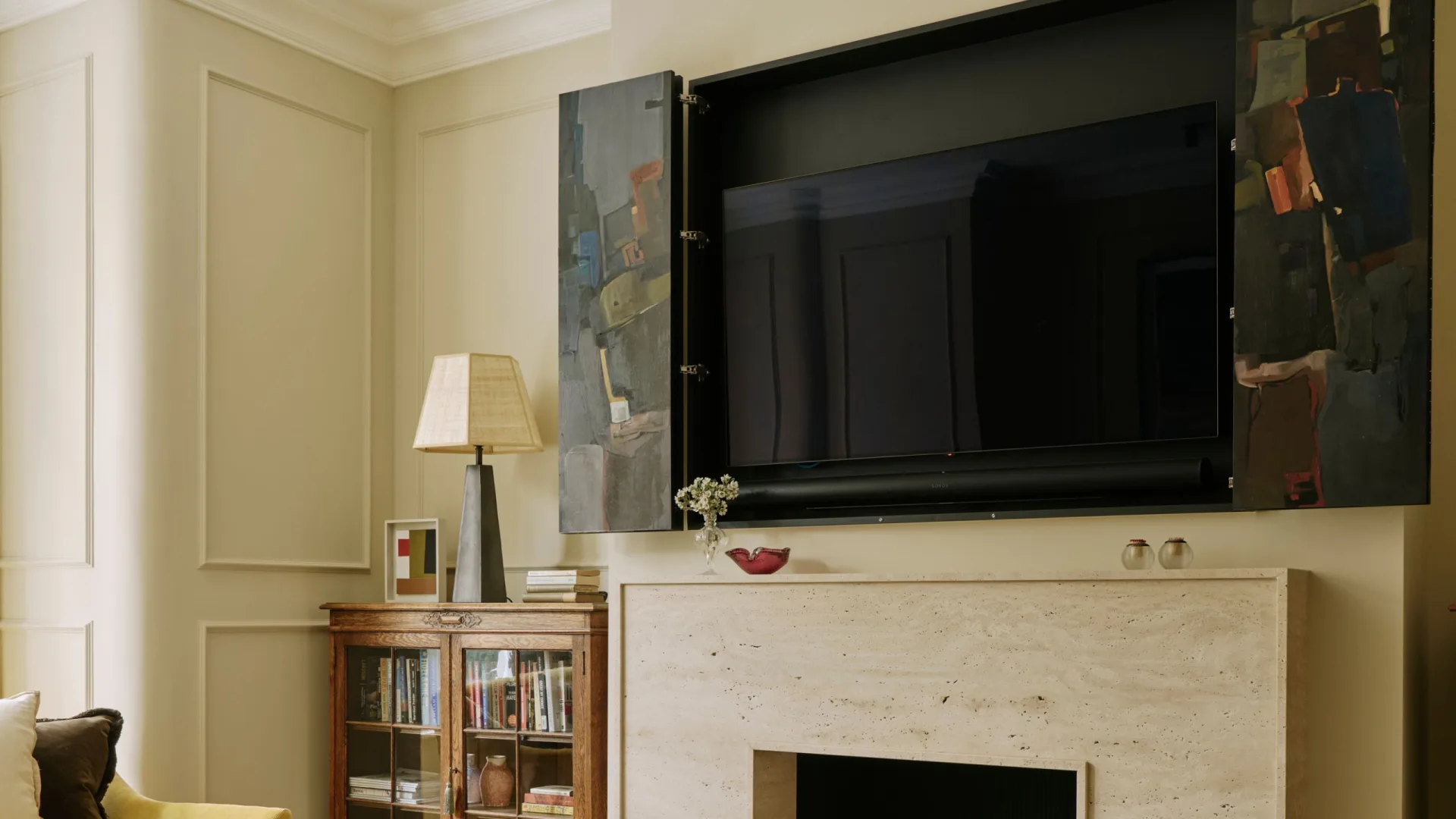
Split artworks are diptych or multi-panel pieces that appear as a single, cohesive piece when closed. These are typically constructed with two or more panels that hinge at the center or along a seam, allowing them to open and close like a book or a stage curtain.
When the panels are closed, the TV is fully hidden. When opened, the panels pull apart, revealing the screen. The mechanism is usually built into a frame or cabinet structure, with hinges and a robust joint that ensures smooth movement and durability over time.
These designs are not just about concealment. They add drama, movement, and a sense of interactivity to a room. The act of opening and closing feels theatrical — like a stage curtain. This subtle gesture creates a ritual, a moment of pause where the viewer decides whether to engage with the screen or step back into the atmosphere of the room.
Designers’ Personal Inspirations
Phoebe Hollond was inspired by her passion for astrology. She chose a 1730 celestial map of the southern hemisphere, which shows fixed star positions relative to the ecliptic. This historical print is not only visually striking but also deeply symbolic — it evokes a sense of timelessness and cosmic order.
She split the print in half, using each panel as one side of the diptych. The artwork remains visually striking when closed, and the TV is revealed only when needed. For Phoebe, this design reflects her personal interest in the universe and the idea that homes should reflect the depth of human curiosity.
Designers like Natasha Lyon take a more collaborative approach. She worked with Parisian artist Andrea Mongenie to create eight bespoke artworks. This collaboration was born from a shared design philosophy — one that values color, texture, and emotional resonance over mere form.
NaTasha says they shared design mood boards and room concepts. She asked Andrea to ‘be free and create something unique’ — emphasizing creative freedom over strict direction. This approach allowed the artwork to evolve organically, resulting in a dynamic piece with dark reds and flowing compositions.
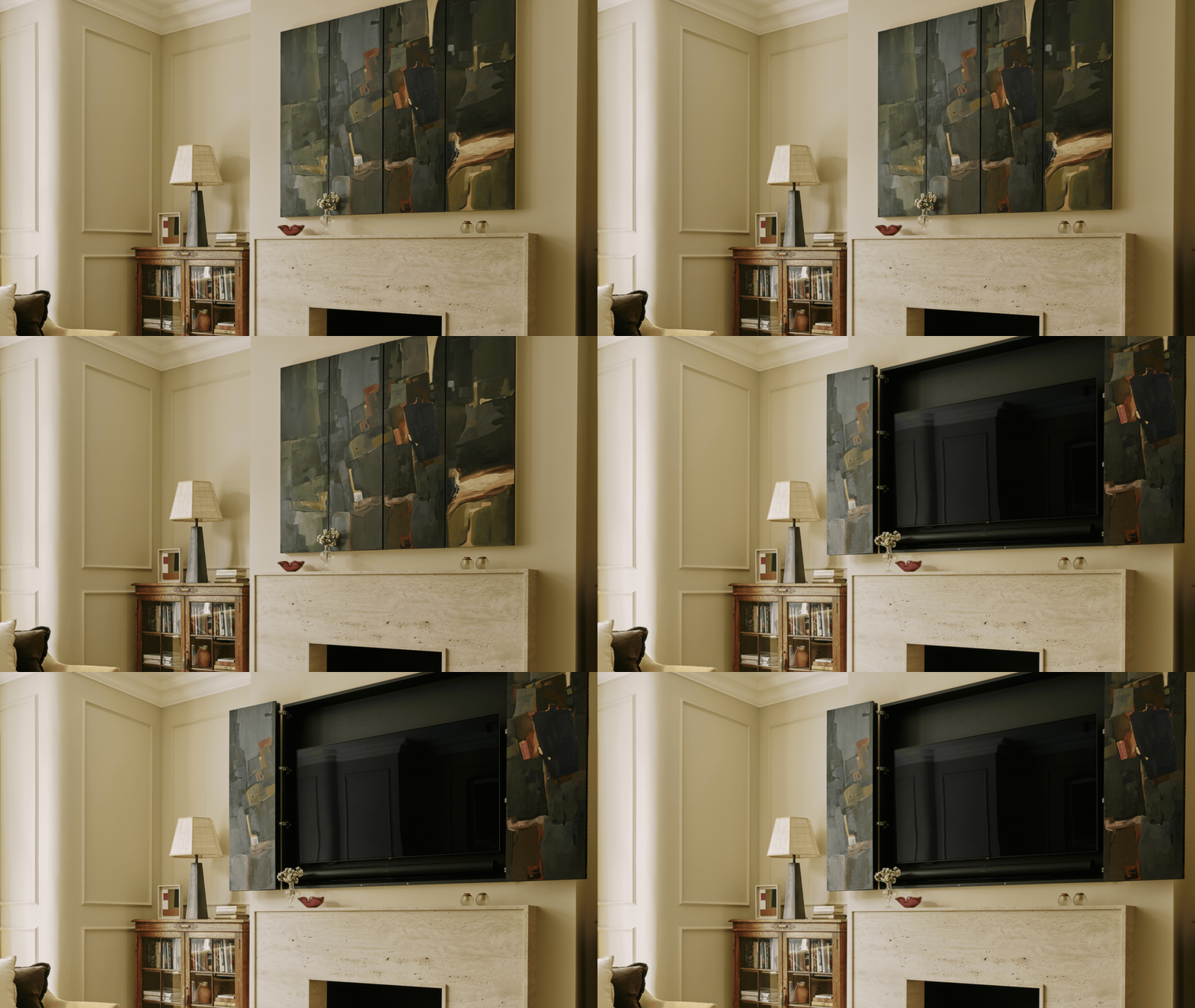
The result is a dynamic piece that complements a tiled fireplace and adds movement to the space. The artwork doesn’t just cover the TV — it becomes a focal point, engaging the viewer through its visual rhythm and emotional tone.
Practical Alternatives to Bespoke Art
Not everyone can afford custom art. Designers offer cost-effective alternatives that still deliver a striking aesthetic.
- Wallpaper: Phoebe recommends buying wallpaper and having a builder apply it to a custom joinery panel. This keeps costs low while maintaining visual impact. The wallpaper can be selected to match existing room themes — such as mid-century modern, bohemian, or minimalist — ensuring continuity with the overall design.
- Vintage pieces: Natasha suggests sourcing vintage art. These offer unique character without the high price of new commissions. A 1950s abstract print or a 19th-century botanical illustration can add historical depth and authenticity to a room. Vintage art also carries a sense of provenance and narrative, making it a more meaningful choice than modern reproductions.
These options allow homeowners to achieve a similar aesthetic without significant investment. They also provide flexibility — the homeowner can choose themes, styles, or colors that align with their personal taste or interior goals.
Installation Is Key
Designers stress that proper installation is essential. A poorly executed setup can compromise both function and appearance.
Phoebe emphasizes that doors must bi-fold so the TV is fully visible when open and completely covered when closed. This ensures that the artwork functions as intended — not just as a cover, but as a seamless part of the room’s design.
NaTasha highlights the importance of hiring a skilled joiner. A poorly installed piece can result in uneven panels, misaligned hinges, or gaps that expose the TV. These flaws not only undermine the visual effect but can also lead to long-term wear or damage.
Without proper mechanics, the artwork may not open smoothly or may leave gaps that expose the TV. A well-installed piece ensures that the transition between art and technology is both elegant and reliable.
Why This Matters
Split artworks reflect a broader shift in design philosophy — one that values wellness and mental health. In an age of constant digital stimulation, homes are being reimagined as spaces of calm and presence.
NaTasha notes that modern life is stressful. She wants homes to offer moments of calm. Hiding a TV allows people to ‘shut out the noise and distractions’ — a design solution rooted in mental well-being. The act of pulling apart the artwork becomes a deliberate pause, a moment of intentionality.
TVs can be distracting. They pull attention into endless content loops. A split artwork offers a temporary escape — a space where the viewer can choose when to engage with screens. This design choice supports a return to analog living, even if only for a few hours each day.
Other TV Hiding Methods
Not all solutions rely on art. Some designers use furniture with automated lifts. These are typically built into media cabinets or built-in shelves, with a button or remote that triggers the TV to rise and fall.
Phoebe has designed pieces with lift buttons that allow the TV to rise and fall. These are more practical, focusing on function over aesthetics. They are ideal for homes where TV use is frequent or where space is limited.
Others use sliding media units or tapestry wall hangings. These cover the TV but don’t offer the same visual drama as a pull-apart design. While single panels or tapestries can work, the pull-apart format feels more intentional and expressive — it invites interaction and creates a sense of narrative.
When to Use This Design
Split artworks are especially effective during hosting seasons — like Christmas or holidays. They allow a home to appear curated and elegant when guests are present. When the TV is hidden, the room looks intentional and art-forward.
After guests leave, the TV can be revealed — a quiet moment of personal entertainment. This duality — a space that appears sophisticated to others and feels personal to the owner — is one of the most compelling aspects of this design trend.
Limitations and Considerations
Not every home is suited for this design. It requires space — a wall with enough depth to hold two panels. It also needs a reliable hinge and frame to ensure smooth movement.
Homeowners must consider how often they watch TV. If viewing is frequent, the artwork may need to open regularly — which could affect the room’s appearance. In such cases, a more practical solution like a media cabinet might be preferable.
There’s no guarantee the design will be universally appealing. Some may see it as gimmicky or overly theatrical. However, for those who value aesthetics and mental well-being, it offers a meaningful balance between function and form.
For more ideas on modern living room design, see our modern living room ideas guide.
Explore how to hide your TV with other creative solutions at ways to hide your tv.
Learn more about Studio Hollond’s work at Studio Hollond.
Sources & further reading
Featured image: blank — (Image credit: Christopher Horwood. Design: Studio Squire ). Via original publisher. Image source