A TikTok trend can start as a joke, a sound, a “POV,” or a niche micro-community—then suddenly it’s everywhere. The surprising part isn’t the virality. It’s how often that momentum turns into actual revenue: products selling out, small brands scaling overnight, creators building steady income streams, and even big retailers treating TikTok like a serious sales channel.
This isn’t “get rich quick.” Most wins come from doing a few boring things extremely well: clarity, speed, proof, and repeatability.
Below is a practical, creator-and-small-brand-friendly breakdown of how the money actually happens, plus a playbook you can copy.
What “trend → money” really looks like (the 3-stage path)
1) Attention (the meme phase)
- A sound/format spreads because it’s easy to remix.
- People copy the structure: hook → punchline → reveal.
2) Intent (the “wait… I need that” phase)
- Viewers start asking questions:
- “Where did you get it?”
- “Does it work?”
- “Can you link it?”
- Search and saved videos rise (this is where buying behaviour starts).
3) Conversion (the “add to cart” phase)
Monetization happens through:
- TikTok Shop + LIVE shopping
- Affiliate commissions
- Creator rewards programs
- Brand partnerships
- Digital products/services
In the UK, TikTok Shop has become a major channel, with reporting indicating 200,000+ small and medium businesses using it—alongside large retailers.
6 real ways TikTok trends become money (with examples)
1) TikTok Shop: in-app buying (the fastest path from trend to checkout)
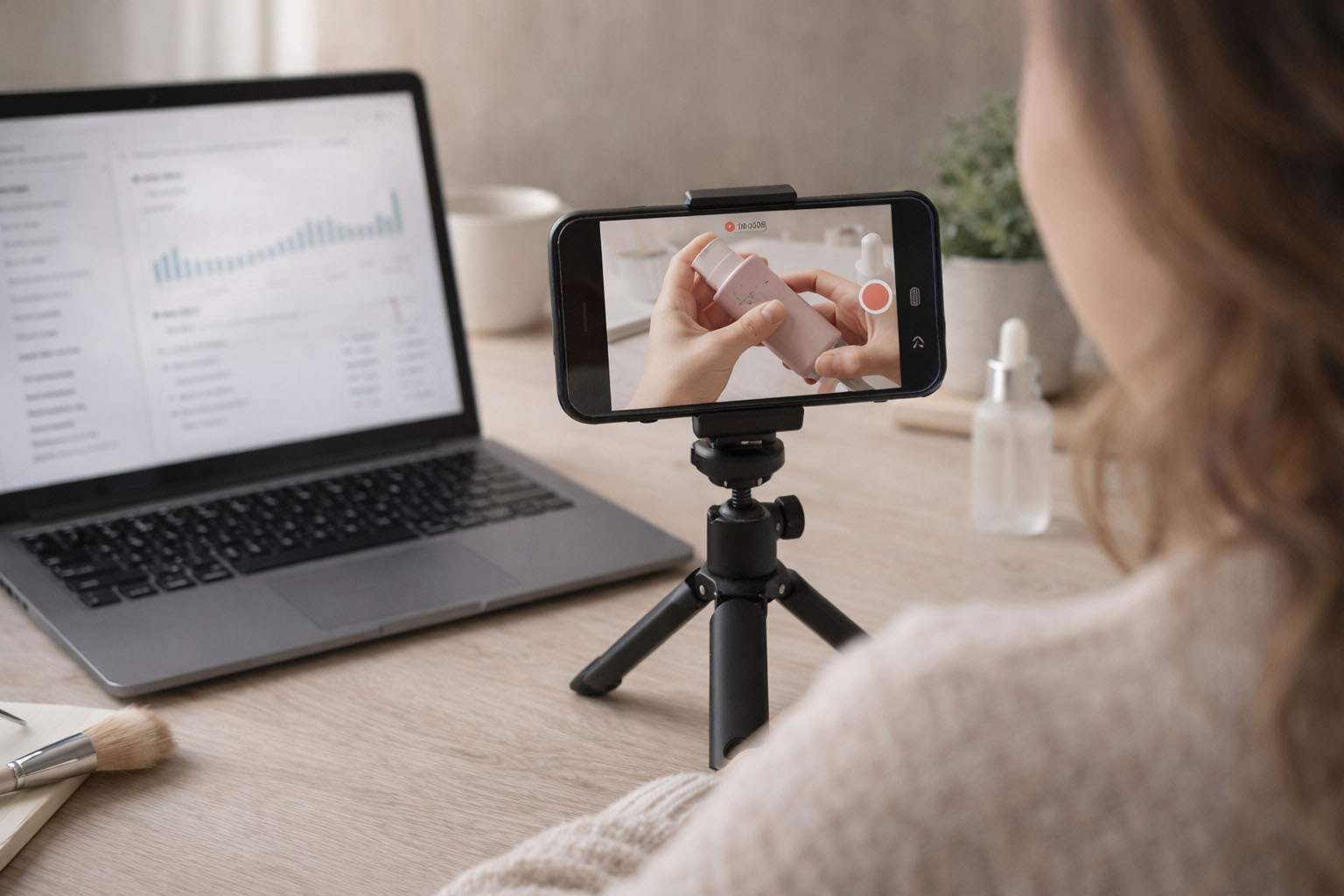
If your content can show a product working in under 10 seconds, TikTok Shop can convert extremely well because checkout stays inside the app.
Who wins here:
- Small brands with a “demo-friendly” product (beauty, home, snacks, gadgets, accessories)
- Creators who can make the product feel real (not like an ad)
UK examples reported include viral retailer moments (e.g., seasonal items selling out after millions of views) and small brands forecasting meaningful revenue directly through TikTok Shop.
2) Affiliate commissions: creators get paid per sale
Creators don’t need their own product to earn. They can recommend items and earn commission when viewers buy.
TikTok Shop’s affiliate model explicitly connects creators and sellers and pays commission on qualifying purchases.
Who wins here:
- Creators with trust in a niche (haircare, organisation, budget finds, tech, books)
- Creators who test products on camera and answer comments with follow-ups
3) Creator Rewards: getting paid for high-quality content performance
TikTok’s Creator Rewards Program (as described by TikTok) is designed to reward high-quality, original content, with signals like play duration, engagement, and search value.
Who wins here:
- Creators who make longer, watchable videos (and series)
- Educational content, reviews, “day in the life,” explainers
4) Brand deals (trend translators earn the most)
Brands pay for creators who can:
- make a trend feel native
- create repeatable formats (not one-offs)
- drive measurable outcomes (clicks, signups, sales)
Small brand tip: the best “brand deal” early on is often UGC-style content you can reuse as ads—paying a creator for videos you can run across TikTok/Meta.
5) Services & digital products (quiet, consistent money)
Trends don’t have to sell physical items. They can sell:
- templates (Notion, Canva)
- mini courses
- coaching slots
- ebooks / guides
- paid communities
The trend is simply the entry point; your offer is the exit.
6) “Trend-powered” retail: online buzz drives off-app sales
Many brands use TikTok as the discovery layer and convert via:
- their website
- Amazon
- Etsy
- in-store availability
This is especially useful if you don’t want to rely on in-app fulfilment or you’re building a premium brand.
The creator + small brand playbook (copy this)
Step 1: Pick the right kind of trend (not just the loudest one)
Choose trends that match one of these:
- Problem-solving (before/after, hacks, “I fixed this”)
- Identity (core aesthetic communities)
- Proof (tests, comparisons, results, “I tried it for 7 days”)
- Repeatable format (easy to publish daily)
Skip trends that are:
- too broad (everyone is posting the same thing)
- too brand-mismatched (you’ll get views but no buyers)
- impossible to demonstrate quickly
Step 2: Create 3 versions of the same idea (the “format stack”)
Make:
- Hook-first (0–2 seconds: “I stopped doing X and my skin did THIS.”)
- Story-first (mini story + lesson)
- Proof-first (demo/test/results)
Step 3: Build your conversion bridge (so views can become money)
Pick one primary bridge:
- TikTok Shop product link
- Affiliate product showcase
- Website link (lead magnet → email list)
- “Comment ‘LINK’ and I’ll DM you” (manual but effective early)
Step 4: Turn comments into content (this is where sales come from)
High-intent comments are gold:
- “Does it work on sensitive skin?”
- “Is it worth it?”
- “How long does shipping take?”
- “Can you show it in daylight?”
Reply with video. Pin your best answer.
Step 5: Make it scalable (so you don’t burn out)
If you’re a small brand:
- keep 1–2 hero products trend-ready
- have enough stock for a spike (or set clear backorder expectations)
- tighten fulfilment and returns policy
If you’re a creator:
- batch film
- build 2–3 recurring series
- track what drives saves, not just likes
Two mini case studies you can learn from
Case study A: Retail + trend + sell-out
UK retailers have used TikTok Shop and creator-led content to push seasonal items from trending video to sell-out within days, helped by massive reach and in-app shopping.
Lesson: distribution + timing + clear product story beats “perfect production.”
Case study B: Small brand forecasts meaningful revenue via TikTok Shop
Reporting highlights small UK brands projecting significant annual revenue through TikTok Shop, including high-value purchases—showing TikTok isn’t only for low-ticket impulse buys.
Lesson: premium can work if you show craftsmanship, trust, and proof.
What not to do (the mistakes that kill momentum)
- Chasing every trend → you look inconsistent and confuse buyers
- No proof → people watch, but don’t trust
- No “bridge” (no link, no next step) → you leak revenue
- Over-discounting → you train your audience to wait for cheaper
- Copying without a twist → you become interchangeable
A simple content formula that converts (use this today)
Hook: “I tried the viral ___ so you don’t have to.”
Proof: show it working (close-up, good lighting)
Context: who it’s for / who should skip it
CTA: “Link in Shop / it’s in my showcase / comment ‘LINK’”
FAQ (great for Yoast FAQ block)
Do I need TikTok Shop to make money from trends?
No. TikTok Shop is a fast path, but creators and brands also monetize through affiliates, brand deals, services, and off-app sales.
What’s the fastest monetization method for beginners?
Affiliate links are often fastest because you don’t need inventory; TikTok Shop affiliate tools are designed for commission-based selling.
Is TikTok actually a serious sales channel in the UK?
Yes—major UK retailers and a large number of SMEs are using it, and reporting shows strong adoption and sales growth around key retail periods.
How do creators get paid by TikTok (not brands)?
TikTok describes its Creator Rewards Program as rewarding high-quality original content using signals like engagement, play duration, and search value.