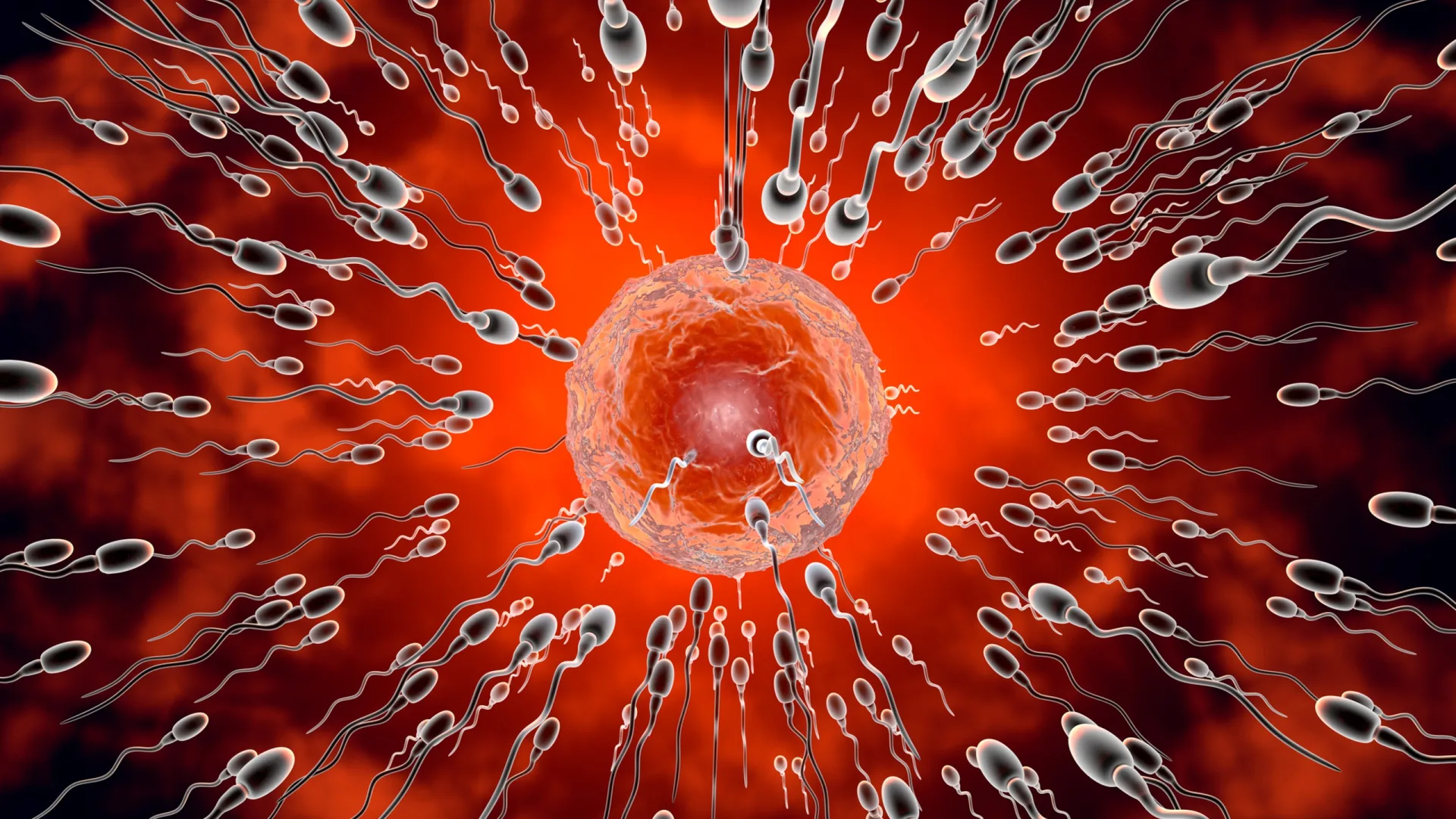
A new 26-year study challenges long-standing claims that men’s sperm counts are in freefall worldwide.
Denmark’s Sperm Trends Show Stability
From 1996 to 2022, researchers analyzed data from 8,320 men undergoing military service evaluations in Denmark.
These men were assessed through routine medical screenings, offering a large, consistent, and nationally representative sample.
The study focused on key semen parameters: sperm concentration, motility, and morphology.
Over 26 years, sperm concentration remained stable. Motility showed modest improvement—meaning sperm moved more effectively toward an egg.
The findings were published in Andrology, a leading journal in male reproductive health.
Standardized protocols ensured consistent sample collection and analysis, improving result reliability.
Optimism, But With Caveats
The research team says recent semen levels are higher than those from over two decades ago.
Still, more than one-third of men had at least one semen measure below the threshold linked to infertility risk.
That means many men still face reproductive health challenges.
Current sperm levels remain far below those recorded in the mid-20th century—50 to 80 years ago.
Global Trends: A More Complex Picture
Earlier studies found sperm declines across all major regions: North America, Europe, Australia, South America, Asia, and Africa.
But the drop varied by country and region.
The Danish study doesn’t contradict past findings. It shows regional differences—some areas may see stabilizing or improving trends.
Scientific Skepticism About Historical Data
Not all experts accept the global decline narrative.
Reproductive scientist Michael Carroll, not involved in the Danish study, says trends vary widely by region.
He argues the idea of a universal sperm decline is unresolved and needs more context-specific data.
Andrologist Allan Pacey from the University of Sheffield questions older sperm studies.
He notes that even the gold-standard technique—haemocytometry—is difficult and error-prone.
He believes improvements in training and lab standards over time may explain better modern measurements, not a real decline.
Technical Evolution vs. Biological Change
Michael Dahan, a fertility specialist at McGill University, agrees with Pacey.
He points out that tools and methods have changed over decades.
If instruments improved, modern readings may look better—not because sperm health improved, but because of better techniques.
What the Findings Actually Mean
Even without a global decline, sperm quality remains a concern for many men.
Changes in sperm shape, number, and movement signal reproductive health—but not all sperm are equal.
Some imperfect sperm can still fertilize an egg.
Carroll says dramatic headlines may have overstated the science.
Still, the research has spotlighted male fertility—an issue worth discussing.
What to Watch Next
More long-term, cross-national studies are needed to confirm regional trends.
Researchers should standardize sperm testing methods across countries.
Future studies should also examine lifestyle and environmental factors—like endocrine disruptors, diet, smoking, obesity, and stress—that affect sperm quality.
For now, the Danish study offers a cautious, hopeful view of sperm health.
It shows that while global declines may not be universal, male fertility remains a complex and evolving issue needing ongoing research and public awareness.
Source: ScienceAlert
Sources & further reading
Featured image: A 26-Year Study Challenges Claims That Men's Sperm Counts Are Plummeting. Via original publisher. Image source