Kaija Saariaho’s opera Adriana Mater unfolds in a war-torn region, likely the Balkans. It follows a mother’s journey through trauma and violence, as she tries to break a cycle of revenge. Source: theguardian.com.
What Happened in the Story
After being raped by Tsargo, a man from her own community, Adriana becomes pregnant. Her sister Refka urges her to have an abortion. Adriana refuses and chooses to raise her son Yonas without knowing his true father.
At age 17—changed to 20 in this English National Opera production—Yonas learns the truth. He searches for Tsargo. Finding him blind, he cannot kill him. Yonas feels deep failure. Adriana declares they are redeemed because Yonas did not become a killer like his father.
Why the Composer Wrote This Opera
After 9/11, Saariaho lost her trust in music as a private, protected space. She said she needed to write something reflecting the real world.
She collaborated again with Amin Maalouf, a former war correspondent. The libretto draws on both real conflict experiences and her own memories of pregnancy. The result is emotionally honest and deeply human.
How the Music and Staging Work
Act one uses sinuous woodwind lines and shimmering strings, celesta, and tuned percussion. These elements suggest an eastern European setting, both vivid and distant.
Act two becomes more expressionistic. The scene of the rape is intensified with horns and timpani in side boxes. The sound is powerful and emotionally charged.
Annilese Miskimmon’s staging avoids direct intervention. It shows actors and children building a sense of community. The characters begin in a bombed-out concert hall. They later lay wreaths for the fallen, showing the human cost of war.
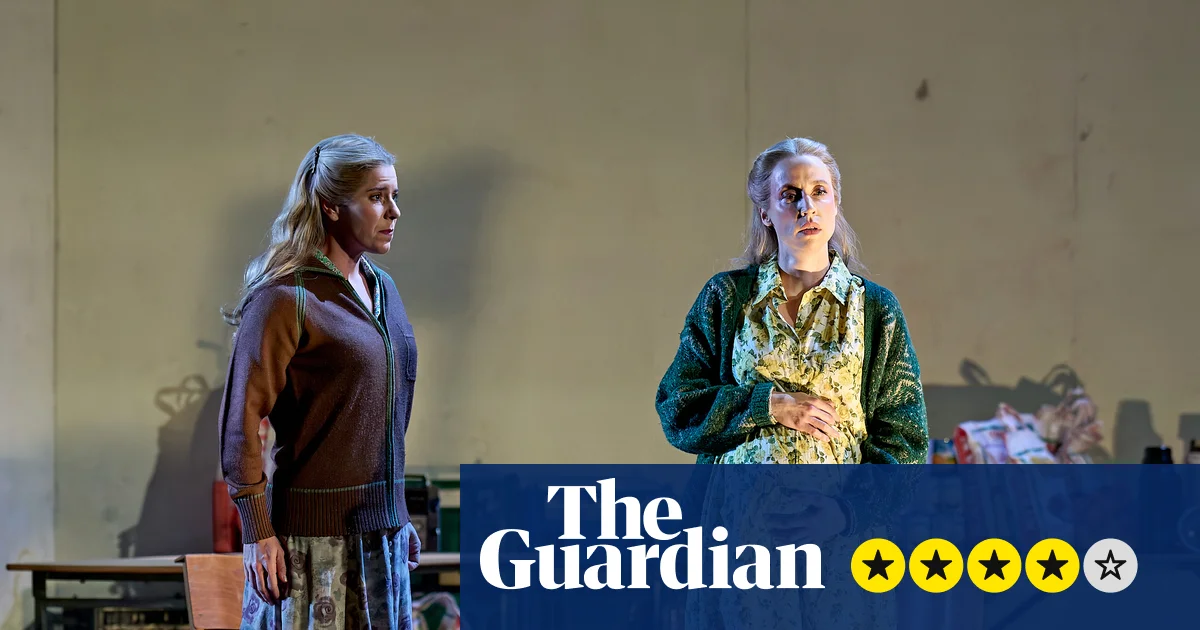
Evie Gurney’s 1980s costumes are grounded in time. Some feel familiar, but they help anchor the story. Lee Curran’s lighting is effective, shaping mood and emotion in every scene.
Performance Highlights
André de Ridder leads the orchestra with precision. He balances voices and instruments, especially the offstage chorus. The chorus is electronically embedded and played in surround sound, creating a haunting, atmospheric effect.
Kristina Stanek brings depth and tenderness to the title role. Lauren Fagan’s soprano is bright and clear. She makes Refka’s protective nature stand out. Caspar Singh sings well, but Yonas comes across as too old and physically aggressive. Leigh Melrose gives Tsargo a chilling complexity.
Why This Opera Matters
Adriana Mater may feel long, but it offers rare emotional clarity. It comes from a place of deep compassion.
The opera asks: Can a child avoid the cycle of violence? The answer is yes. That small choice becomes a form of hope.
Through real-world experiences and emotional honesty, it adds to modern operatic conversations. It shows how war affects people and how compassion can endure.
For audiences, it is a powerful reminder of war’s human cost. It celebrates quiet acts of choice and resilience in the face of brutality.
Read the full review on The Guardian.
Sources & further reading
Featured image: original publisher image. Via original publisher. Image source