AI agents are no longer confined to apps or dedicated platforms. They now live in your text messages—responding to your needs, managing tasks, and acting on your behalf. Source: techcrunch.com.
What Are These AI Agents?
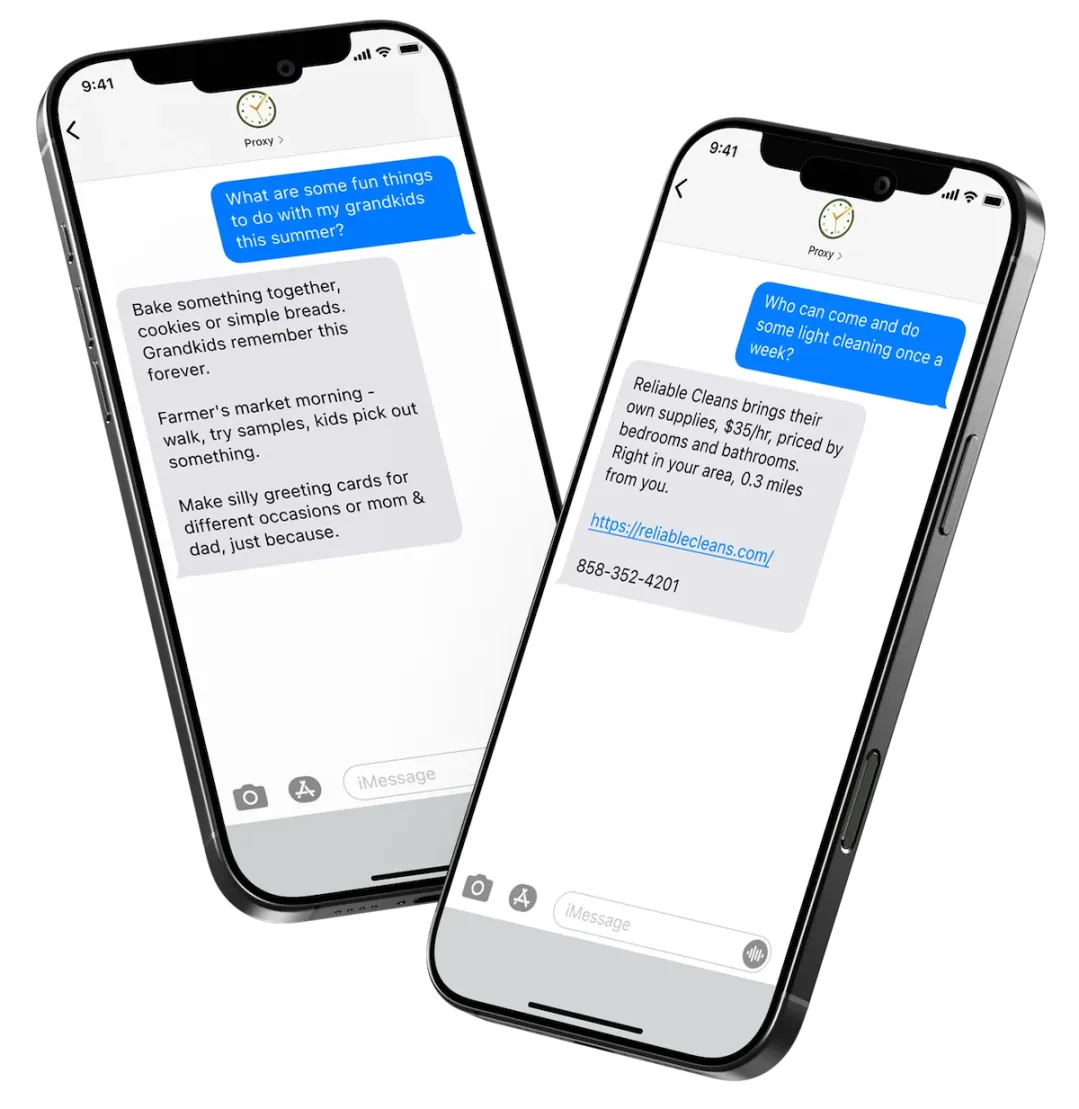
These are AI assistants that operate through messaging apps like iMessage, WhatsApp, or RCS. You don’t need to download a new app. You simply text them like a person.
They remember your context, connect to your existing services, and complete actions such as scheduling appointments, making reservations, or sending emails.
Each agent has a unique design and purpose. Some focus on personal life, others on work or family coordination. All operate through text, making them accessible and intuitive.
Key Agents and How They Work
Ask Proxy
Ask Proxy stands out by aiming to ‘think like a woman.’ According to the company, it anticipates your needs before you ask, such as suggesting dinner party decor after seeing a photo of an empty table.
It can add events to your calendar, set reminders, and recommend activities. A work-focused version is designed to keep personal data off company systems.
It works via SMS. Users text ‘start’ to 820-732-2625. The personal version costs $1 per day. Business pricing starts at $15 per employee per month for large teams and $23 for small teams with fewer than 49 employees.
Caddy
Caddy turns scattered information into actionable items. It lives in iMessage on iPhone and RCS on Android.
For instance, if a friend sends a list of things to pick up, Caddy identifies it and adds items to your calendar or sets reminders. It connects to your email, calendar, and conversations.
It has been in public beta since April 2026. No pricing is mentioned, but it is designed for everyday use without requiring app switching.
Comma
Comma manages tasks across devices and apps. It tracks progress and checks its own work to determine when a task is complete.
It surfaces updates when approvals are needed. It can deliver daily briefings and flag urgent matters. It also summarizes recorded calls.
Comma is free to start and open source. It works across browsers, computers, and messaging apps like Signal, Telegram, and WeChat.
Fambot
Fambot is an AI ‘chief of staff’ for families. It organizes school events, sports schedules, meal plans, and daily responsibilities.
It sends a daily summary to parents via SMS. The message includes the next day’s events, to-dos, and details like school uniforms.
It connects to Gmail, Google Calendar, Outlook, and WhatsApp. Apple Calendar support is planned. It launched in beta in September 2026 and is currently free during that period.
Fambot expects to charge a fee equivalent to a Netflix subscription in the future.
Folk
Folk runs on a private cloud and can execute multi-step tasks. It works through iMessage, WhatsApp, and Telegram.
It can manage reminders, research topics, track flights, and handle email. It can also run code and perform real-world actions like restaurant bookings.
It launched in May 2026. A Pro subscription costs $8.33 per month for unlimited background tasks.

Haven
Haven introduces the concept of a ‘digital twin.’ According to the company, it understands and adapts to your preferences, routines, and decision-making styles, creating a personalized memory graph based on your interactions.
While traditional assistants respond to what you ask, Haven predicts what you would do and how you would do it.
It is available for free in beta on iPhone and Android. You can reach it by texting or calling (435) 260-6500.
Instinct
Instinct raised $1 billion in September 2026, valuing the company at $10 billion.
Users can text or speak to Instinct. It connects to email, Google Workspace, and calendar apps. Early users have used it to plan trips, buy groceries, book tickets, and cancel subscriptions.
It began offering dedicated email addresses for users in September 2026. These allow Instinct to create accounts and manage tasks without filling the user’s personal inbox.
It has also started rolling out support for placing calls. The company remains in private beta.
Iris
Iris, powered by Hermes Agent, lets users delegate tasks through iMessage. According to the company, it connects to apps and follows up proactively.
It retains context from previous interactions and works through multiple steps. It is designed to follow up with users rather than waiting for a new message.
Martin
Martin is a general-purpose assistant available via SMS, phone, WhatsApp, email, and its iOS app.
It manages calendars, reminders, tasks, notes, and communications. It can send messages or make calls on your behalf and provide daily summaries.
Subscriptions start at $21 per month. It is priced higher than most similar agents.
Maverick
Maverick acts as a personal assistant that lives in your texts. It fixes typos, cancels subscriptions, schedules meetings from voice notes, and helps group chats agree on event dates.
According to the platform, it asks for permission before taking action. It offers hundreds of integrations, including Discord, Gmail, and Slack.
It is in beta and free on iMessage. A Pro version costs €27 per month (about $30.25 USD), including 500 tasks a month, 20 connected apps, scheduled tasks, and memory.
Miso
Miso is a travel-focused assistant. It operates through iMessage and combines AI trip planning with support from a dedicated travel team.
It arranges flights based on user preferences, loyalty points, and priorities. It provides flight updates and personalized recommendations.
Ohai
Ohai is a family assistant that helps manage household tasks and information. It turns messages, emails, and voice requests into schedules and plans.
It coordinates calendars, chores, and meals across family members. It offers a free basic plan and tiered subscriptions starting at $9.99 per month based on family size.
Orbits
Orbits works through its app and text messaging. It brings together calendars, lists, and conversations and carries out tasks like searching the web, making purchases, booking restaurants, and requesting service quotes.
It reminds family members of chores and communicates with service providers. It helps coordinate responsibilities beyond the household.

It is backed by investors including Andreessen Horowitz (a16z) Speedrun fund, N49P, and Garage Capital.
Pally
Pally works like a friend. It connects information from WhatsApp, Gmail, calendars, and Google Drive to help users track plans, receipts, dates, and files.
It is available via iMessage, RCS, and Telegram. A free plan is offered.
Poke
Poke launched in March 2026 as a general-purpose assistant. It handles tasks in calendars, health, smart-home controls, and photos.
According to the company, it became notable in June 2026 when Apple approved it as the first AI agent on the Apple Messages for Business platform. The parent company, The Interaction Company, was acquired by Cognition in a deal valued in the low nine figures.
Rene
Rene is designed to be a user’s ‘best contact’ rather than a productivity tool. It turns natural-language conversations into tasks, reminders, and summaries.
According to the company, it maintains context across conversations and can surface things that need attention later. It has a browser, can write code, shop for you, and create slides and images.
It is available on iMessage, Telegram, and WhatsApp.
Skye
Skype is an ‘agentic homescreen’ for iPhone. It analyzes data from connected services and surfaces relevant content through cards and daily briefings.
According to the company, it generates audio briefings, prepares meeting information, and surfaces reminders. It entered private testing in April 2026. A public release date has not been announced.
Signull Labs raised $3.6 million in seed funding in 2025.
Stanley
Stanley is an AI content assistant for creators. It helps users generate ideas, turn them into posts, and maintain a consistent publishing schedule.
According to the company, it connects to Instagram and suggests content based on actual user activity. It turns voice notes into scripts and captions. It includes a content calendar and can schedule posts.
Szn
Szn coordinates tasks and follow-ups through a single conversation thread. Users can send text, voice notes, photos, or forwarded emails. The assistant takes action, including making calls and managing follow-ups.
According to the company, it has served over 7,500 businesses across 16 countries and completed more than 10,000 jobs. It handled 95 hours of calls.
Tab
Tab allows users to delegate tasks via iMessage or WhatsApp. Examples include ordering groceries or finding birthday gifts.
Investors include SV Angel, Valar Ventures, and American Spirit.
Tomo
Tomo’s key feature is that it can join group conversations. According to the company, it helps with goals, accountability, scheduling, and organization.
It can send reminders, search the web, work with calendars and email, watch videos, and edit photos. The basic plan starts at $19.99 per month.
Town
Town targets professional life. It gives users a ‘Townie’—an AI assistant that learns how they work and handles recurring tasks.
According to the company, it works with email, calendars, documents, Slack, and other platforms. In June 2026, it raised $55 million in a Series A led by Andreessen Horowitz and Forerunner.
Underdog
Underdog is privacy-focused. According to the company, it runs entirely on the user’s device, keeping data off cloud servers.
It launched an invite-only beta in October 2026. It supports Mac and Windows initially. Linux, iPhone, and Android versions are planned.
According to the company, it will offer the app for free initially and has no plans to include advertising.
Wajo
Wajo’s first agent, Fo, can call businesses, send emails, join group chats, make bookings, and coordinate tasks.
According to the company, it has its own identity—its own email, phone number, and payment card—so it can interact with businesses without needing user credentials.
When Fo encounters something it cannot handle on its own, it brings in a human assistant to finish the task. Fo launched publicly in September 2026 with a free tier. Paid Pro offers support for heavier workloads and custom agents.
Why This Matters
These agents reduce the need to switch between apps. They integrate with existing tools you already use—like calendars, email, and messaging.
They offer a seamless experience. You don’t need to open a new app or log in. You just text, and the agent acts.
For families, they help manage shared responsibilities. For professionals, they automate routine tasks. For individuals, they simplify daily decisions.
Limitations and Open Questions
Many agents are still in beta. Features may change or be limited. Some lack clear pricing or long-term availability.
Privacy concerns remain. Agents with dedicated email addresses or payment cards may create new risks. Users must trust that data is handled securely.
Not all agents offer transparency about how decisions are made. Some may act without clear user consent.
There is no standard for accountability. If an agent makes a mistake, who is responsible?
Some agents require user permission before taking action. Others may act without asking, raising ethical concerns.
What to Watch Next
More agents may enter mainstream use as privacy and security standards evolve.
Regulatory scrutiny may increase as AI agents take on more autonomous actions. How they handle personal data and user consent will be closely watched.
Integration with smart homes, vehicles, and other devices may grow. Agents like Haven and Skye suggest future uses beyond messaging.
As more agents emerge, users will need to evaluate which align with their privacy, workflow, and trust expectations.
For now, these tools represent a shift in how we interact with technology—moving from apps to real-time, conversational assistants.
Sources & further reading
Featured image: Discussion, chat and commenting concept.. Via original publisher. Image source