Millions of Brazilians cast their votes on Sunday in the first round of the country’s presidential election, marking a pivotal moment in Brazil’s political landscape. The vote reflects deep societal divisions, with citizens expressing strong preferences for leadership styles that align with their values and economic expectations.
Key Candidates: Lula and Bolsonaro
Luiz Inácio Lula da Silva, 80, is running for his fourth non-consecutive term as president. A former labor leader and long-time figure in Brazilian politics, Lula has championed social welfare programs, poverty reduction initiatives, and inclusive economic policies that have resonated with many voters, especially in urban and rural communities.
Flávio Bolsonaro, 45, is competing in his first presidential race. As the son of former President Jair Bolsonaro, who governed from 2019 to 2022, he carries a legacy shaped by a conservative, nationalist platform. His campaign emphasizes national security, reduced public spending, and a firm stance on immigration and law enforcement.
What Happened in the Vote
The election saw widespread public participation, with polling stations operating across all regions of Brazil. The voting process was largely peaceful, though some areas reported minor disruptions due to political tensions. The results indicate that both candidates have secured substantial support, with no clear majority emerging in the first round.
Runoff Scheduled for 25 October
The BBC reports that a second round of voting is set for 25 October. This runoff will determine the next president of Brazil and will be closely monitored by domestic and international observers. The outcome will have significant implications for Brazil’s domestic policies and its role in regional and global affairs.
Background: The Political Divide
- Lula has long been associated with labor movements and social programs aimed at reducing poverty and expanding access to education and healthcare.
- Bolsonaro’s platform emphasizes national security, fiscal responsibility, and a strong defense of traditional values, often contrasting with Lula’s more progressive economic vision.
- Public opinion has been shaped by years of contrasting policies, media narratives, and political debates, particularly over issues like inflation, public spending, and social inequality.
Why This Election Matters
The outcome will influence Brazil’s economic direction, social policies, and international relations. As a major Latin American nation, Brazil’s leadership decisions affect regional stability, trade agreements, and global climate and development initiatives.
Limitations and Open Questions
The source does not provide detailed vote counts or official results. Final figures will be released after official tallies. There is no mention of voter turnout data, polling accuracy, or electoral integrity measures in the provided content.
What to Watch Next
On 25 October, the runoff will be held. The BBC will continue to report on the results and their implications. Observers will pay close attention to how the final vote is counted and verified, ensuring transparency and public trust in the democratic process.
Source: BBC News Watch: How Brazil’s dramatic election unfolded — https://www.bbc.co.uk/news/videos/cwp9g54v9xjlo?at_medium=RSS&at_campaign=rss
Sources & further reading
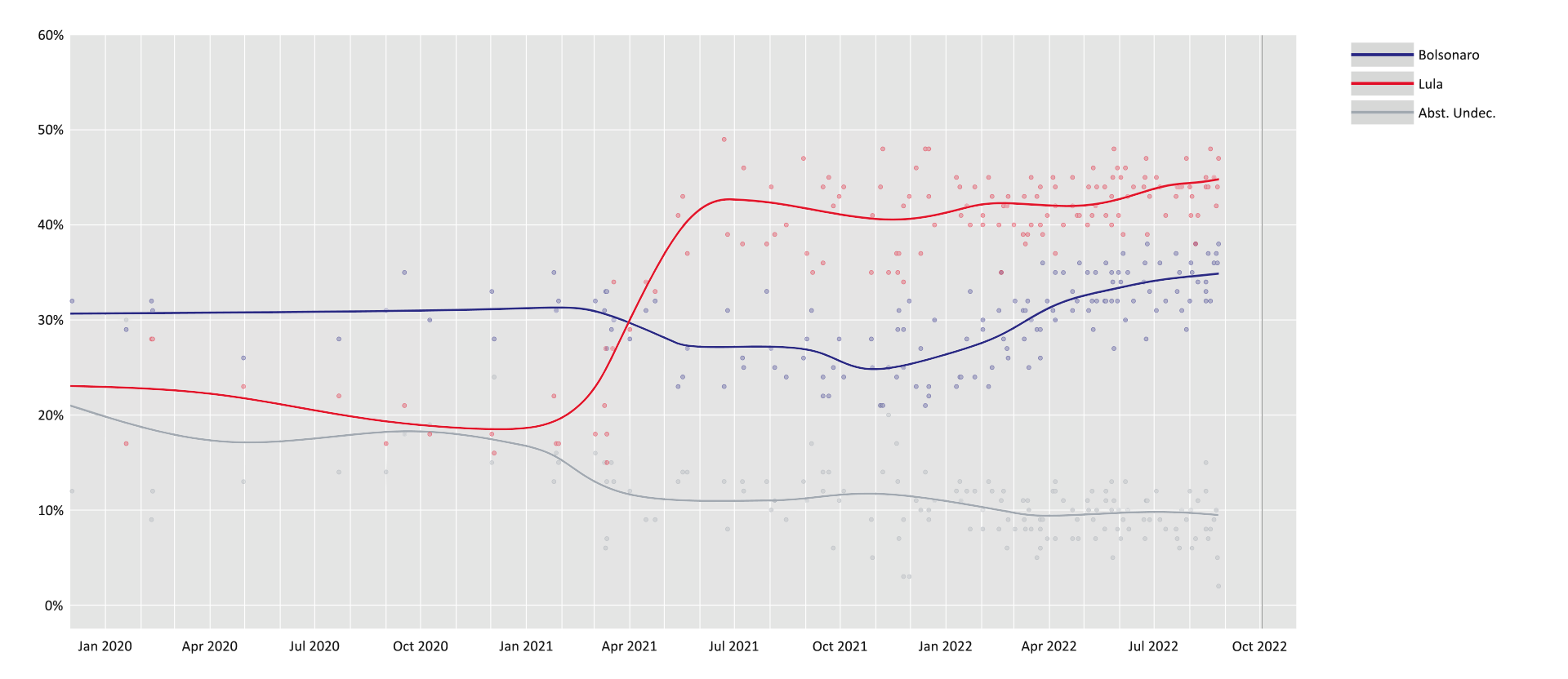
Featured image: Opinion polling for the 2022 Brazilian presidential election graphic.svg by Teratornis06, CC BY-SA 4.0, via Wikimedia Commons. Image source · License