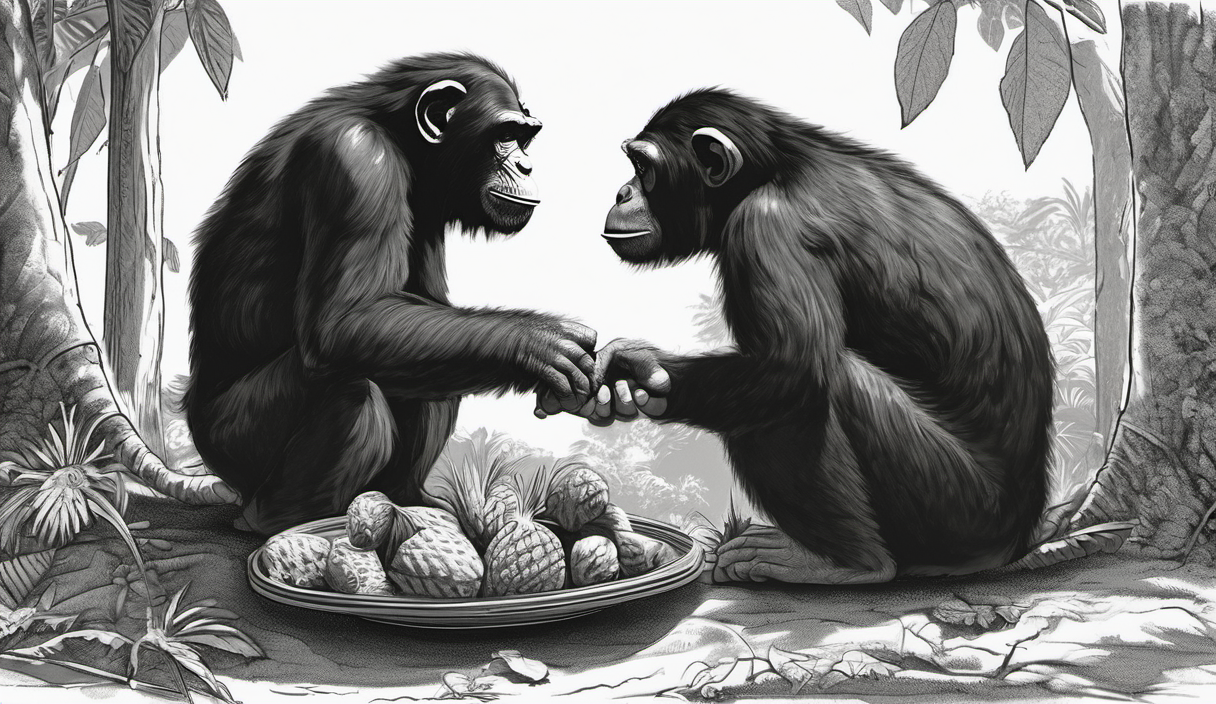
A new study by UC Berkeley researchers reveals that chimpanzees are less likely to steal from close friends.
What Happened in the Study
Scientists observed 26 chimpanzees at the Ngamba Island Chimpanzee Sanctuary in Uganda over more than 800 hours.
They identified close bonds based on grooming patterns, daily interactions, and physical proximity.
Researchers then tested stealing behavior using pineapple as a reward. A ‘victim’ chimp had three trays of pineapple, with a rope attached to the trays.
The rope was led into a second room where a ‘thief’ chimp could either leave it or pull it to steal the fruit.
Key Findings
- Chimps stole in 70% of trials with non-friends, compared to 61% with friends.
- Victims showed stronger initial anger when friends stole, but calmed down faster than when non-friends stole.
- Thieves expressed less hostility when stealing from a bonded friend than from a non-friend.
Why This Matters
The study suggests that chimpanzees have mutual expectations in friendships—similar to human social bonds.
These expectations may form the foundation of human moral principles, such as fairness and cooperation.
As Oded Ritov, the study’s first author, explained: ‘We think that these expectations might be the basic building blocks of the larger-scale cooperation we see in humans.’
Jan Engelmann, a senior author and psychology professor, said this is the first evidence that chimpanzees expect special treatment from their friends.
Background: How the Research Works
Previous research has shown nonhuman primates have relationship-specific behaviors.
But human friendships go beyond simple preferences—they involve shared expectations.
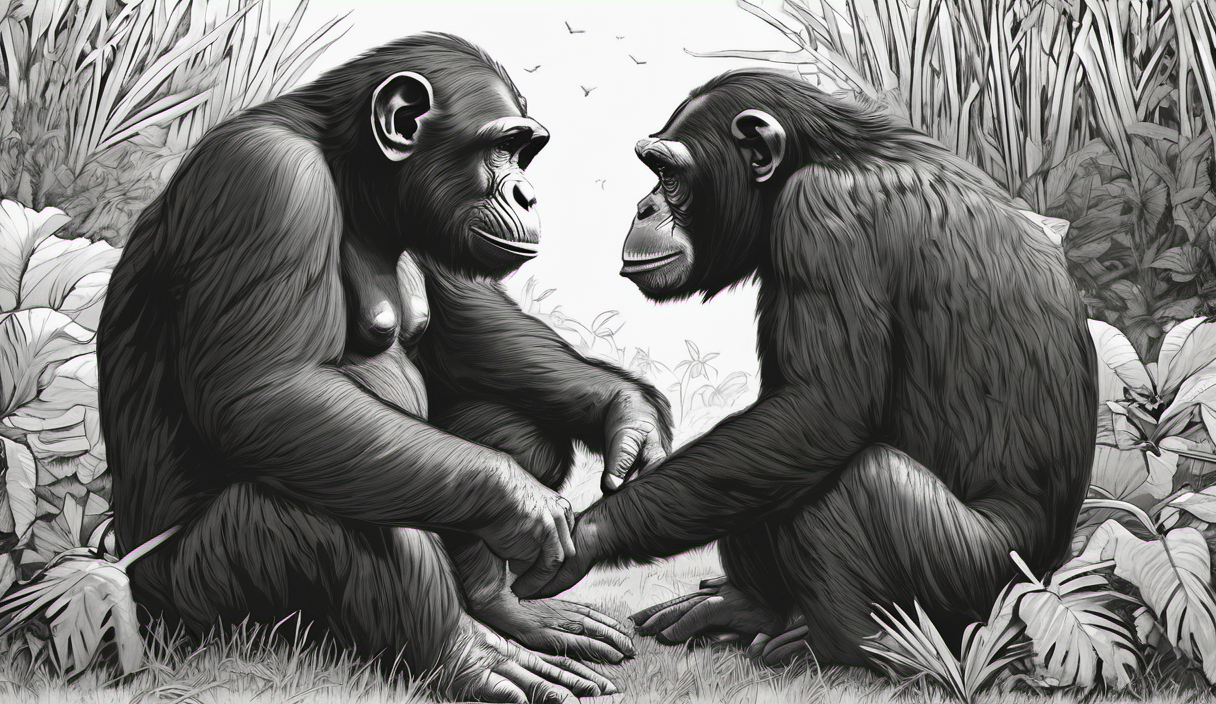
Chimpanzees show emotional responses that mirror human reactions: anger, calm, and hostility.
These reactions vary based on whether the interaction is with a friend or a non-friend.
Limitations and Open Questions
Scientists caution that calling chimp relationships ‘friendships’ is still debated.
They argue we don’t fully grasp the cognitive and emotional complexity of these animals.
While the study shows behavioral patterns, it does not prove that chimps understand friendship as humans do.
What to Watch Next
Further research will explore whether similar social expectations exist in other primates.
It may also examine how these behaviors evolve across species and environments.
The paper was published online in September and will appear in the November issue of Evolution and Human Behavior.
For more on the science of social behavior in animals, see the original article from Berkeley News.
Learn more about the Social Origins Lab at socialoriginslab.com.
Explore related work on animal emotions at socialoriginslab.com/people/.
Sources & further reading
AI-generated illustration.