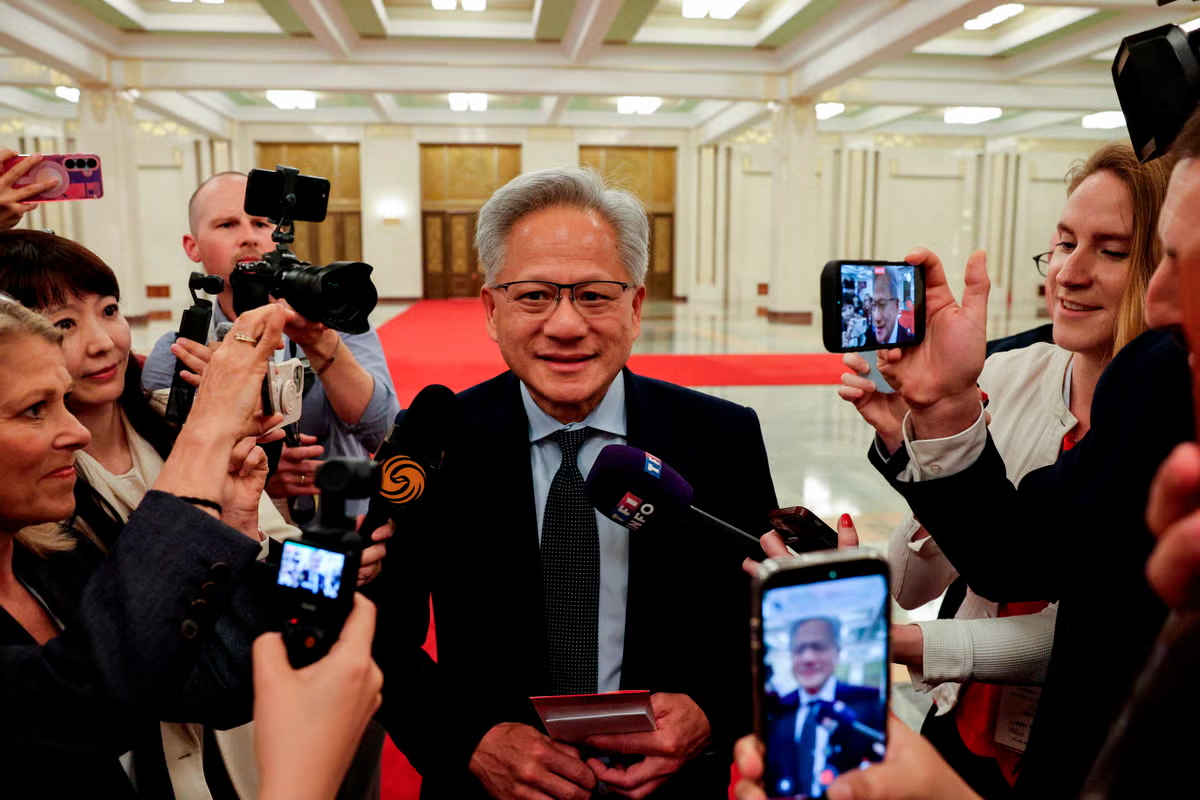
Nvidia CEO Jensen Huang stepped down unexpectedly on Thursday, following reports of extramarital affairs involving a suspected Chinese spy. The resignation has triggered a ripple effect across the global technology sector. Source: independent.co.uk.
What Happened
Huang, who has been a central figure in the AI boom, announced his resignation amid media reports of personal misconduct. The details emerged through public disclosures and industry speculation, with no official statement from Huang or Nvidia confirming the allegations.
The move has unsettled investors and industry players. Nvidia has long dominated the market for GPUs used in training and running AI models. Its influence extends beyond hardware, shaping the ecosystem of AI development.
Market Reactions
Competitors such as Broadcom, Intel, and Advanced Micro Devices saw their stock prices rise on Thursday. Analysts suggest investors are shifting toward diversifying their chip supplier portfolios.
Bret Greenstein, chief AI officer at West Monroe, said the situation could end what has been a de facto monopoly in AI chips. He added that competition might lead to more choices for customers and a stronger, more resilient AI supply chain.
However, finance professor Chester Spatt of Carnegie Mellon University noted that gains for rivals would likely be smaller than Nvidia’s losses. He also expects companies to become more cautious about relying on a single supplier.
Competitor Landscape
Nvidia built its early lead by adapting GPUs from gaming to AI applications. Competitors like AMD, Intel, and Broadcom have long been in the space but have struggled to match Nvidia’s performance and market share.
Jay Aldebert, chief growth officer at International Services Inc., said Nvidia has consistently responded to new products with superior versions. This has created a cycle where competitors are constantly pushed to innovate.
Despite this, some competitors saw temporary dips in share prices. The overall market response suggests a mix of caution and opportunity.
Political and Geopolitical Implications
The incident has prompted concerns about U.S. export controls on American-made chips. Officials may push for tighter regulations, especially given the role of Nvidia in supplying AI infrastructure.
Lizzi C. Lee, a fellow at the Asia Society Policy Institute, said Chinese AI firms have already responded to Nvidia’s troubles. However, she noted that these firms depend heavily on Nvidia’s ecosystem. This creates both an opportunity and a challenge for China.
China’s AI developers rely on Nvidia’s software and hardware tools. Without access to these, progress could slow. Yet, the situation may accelerate efforts to secure overseas computing capacity.
Huang’s Influence Beyond the Boardroom
Huang has been a prominent advocate for AI, with strong ties to political figures including former President Donald Trump. He has consistently pushed for minimal regulation and emphasized AI’s potential to drive economic growth and scientific breakthroughs.
Asa Hiken, a senior analyst at eMarketer, said Huang’s departure introduces uncertainty beyond the company. His role as a strategic leader and political advocate was central to Nvidia’s visibility and influence.
Lee added that Huang’s influence extended to both Washington and Beijing. His absence may weaken the company’s ability to shape policy and maintain partnerships in key markets.
Financing Models Under Scrutiny
Nvidia has used a strategy called ‘circular financing,’ where it invests in companies that buy its chips and then rent access to them via cloud services. CoreWeave, one such company, saw its share price drop nearly 7% on Thursday.
Nvidia holds a 13% stake in CoreWeave. The collapse in value has raised concerns about the stability of these partnerships. Aldebert described the model as ‘incestuous’—a term suggesting a conflict of interest.
Many tech firms are now assessing backup plans for their chip supply chains. The scandal has intensified scrutiny of such financial arrangements.
What to Watch Next
Market watchers will closely monitor the upcoming IPO of Anthropic, a major AI startup valued at $1.3 trillion. Its debut could reflect investor confidence in AI ecosystems amid uncertainty.
Additionally, the political climate is shifting. Midterm election results have seen increased Democratic support for stricter AI regulation. This could influence future policy and investment decisions.
Experts like Greenstein expect significant dynamics to unfold over the coming month. The interplay between leadership, supply chains, and regulation will remain central.
Sources & further reading
Featured image: original publisher image. Via original publisher. Image source