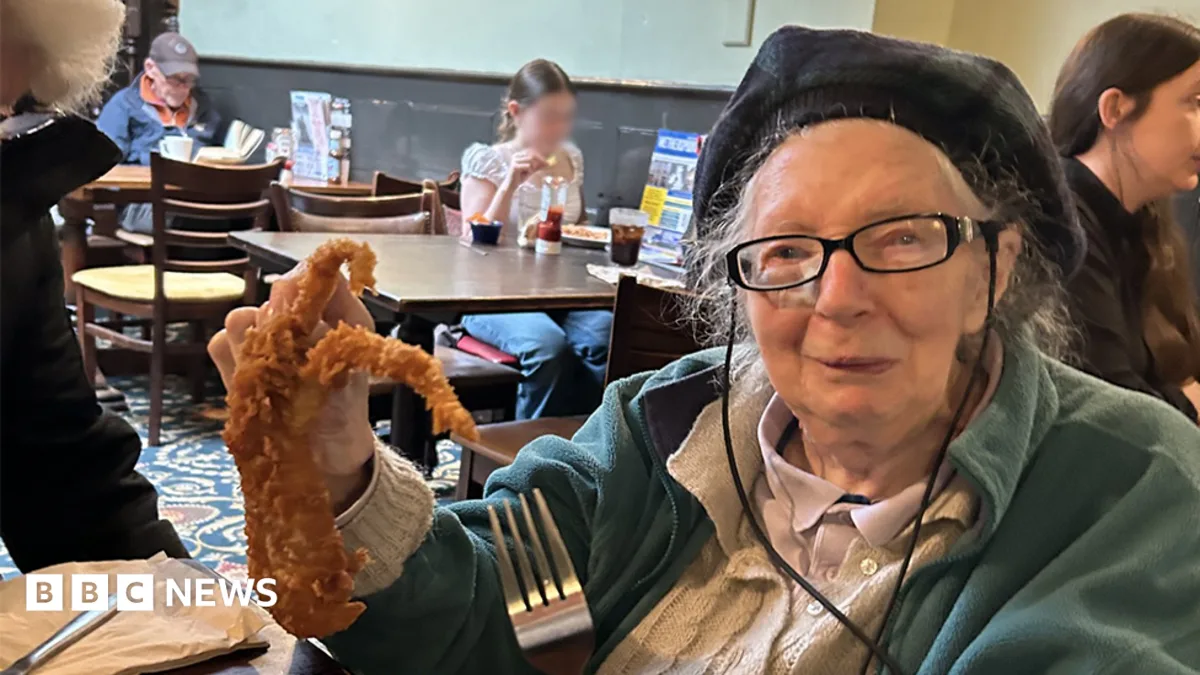
Jean Powell, a 95-year-old resident of Monmouth, Wales, lived in a Wetherspoons pub for nearly 10 months after her home was flooded by the River Monnow. Source: bbc.co.uk.
What Happened to Jean Powell
When neighbours hammered on Jean Powell’s door, they evacuated her because the river burst its banks and swamped her town. Little did she know she would never return home.
She stayed at her local Wetherspoons for almost 10 months. She kept asking when she could go back to her flat.
Friend Wyn Smith said, ‘Jean used to say, when am I going home?’
At first, Jean was happy to be in town. She felt at home. The Wetherspoons staff provided food and care, showing strong attention to her needs.
Over time, living in one room became difficult. Her health declined. She never returned to her home.
Broader Impact on Monmouth Residents
One in seven properties in Wales are at risk of flooding. Monmouth is one of many communities affected.
Emily Frost, a mother of two, was evacuated from her end-of-terrace cottage during the same storm. The floodwaters reached waist-deep levels when she opened her door.
She said, ‘Opening the door, I completely freaked out to the lifeguard.’ The evacuation turned a wedding anniversary into a traumatic event.
After the flood, her family lived in rental accommodation for six months. The home needed full demolition and rebuilding.
Emily said, ‘We didn’t bring the boys home for a good while because we didn’t want them seeing everything they’d treasured had been destroyed.’
Her children now play ‘floods’ games. They try to process what happened. Emily said, ‘They couldn’t understand why we weren’t able to go home or have their things.’
Environmental and Systemic Challenges
The River Monnow swelled to over six and a half metres during the storm. This was a one-in-75-year event, triggered by more than half a dozen Met Office rain warnings in one week.
Natural Resources Wales (NRW) warns wetter, windier weather is now more likely due to climate change.
Severe flood warnings were issued hours before the flooding. But the town’s defences failed before residents could fully respond. The warning for Monmouth came at 03:31 on Saturday morning — more than two hours after the defences broke.
Emily signed up for NRW’s free flood alert service. She went to bed when the rain stopped. She said, ‘Everyone thought the danger had passed. Then the water rose unexpectedly. It showed how fast things can change.’
The official report recommends reviewing flood warning timing in the Monnow catchment. It also calls for a review of how well people understand and act on alerts.
NRW reviews its warning thresholds and response plans after every major incident. But fewer than one-third of at-risk properties in Wales are signed up to the alert service.
Wales’ geography — with long coastlines and fast-flowing rivers — makes it especially vulnerable. Rain runs quickly down steep valleys, causing rivers to rise fast.
The report also recommends reviewing whether Monmouth’s town centre defences are still adequate. Sara Pearson of NRW said, ‘We’ve never seen flooding like this. With climate change, it will only get worse. We can’t stop it, but we can reduce the damage.’
Local authorities say drainage and ditch clearing are ongoing. But Catrin Maby of Monmouthshire Council said, ‘If it was only about drain clearing, we wouldn’t need to worry. We must review engineered defences, land management, and allocate enough resources to drainage and maintenance.’
UK insurance companies paid out £565 million in 2025 for storm and flood recovery. Emily’s home has flood gates and doors installed after advice from Flood Mary. She said, ‘I feel safer now. I’ll still be cautious when I get a warning — it’s whether I’ll go back to that time or not. But I don’t feel safe in my own house. I should.’
Residents like Jean and Emily are not alone. The trauma of losing homes goes beyond material loss. It affects safety, belonging, and daily life. As one resident said, ‘It’s not just about water. It’s about the fear of what comes next. If you see water, you panic. You need to feel at home — not just in a house, but in your daily life.’
Sources & further reading
Featured image: Jean Powell wearing a green coat and a blue hat in a pub having her lunch wearing glasses. Via original publisher. Image source