What Happened
The installation began in May with a striking ritual: a large bell salvaged from the Venice Lagoon was rung by Holzinger in a nude form, acting as the human clapper. Source: artnews.com.
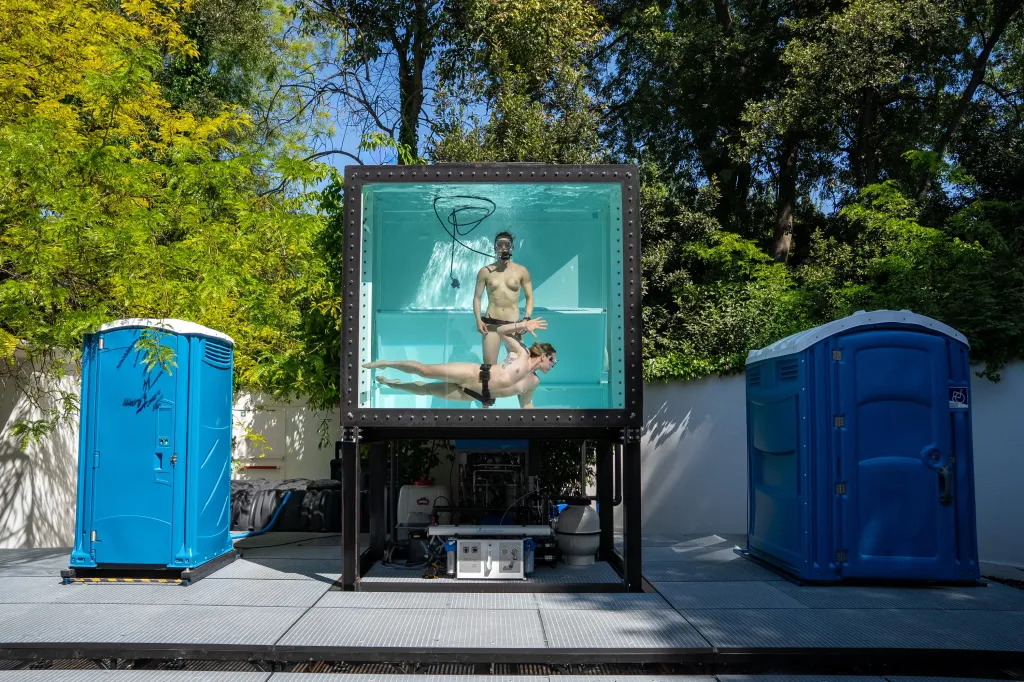
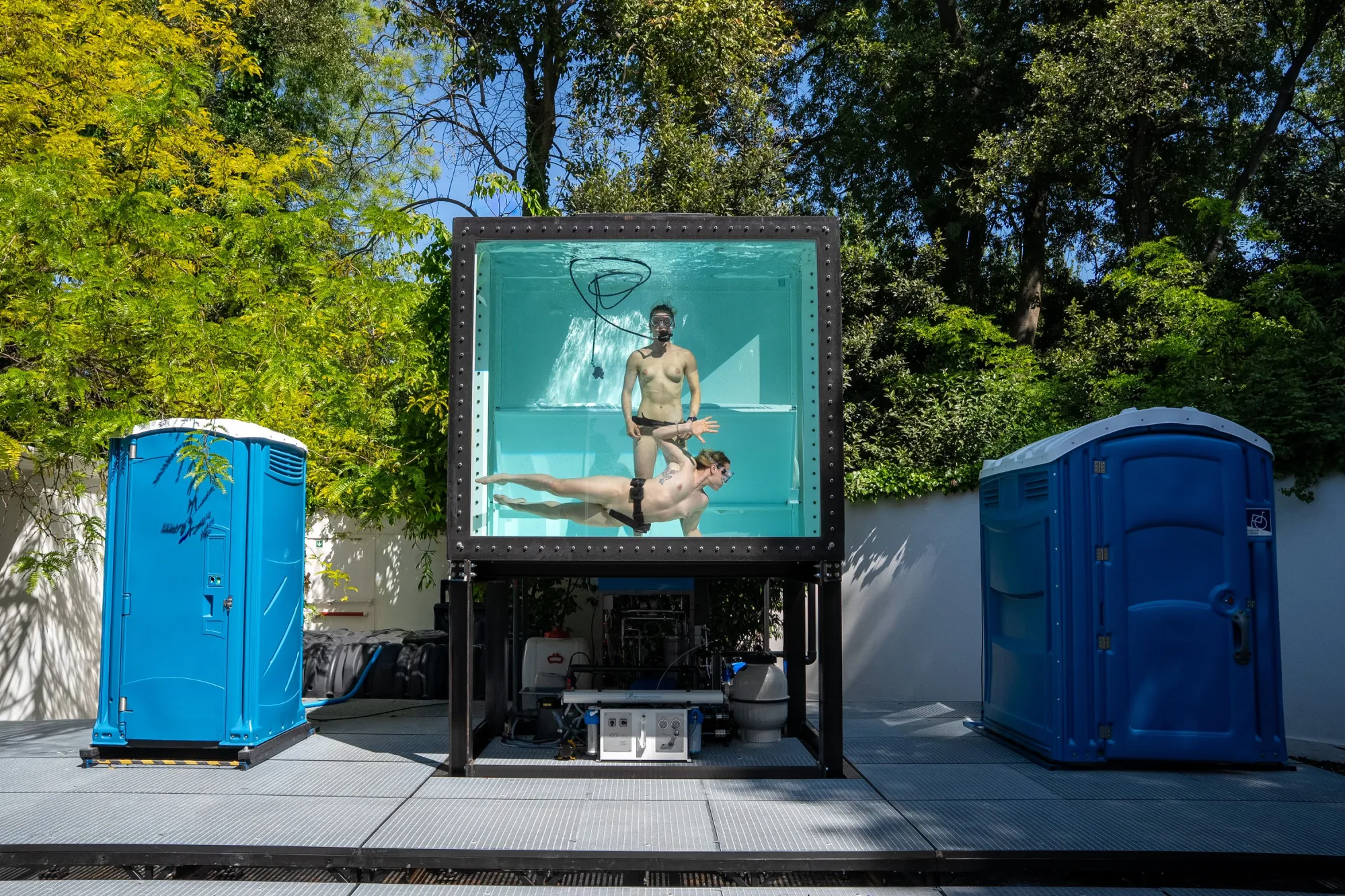
Over the next seven months, visitors to the pavilion were encouraged to use on-site port-a-potties. The waste collected—both human and lagoon-derived—was gathered and processed.
For the closing event, Holzinger prepared a ‘final dinner’ made from distilled bodily waste. The meal is not a literal consumption of waste, but a symbolic act using the material as a monument to the environment and human presence.
The final dinner is described in the source as containing ‘all the bodily waste collected from pavilion visitors over the past seven months.’ It serves as a distilled monument for the future, according to the announcement.
How the Installation Worked
Holzinger’s work draws on a body-first philosophy. Her art emphasizes physical presence and materiality, often blurring lines between the human body and the environment.
Visitors were not asked to participate in a direct way, but rather to engage with the space and its systems. The port-a-potties were placed strategically, and urine was filtered into a dunk tank, a visible element of the installation.
The bell, which rang every hour throughout the pavilion, became a timekeeper. It marked the passage of time, echoing the ongoing environmental crisis in Venice.
Why It Matters
By using waste as a material, Holzinger challenges viewers to reconsider what is discarded and what is valuable.
The work reflects the ecological realities of Venice—rising waters, pollution, and the erosion of natural systems. It turns personal bodily functions into a public, environmental statement.
The final dinner is not a literal meal, but a conceptual gesture. It underscores the idea that human activity, even private ones, contributes to larger environmental narratives.
Limitations and Responses
Some critics have questioned the appropriateness of using bodily waste in art. Others argue that such works risk reducing complex environmental issues to visceral, bodily experiences.
There is no explicit statement from Holzinger about the safety or health of the materials used. The source does not clarify whether the waste was treated or sterilized.
While the work is conceptually strong, it does not offer solutions or policy recommendations. It presents a reflection, not a response.
Artnews notes that Holzinger’s work has been described as ‘propriety-imploding,’ suggesting a deliberate disruption of social norms.
The bell continues to ring after the installation ends. This ongoing presence suggests a commitment to memory and continuity, even in the face of environmental collapse.
For more on Holzinger’s broader practice, see her previous work at the Venice Biennale: After Venice: Holzinger’s Sea World Coming to Brooklyn.
For deeper context on the role of art in environmental discourse, explore Artnews’ coverage of environmental art.
As Holzinger’s work progresses, it will be watched for how it navigates the tension between artistic expression and environmental ethics.
Sources & further reading
Featured image: Two nude people in a dunk tank flanked by blue latrines.. Via original publisher. Image source