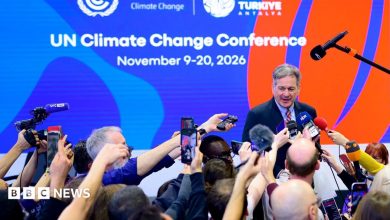
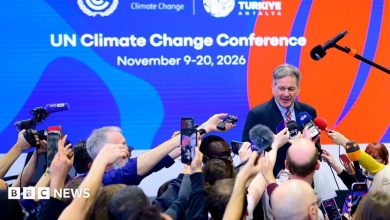
The UN climate summit in Antalya, Turkey, is entering its second day of extended negotiations. Countries are deadlocked over whether to include language on reducing fossil fuel demand in a new global climate deal. Source: bbc.co.uk.
Deadlock Over Fossil Fuel References
A draft agreement earlier this week called for faster fossil fuel phase-out. A pared-down version released Thursday removed all mentions of coal, oil, and gas.
Panama’s environment minister, Juan Carlos Navarro, said the absence of fossil fuel references is unacceptable. He stated: ‘It is not acceptable to have a COP or a cover decision that does not even mention fossil fuels and we simply will not put up with it.’
Tuvalu’s climate minister, Maina Talia, called the omission a ‘red line’. She said: ‘We’re talking about the root cause of all of this.’
Key Concerns and Responses
France’s ecological transition minister, Monique Barbut, criticized references to carbon capture. She said: ‘We cannot be announcing to the world that we are now getting to 1.5 increase in the temperature and do business like nothing was happening.’
She warned such language could be used to justify continuing oil and gas use — a move she sees as greenwashing.
Australia’s climate minister, Chris Bowen, argued the summit should focus on clean energy implementation. He said the agreement should highlight progress in renewable energy, not fossil fuel phase-outs.
Climate Finance and Adaptation
Developing nations are pushing for more funding for climate adaptation. Earlier versions of the text included a $120bn commitment by 2035 — a figure later removed.
Ghana’s environment minister, Zanetor Agyeman Rawlings, led the African Group’s demand. He said: ‘We did not come here to beg, we came here to claim what is rightfully ours for our people who are suffering the brunt of anthropogenic activities of developed countries.’
The EU has previously refused to support increased climate finance, creating a major gap in negotiations.
Activists and Observers React
Environmental groups have strongly criticized the talks. Mohamed Adow of Powershift Africa said: ‘I can tell you without any doubt that this has been the worst COP ever.’
These concerns show a growing divide between developed and developing nations over responsibility and accountability.
What Happens Next?
The final text was sent to delegates in the early hours of Sunday morning. A 9am meeting was scheduled for approval. If no consensus is reached, the summit ends without a deal and is reconvened next year.
This has only happened once since 1995. Negotiating teams with Sunday morning flights have rescheduled travel — a sign a deal remains out of reach.
Compromise Efforts
To bridge the gap, the European Union and Saudi Arabia — deeply divided on fossil fuels — were brought together on Saturday. The effort aims to find a shared compromise.
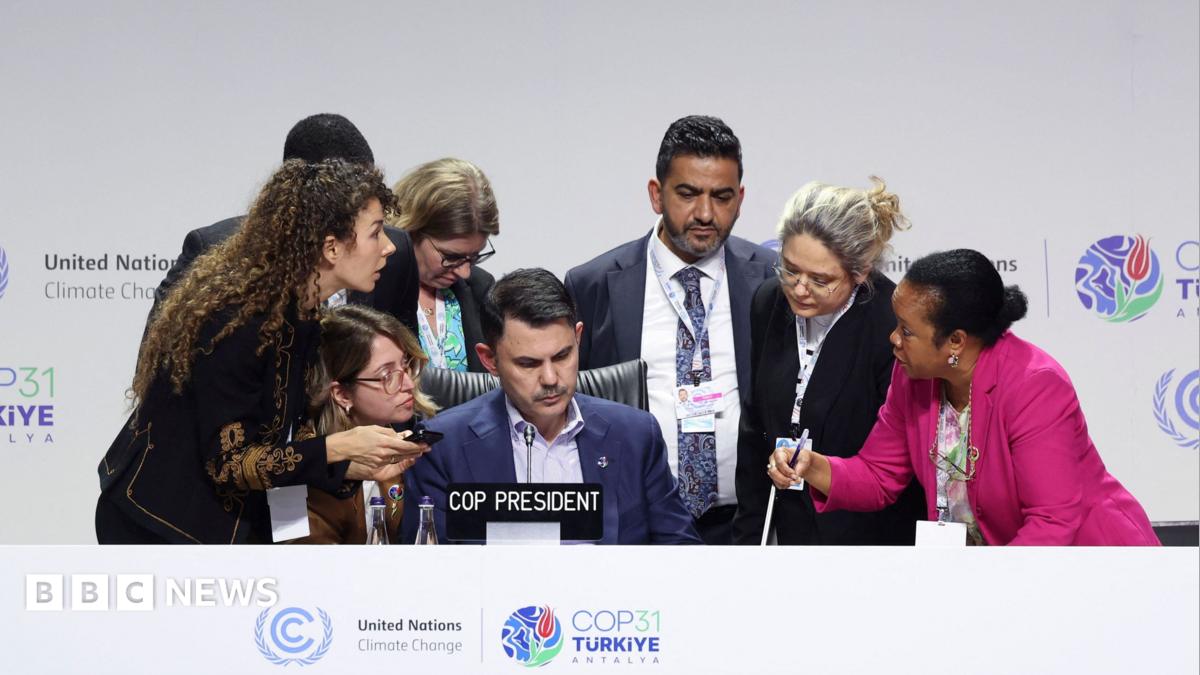
At the time, COP31 President and Turkish Environment Minister Murat Kurum said: ‘We ask you to look at this decision carefully. We are closer than ever to agreement on the remaining issues.’
The Antalya Accords could, for the first time, acknowledge that the Paris climate goal of limiting warming to 1.5°C has been missed. The world is now in a period of ‘overshoot’ — beyond which millions face rising seas and extreme heat.
Without a final agreement, the summit will pause and resume next year. The world watches closely to see if a new climate deal can be reached — or if divisions over fossil fuels and finance remain too deep.
For more on the current climate negotiations, see COP31 Climate Talks in Deadlock Over Fossil Fuels.
For details on Africa’s demand for climate finance, see Africa Demands More Climate Finance at UN Summit.
For a full analysis of whether COP31 will end with a deal, see Will COP31 End With a New Global Climate Deal?.
Sources & further reading
Featured image: A man in a blue suit sitting down in front of a placard that says 'COP President' is surrounded by seven people in suits leaning in and speaking to him.. Via original publisher. Image source