Geoffrey Bardon arrived at Papunya in 1971 as a 30-year-old school teacher from Sydney. He was assigned to teach at a government school in the remote Northern Territory settlement. His time there would spark a transformation in Australian Indigenous art.
The Origins of Western Desert Art
Bardon set up a painting centre for Aboriginal men. He encouraged them to transfer ceremonial designs—traditionally drawn on sand or body—onto boards. These designs were part of long-standing cultural practices of Pintupi, Luritja, Warlpiri, Anmatyerr, Kukatja, and Arrernte peoples.
The designs had deep spiritual roots. They were used in rituals, storytelling, and body painting. They expressed ancestral knowledge and cultural continuity. Bardon helped adapt these traditions into a new format.
He taught the men how to use paint, gave feedback on composition, and began selling the artworks. This created a new income stream for the artists and their communities. The paintings were not just art—they were cultural artefacts with deep meaning.
While the style of dots, circles, and lines became iconic, it was not new. Aboriginal people had made art for centuries. The designs predated Bardon. The movement was a reconfiguration of existing traditions, not their origin.
Bardon’s Personal History and Mental Health
Bardon had a history of mental instability. This phase coincided with his time at Papunya.
Living in remote desert conditions was a shock to him. Raised in Sydney’s white suburbia, he found the environment alienating. The strict living arrangements and isolation overwhelmed him.
He was deeply impressed by the men he met—like Tim Leura Tjapaltjarri and Clifford Possum Tjapaltjarri. Their ceremonies and stories showed deep cultural continuity. Bardon saw himself as a bridge to a new form of Aboriginal art.
But his vision was shaped by idealism and personal ambition. He did not fully understand the artists’ worldviews. His story was influenced by his own emotional state and cultural assumptions.
The 1972 Breakdown and Aftermath
In 1972, Bardon suffered a nervous breakdown. His brother Jim travelled to Papunya to bring him back to Sydney. The breakdown reflected deeper mental instability.
Bardon became increasingly paranoid—about administrators, colleagues, and local contacts. This showed a growing disconnection from reality.
He was admitted to a private psychiatric hospital. There, he underwent Deep Sleep Therapy—a treatment used in the 1950s and 1960s. It involved long periods of sleep induction. The therapy has since been discredited. It caused memory loss, emotional detachment, and lasting cognitive harm.
The Myth of Bardon and the Painting Men
After the breakdown, Bardon’s memory of Papunya became central to the story. He described himself as a white saviour and a truthteller who sacrificed himself for Aboriginal culture.
His brother Jim, an aspiring author, played a key role in shaping these stories. Jim had access to Bardon’s personal archives and their shared experiences. Together, they co-wrote an unpublished biography of Bardon.
Jim used his literary skills to craft a compelling narrative. It elevated Bardon as a tragic hero and cultural visionary. The artists themselves were often left in the background.
Who Gets to Tell the Story?
Kitty Hauser argues that storytelling is shaped by the teller’s background. Bardon’s mental health and personal ambitions influenced how he remembered the events.
Jim helped build a narrative that focused on Bardon’s sacrifice. This left little space for the artists’ voices. Many had created art for generations. They were not consulted in shaping the public image of the movement.
Hauser’s book is a powerful cautionary tale. It shows how personal baggage shapes cultural stories. The story of Papunya art reflects broader patterns of white paternalism in Australia.
Many non-Indigenous Australians see Aboriginal art as uniquely authentic—without understanding its roots or the communities behind it.
Why This Matters Today
The Western Desert art movement continues to influence the global art market. Today, Aboriginal art is a multi-billion-dollar industry. Works sell for millions at auctions.
Yet, the story of its origins is often told through Bardon’s eyes. This version has been repeated without critical review. It risks reducing Indigenous cultures to aesthetic symbols.
Hauser warns that personal narratives can overshadow community voices. The real story is not just about art—it’s about power, memory, and who defines cultural history.
For deeper insight into how the story has evolved, see The Myth of Geoffrey B-ardon and the Papunya Art Movement.
For a look at how collectors are shaping the market today, see How the Next Generation of Collectors Is Shaping the Art Market.
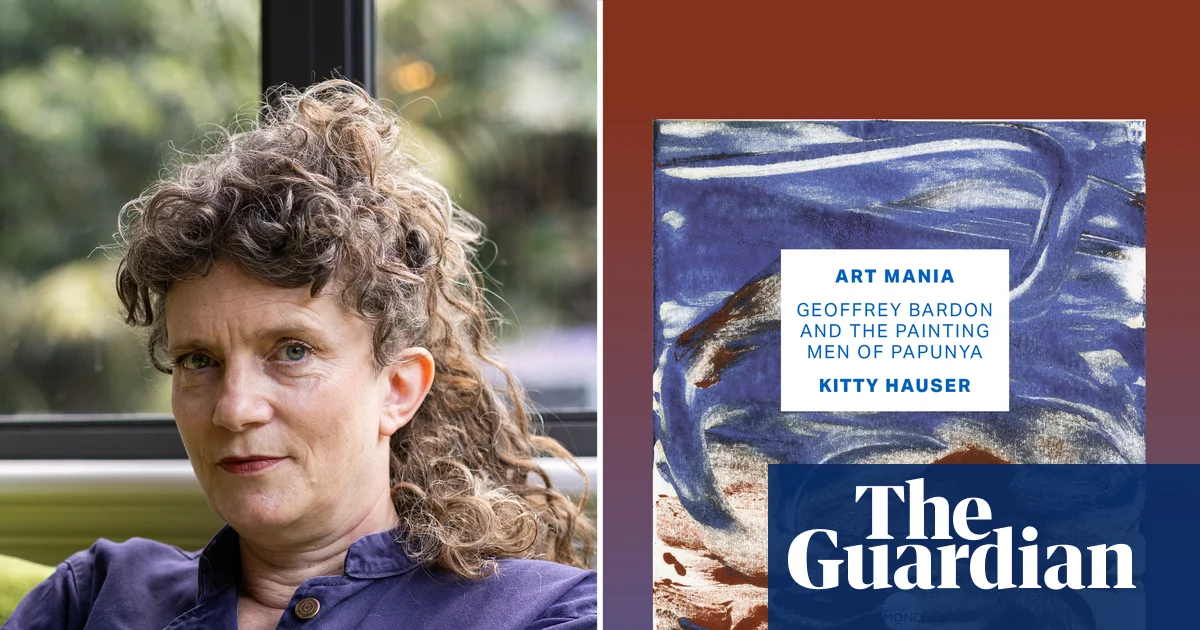
Hauser’s book, Art Mania: Geoffrey Bardon and the Painting Men of Papunya, is available now (Giramondo; $39.95). It can be found at the Guardian.
Sources & further reading
Featured image: original publisher image. Via original publisher. Image source