
Godzilla Minus Zero stands as a major achievement in the evolution of the Godzilla franchise. It builds on the emotional and thematic depth of its predecessor, Godzilla Minus One, while delivering a visually stunning and thematically rich sequel. Source: arstechnica.com.
What Happened: A Sequel That Honors Its Roots
Director Takashi Yamazaki returns with Godzilla Minus Zero, a direct sequel to Godzilla Minus One. The story begins two years after the original film’s climax. The family of former kamikaze pilot Kōichi Shikishima (Ryunosuke Kamiki) tries to rebuild their lives after the devastation caused by Godzilla.
A new kaiju emerges—Ghidorah—arriving via meteorite. It starts by feeding on local wildlife. It then evolves into a dragon-like creature. This transformation is a direct nod to Ghidorah’s iconic status in the franchise. The creature causes widespread destruction, prompting the government to mobilize its disaster response team.
Kenji Noda (Hidetaka Yoshioka), the director of the Large-Scale Disaster Response Bureau, seeks out Kōichi for help. The team tracks Ghidorah using meteorological patterns. Makoto Aoyama (Masami Nagasawa) leads the meteorology efforts. Despite their efforts, they lack a clear strategy to stop the kaiju.
Key Visual Innovations
The film is the first Japanese movie shot entirely for IMAX. This choice enhances the scale and immersion of the kaiju battles. Yamazaki says the decision was both technical and narrative—aimed at making the world and the monsters feel vast and powerful.
Ghidorah responds to a bombing attack by mutating into its three-headed King Ghidorah form. This evolution is visually striking and thematically significant. Yamazaki describes it as a reflection of how threats escalate when provoked—like real-world crises.
Ghidorah gains a new ability—a gravity beam. It levitates buildings and even Godzilla into the air. The effect adds unpredictability to the battle. Yamazaki says the power was intended to heighten danger and make each fight feel like a true cinematic risk.
In a dream sequence, biologist Kanji Murakami (Min Tanaka) sees Godzilla rise from the Atlantic Ocean in front of the Statue of Liberty. The scene is inspired by Cloverfield. It reinforces the link between Godzilla and nuclear radiation. Yamazaki says the scene shows how trauma and memory shape present actions.
Human Stories and Emotional Depth
At the heart of the film is a family trying to live in peace. Kōichi faces a moral dilemma: should he risk his life again to fight a kaiju? Failure could leave his daughter Akiko orphaned. He is not a hero driven by duty. He is shaped by guilt and past decisions.
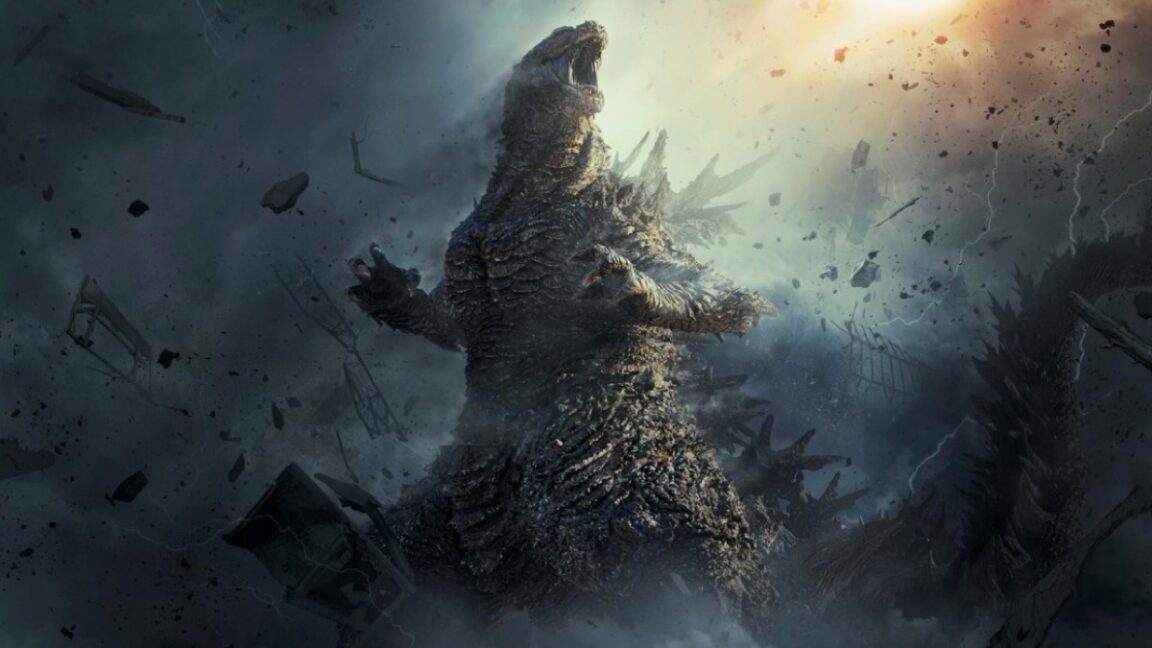
Noriko (Minami Hamabe), Kōichi’s wife, is infected with Godzilla’s radioactive G-cells. She is the only human to survive the mutation. Her infection is kept secret to avoid government intervention. When she touches Godzilla’s remains, she reacts with pain and connection. This suggests a deep bond beyond survival.
Yamazaki calls this moment a study of symbiosis—not literal fusion, but shared existence shaped by trauma and survival. The emotional weight of guilt, loss, and responsibility drives the narrative. The film avoids treating kaiju battles as spectacle. Each fight becomes a personal reckoning.
Why It Matters: A Mature Approach to Kaiju Cinema
Godzilla Minus Zero balances action with emotional realism. It avoids treating battles as set pieces. Instead, it uses them to explore deeper themes—like war’s legacy, memory, and survival’s cost. The pacing is deliberate. It allows time for character development and quiet moments of normalcy.
The film honors its roots by revisiting the postwar Japanese context of Godzilla Minus One. It connects the monster to historical trauma. The presence of G-cells in human bodies suggests a biological link between humans and kaiju. This opens doors for future exploration of evolution and symbiosis.
What’s Left Open
The film does not fully resolve Noriko’s connection to Godzilla. The G-cells suggest a deeper bond, but the film ends without exploring its implications. Yamazaki confirmed no third film has been announced. However, he previously suggested a sequel might explore this theme further.
Some viewers may find the early pacing slow. The film spends time showing daily routines and emotional states. Yamazaki says this was intentional. Audiences should feel the weight of normalcy before chaos arrives. The film’s realism comes from quiet moments, not just action.
What to Watch Next
No official sequel has been announced. But the emotional and thematic threads left open suggest strong potential. The connection between Noriko and Godzilla, and the role of G-cells, could become central to a future installment. The film ends on a bittersweet note—acknowledging both victory and personal cost. This tone reflects a mature evolution in the franchise.
Godzilla Minus Zero is still playing in theaters. It is recommended for fans of thoughtful, character-driven monster films that balance spectacle with emotional depth.
For more on the evolution of the Godzilla franchise, see our review of Terminator 2: Judgment Day. For background on the film’s production, visit the official Wikipedia page.
Sources & further reading
Featured image: roaring giant godzilla monster. Via original publisher. Image source
