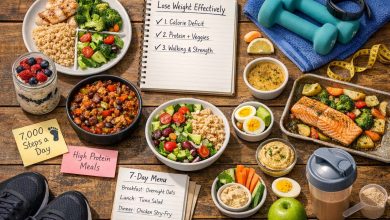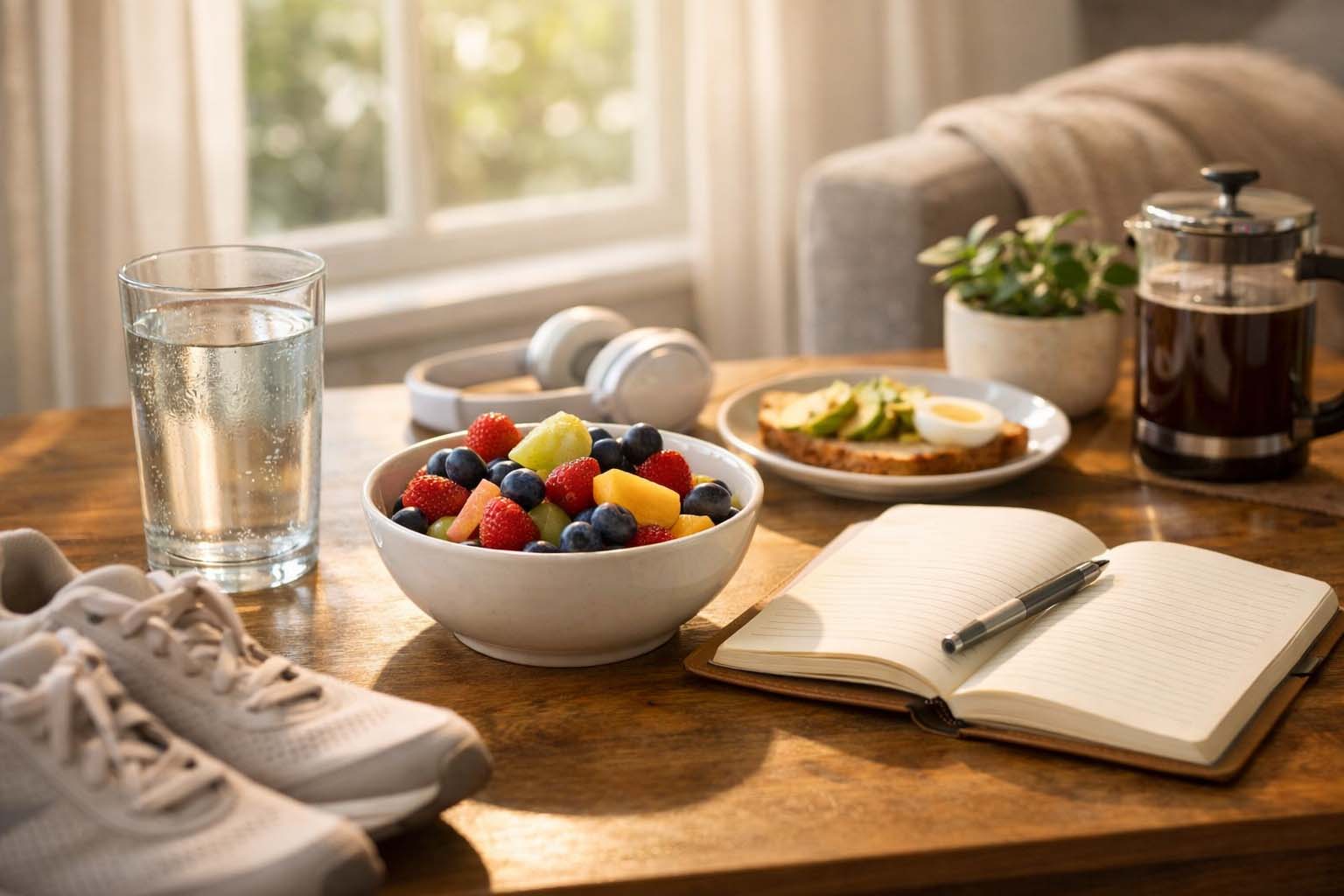
You don’t need a “perfect” routine to feel better. Most life-changing results come from boring, repeatable habits you can do on your worst days—not your best ones.
Below are 15 practical healthy habits that improve energy, mood, focus, and long-term wellbeing. Use them like a menu: pick 3 habits to start this week, then add more slowly.
Quick Start: The “3 Habit” Rule (so you don’t quit)
Choose:
- 1 body habit (move / food / sleep)
- 1 mind habit (stress / calm / focus)
- 1 environment habit (planning / screens / space)
Do them for 7 days, imperfectly, then upgrade.
1) Protect your sleep window (your whole life gets easier)
A healthy adult often needs around 7–9 hours of sleep.
Make it stick:
- Set a fixed wake-up time (even weekends).
- Aim for a wind-down alarm 45–60 minutes before bed.
- Keep your room cool, dark, and quiet.
Tiny version: “In bed, phone down” for 5 minutes.
2) Move your body daily (without overthinking it)
For adults, UK guidance includes aiming for at least 150 minutes of moderate activity weekly (or 75 minutes vigorous) and strength work 2+ days/week.
Simple ways to hit it:
- 30 minutes brisk walking, 5 days/week
- 10 minutes after each meal
- Two short strength sessions (15–25 mins)
Tiny version: Walk for 5 minutes right now.
3) Add strength training (it’s the “insurance policy” habit)
Strength supports posture, joints, metabolism, and confidence.
Start easy:
- Squats to a chair (3×8)
- Wall push-ups (3×8)
- Glute bridges (3×10)
Tiny version: 1 set of 8 squats while the kettle boils.
4) Eat “5 a day” the easiest way (add, don’t restrict)
NHS advice explains what counts toward 5 A Day (for example, 80g fresh/frozen/canned fruit/veg = one portion).
Make it effortless:
- Add berries to breakfast (1)
- Add salad/veg to lunch (1–2)
- Add veg to dinner (2)
- Keep apples/bananas visible (bonus)
Tiny version: Add one fruit or veg to your next meal.
5) Build meals around protein + fibre (you’ll snack less)
This stabilizes hunger and energy.
Easy combos:
- Greek yogurt + fruit + nuts
- Eggs + wholegrain toast + tomatoes
- Lentil soup + side salad
- Chicken/tofu + veg + rice
Tiny version: Add one protein item to breakfast
6) Drink water like a grown-up (without turning it into a project)
Hydration helps energy and concentration.
Make it automatic:
- One glass on waking
- One glass with each meal
- Carry a bottle you actually like
Tiny version: 6 slow sips now.
7) Keep alcohol “low risk” (future you will thank you)
UK guidance recommends not regularly drinking more than 14 units per week to keep health risks low.
Practical rules:
- Choose 2–4 alcohol-free days weekly
- Alternate drink → water
- Downsize servings at home
Tiny version: Swap tonight’s second drink for sparkling water.
8) Eat slowly for the first 5 minutes (a sneaky appetite hack)
Fast eating often leads to overeating.
Try this:
- Put the fork down between bites
- Chew fully
- Don’t scroll for the first 5 minutes
Tiny version: Take 10 slow bites before speeding up.
9) Create a 2-minute stress reset (use it daily, not just in crisis)
Your nervous system needs regular “downshifts.”
2-minute reset ideas:
- Box breathing (4–4–4–4)
- 30-second shoulder release
- Step outside for air + light
Tiny version: Exhale longer than you inhale for 5 breaths.
10) Put sunlight on your face early (especially in winter)
Morning light supports your body clock and can make sleep easier later.
Easy approach:
- 5–10 minutes outside after waking (even cloudy)
- Pair it with a short walk
Tiny version: Stand near an open window for 2 minutes.
11) Protect your attention (notifications are energy thieves)
Your brain can’t relax when it’s constantly “on call.”
Do this today:
- Turn off non-essential notifications
- Keep socials off your home screen
- Use Focus/Do Not Disturb in the evening
Tiny version: Remove one app shortcut
12) Make your home support your habits (environment beats willpower)
If healthy choices are visible and easy, you’ll do them more.
Quick wins:
- Fruit bowl on the counter
- Water bottle ready
- Workout clothes laid out
- Healthy snacks at eye level
Tiny version: Prep tomorrow’s outfit tonight.
13) Plan “default meals” (decision fatigue is real)
Choose 3–5 simple meals you repeat weekly.
Examples:
- Omelette + salad
- Stir-fry veg + tofu/chicken + rice
- Tuna/bean salad + wholegrain bread
- Soup + added protein
Tiny version: Write 3 meal ideas on your phone notes.
14) Walk after meals (the “free upgrade” habit)
A short walk after eating can boost digestion and helps you hit your activity minutes.
Tiny version: 3 minutes around the block.
15) Keep a “done list” (mental health loves evidence)
Your brain remembers failures more than wins unless you give it proof.
Try this:
Each night, write:
- 1 thing you did for your body
- 1 thing you did for your mind
- 1 thing you handled well
Tiny version: One sentence only.
A 7-Day “Healthy Habits” Mini Plan (copy/paste)
Day 1: 10-minute walk + glass of water on waking
Day 2: Add 1 fruit/veg + phone off for 30 mins before bed
Day 3: 10-minute strength circuit + 2-minute breathing reset
Day 4: Protein at breakfast + sunlight outside for 5 minutes
Day 5: Walk after one meal + prep tomorrow’s outfit
Day 6: Alcohol-free day + write a 3-line done list
Day 7: Repeat your easiest 3 habits + plan next week’s defaults
FAQ (SEO-friendly)
What’s the best healthy habit to start with?
Start with the one that feels easiest: a daily walk, a fixed wake-up time, or adding one fruit/veg per day.
How much exercise do adults need each week?
Guidance includes aiming for 150 minutes moderate activity weekly and strength work at least 2 days/week.
How many hours of sleep do adults need?
Many healthy adults need around 7–9 hours (individual needs vary).
What does “5 a day” actually mean?
NHS explains what counts and typical portion sizes (often 80g fresh/frozen/canned fruit/veg per portion).
How much alcohol is considered “low risk” in the UK?
UK CMO guidance recommends not regularly exceeding 14 units per week.
Final note
These tips are general wellness guidance. If you have a medical condition, take medication, or feel unwell, it’s smart to check with a GP or qualified health professional before making major lifestyle changes.
If you want, I can also format this exactly as a WordPress post (with shortcodes, image blocks, and an FAQ schema-ready section) and add even more photo prompts for every habit.