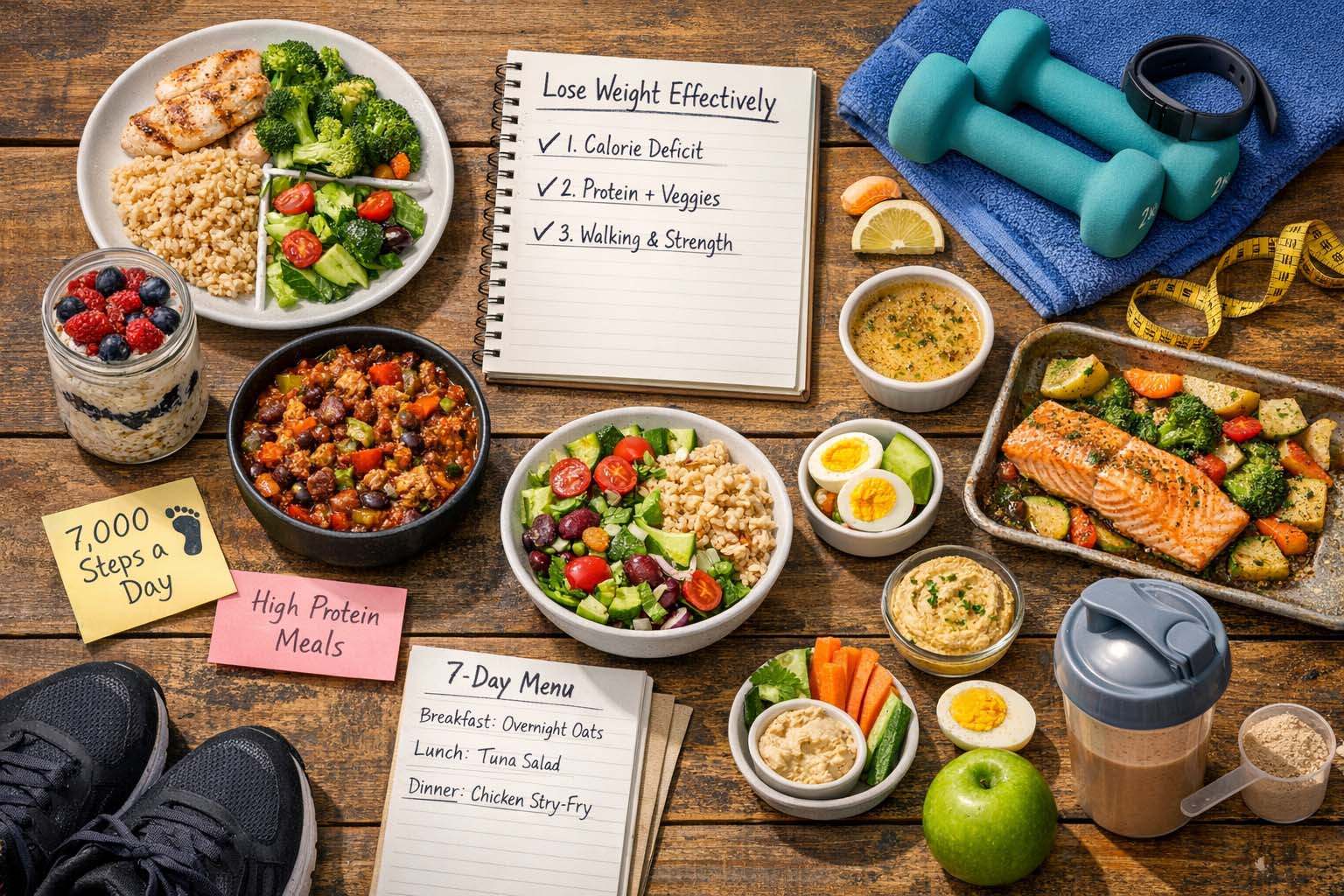
Losing weight isn’t about “perfect willpower.” It’s about creating a small, consistent calorie deficit, protecting your energy with protein + fibre, and using a routine you can repeat even on busy weeks. This guide gives you practical methods (“modes”) plus simple recipes you can rotate.
The 3 Rules That Make Weight Loss Work (Without Feeling Miserable)
1) Create a modest calorie deficit (not starvation)
A realistic pace is often 0.25–0.75 kg per week (varies by person). You don’t need extreme diets—just consistent habits that make eating slightly less effortless.
Two easy deficit levers:
- Portion structure (plate method below)
- Swap strategy (high-volume, high-protein foods)
2) Prioritise protein + fibre at every meal
This reduces hunger and helps preserve lean muscle while you lose fat.
Simple targets (no obsession):
- Protein: include a palm-sized portion at meals (or 20–35g per meal)
- Fibre: 2–3 fists of veg/fruit daily, plus beans/oats/wholegrains
3) Make it repeatable (your “mode” matters)
The best plan is the one you can do on ordinary days. Pick a mode from the options below and stick with it for 14 days before changing anything.
Choose Your Weight-Loss “Mode” (Pick ONE to Start)
Mode A: Plate Method (best for most people)
At lunch and dinner:
- ½ plate: non-starchy veg (salad, broccoli, peppers, mushrooms)
- ¼ plate: protein (chicken, eggs, tofu, fish, lentils)
- ¼ plate: carbs (rice, potatoes, pasta, wholegrains)
Add 1 thumb of healthy fat (olive oil, nuts, avocado) if needed.
Mode B: High-Protein, Lower-Snack Routine
- 3 meals/day
- Protein at breakfast
- 1 planned snack only (or none)
Works well if you “graze” and then feel guilty.
Mode C: Time-Restricted Eating (12:12 or 14:10)
Example: eat between 9:00–19:00 (12 hours) or 10:00–20:00.
This can help some people reduce mindless evening eating—but it’s optional, and not ideal if it triggers binge/restrict cycles.
Mode D: Calorie Tracking (short-term, educational)
Track for 7–14 days to learn portions, then switch to plate method. Tracking is a tool, not a lifestyle.
The Movement Plan That Speeds Results (Without “Killing Yourself”)
The 2-part formula
- Daily walking (fat loss engine):
- Aim for 7,000–10,000 steps/day (start where you are and add 1,000 steps)
- OR 30–45 minutes brisk walking, 5 days/week
- Strength training (body-shape protector):
- 2–3 sessions/week, 25–40 minutes
- Focus on: squats/sit-to-stands, hip hinges, push, pull, core
Beginner home circuit (2–3 rounds):
- Sit-to-stands (or squats) x 10–12
- Incline push-ups (hands on table) x 8–12
- Hip hinge (good morning) x 12
- Bent-over row (bands or water bottles) x 10–12
- Plank or dead bug x 30–45 sec
Habits That Make Weight Loss Easier (and Keep It Off)
- Sleep 7–9 hours (poor sleep increases cravings)
- Liquid calories audit: coffees with syrups, juices, alcohol
- Protein first at meals (then carbs)
- Kitchen environment: keep high-calorie snacks out of sight
- 80/20 rule: 80% whole foods, 20% “fun” foods planned
Easy Weight-Loss Recipes (High-Protein, High-Fibre)
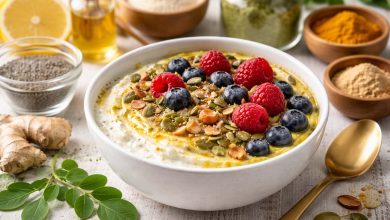
1) Protein Overnight Oats (2 minutes)
Ingredients (1):
- 50g oats
- 200g Greek yogurt (or soy yogurt)
- 100ml milk (any)
- 1 tsp chia seeds
- Berries + cinnamon
Method: Mix, refrigerate overnight.
Tip: Add 1 scoop protein powder if you struggle to hit protein.
2) Veggie Egg Muffins (meal prep)
Ingredients (6 muffins):
- 6 eggs
- Chopped peppers/spinach/mushrooms
- Salt, pepper, optional feta
Method: Mix, pour into muffin tray, bake ~15–18 min (180°C).
3) Tuna & Bean Salad Bowl (no-cook)
Ingredients:
- 1 tin tuna (or chickpeas)
- ½ tin mixed beans, rinsed
- Cherry tomatoes, cucumber, red onion
- 1 tbsp olive oil + lemon + herbs
Method: Mix and eat.
Upgrade: Add a handful of salad leaves.
4) Chicken (or Tofu) Stir-Fry “Big Bowl”
Ingredients:
- 150–200g chicken or tofu
- 2–3 cups mixed veg (frozen is fine)
- Soy sauce + garlic + ginger
- Optional: ½ cup cooked rice/noodles
Method: Fry protein, add veg + sauce, cook until hot.
5) Salmon Traybake (Omega-3 win)
Ingredients:
- Salmon fillet
- New potatoes (small portion)
- Broccoli or green beans
- Lemon, herbs
Method: Roast potatoes first, add salmon + veg for the last 12–15 min.
6) Turkey/Plant Mince Chilli (freezer-friendly)
Ingredients (4 portions):
- 500g lean turkey mince (or plant mince/lentils)
- 1 onion, garlic
- 1 tin chopped tomatoes
- 1 tin kidney beans
- Chilli, cumin, paprika
Method: Brown mince, add everything, simmer 20–30 min.
Serve: With cauliflower rice or a small portion of rice.
7) “Volume” Soup That Actually Fills You
Ingredients:
- 1 onion + garlic
- 2 carrots, celery, courgette
- 1 tin lentils or beans
- Stock + herbs
Method: Simmer until soft. Blend half for thickness.
8) Smart Snack Options (choose 1)
- Greek yogurt + berries
- Apple + 1 tbsp peanut butter
- Protein shake + banana
- Cottage cheese + tomatoes
- Hummus + carrots/cucumber
7-Day Simple Menu Template (Mix-and-Match)
Breakfast (choose 1 daily):
- Overnight oats / egg muffins + fruit / yogurt bowl
Lunch (choose 1 daily):
- Tuna & bean salad / leftovers / soup + protein
Dinner (choose 1 daily):
- Stir-fry / traybake / chilli / big salad + protein
Snack (optional):
- Pick one smart snack above
If hunger hits at night: add more veg, add protein, or move a planned snack to evening—don’t white-knuckle it.
Common Mistakes That Stall Progress
- “Eating healthy” but portions are too big (nuts, oils, cheese, granola)
- No protein at breakfast → cravings later
- Only cardio, no strength training → body shape changes slower
- Weekend “reset” mindset → consistency breaks
- Too little sleep → higher appetite and lower motivation
FAQ (WordPress-friendly)
How long does it take to see results?
Many people notice changes in 2–4 weeks (energy, cravings, waistline). Scale changes can be slower if you start strength training.
Do I need to cut carbs?
No. Carbs can stay—just portion them and pair with protein + veg.
What’s the best exercise for fat loss?
Walking is the most sustainable starter. Add 2–3 strength sessions/week for better body composition.
How do I stop cravings?
Protein at breakfast, fibre at meals, planned treats (not forbidden foods), and better sleep are the big levers.
Pick one mode, repeat it for 14 days, and keep meals simple: protein + veg + smart portions. Most “weight loss success” is just boring consistency done well.
Safety note: If you have a medical condition, take medication, are pregnant, have a history of eating disorders, or you’re unsure what’s safe for you, consult your GP or a qualified medical professional before making major diet or exercise changes.