Microsoft CEO Satya Nadella explained why he offered buyouts to 60,000 employees in October — not to cut jobs, but to help workers transition to a new AI-driven workplace.
What Happened
The buyout program allowed employees to leave with financial support, without being laid off. It was not a traditional workforce reduction.
Instead, it was a strategic step to help employees adapt to a major shift in how work is done at Microsoft.
Nadella said the goal was to give employees control over their career choices during a deep organizational change.
Key Facts
- 60,000 employees were offered buyouts in October.
- The move was not a layoff, but a voluntary exit with financial support.
- It supports Microsoft’s shift to making AI central to all work.
- Employees could choose to stay or leave with support.
How It Works
Microsoft is not replacing human workers with AI — especially software engineers.
Instead, every employee uses AI as a tool to do their job. The focus shifts from hands-on tasks to managing AI systems.
The Cowork team in Microsoft 365, for example, has just 11 developers. They use AI to build software. They don’t write code directly.
They build a software factory that creates the product. The actual coding is done by AI agents.
Shift in Job Roles
Nadella believes every employee will eventually manage AI agents, not do work directly.
He said, ‘That level of direction is what will happen in all jobs.’
Employees will now oversee AI systems, ensuring quality, accuracy, and alignment with business goals.
Why It Matters
This change affects every part of Microsoft’s workflow — from planning to product delivery.
Nadella said it will take longer than expected. ‘It’s going to take a bit more time than anyone expects.’
Public talk about AI singularity or job loss creates anxiety. ‘All of that makes people feel uncertain,’ he said.
Real change requires time, clear communication, and giving people real choices.
The buyout program supports employee well-being by letting people leave on their own terms.
Limitations and Open Questions
Some employees may not see the shift as positive. Technical roles may feel threatened.
Nadella admitted the change is hard for some. ‘For some people, that reorganization is sort of hard, right?’
There is no public data on how many accepted the buyout or how many stayed.
What to Watch Next
It’s unclear how many employees left through the program. Microsoft will need to show AI improves performance and satisfaction.
Future updates may show how the change affects innovation, productivity, and retention.
As the shift unfolds, challenges in training and culture will likely emerge.
For now, the buyout is a response to a deep transformation in how work is done at Microsoft — one that reflects a global trend toward AI-augmented workplaces.
More details can be found in the original report from TechCrunch.
Sources & further reading
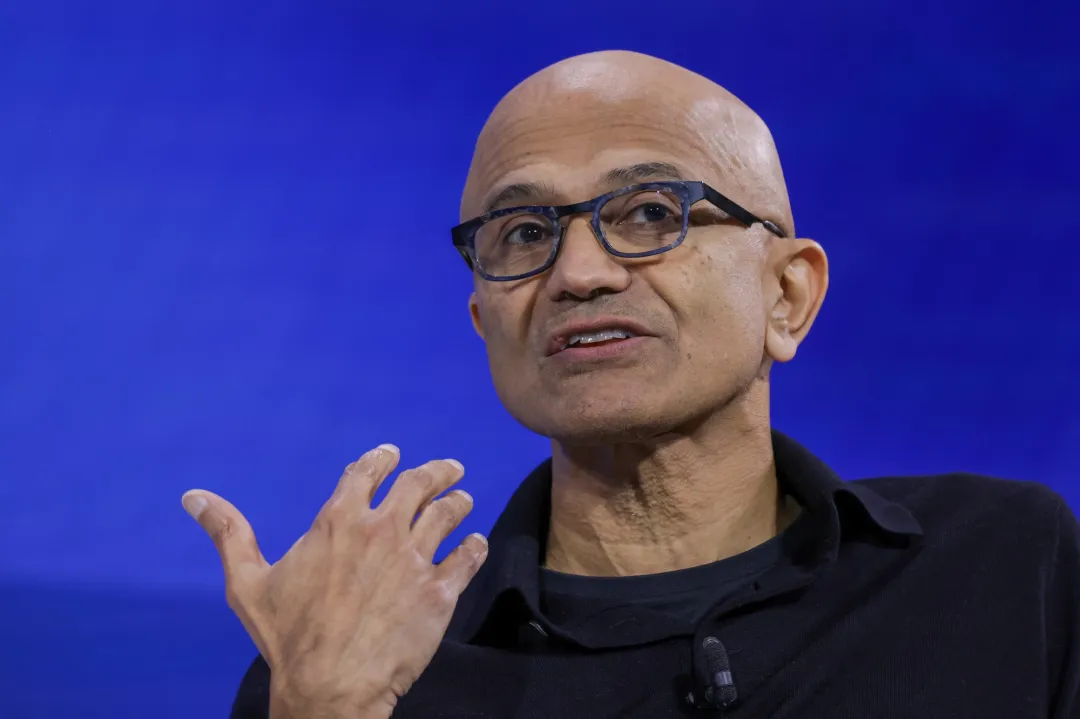
Featured image: NEW YORK, NEW YORK – NOVEMBER 18: Microsoft CEO Satya Nadella speaks during the 2026 DealBook Summit in the Appel Room at Lincoln Center on November 18, 2026 in New York City. Business executives and political leaders are expected to attend the annual New York Times DealBook Summit, now celebrating its 25th year, to discuss topics including artificial intelligence, politics and the global economy, among other issues. (Photo by Spencer Platt/Getty Images). Via original publisher. Image source