Wrapping a tree is a simple, effective way to protect young or vulnerable trees during winter. As leaves fall, trees lose their canopy, exposing trunks to harsh conditions. This makes them more prone to damage from cold, wind, and animal activity. Source: bobvila.com.
Why Winter Damage Happens
When trees lose their leaves, they no longer receive shade from their canopy. This exposes the trunk to direct sunlight and cold air.
Temperature swings—especially between day and night—can cause bark to expand and contract. This leads to cracks, known as frost cracks or sunscald.
Freeze-thaw cycles are especially damaging. When bark freezes and then thaws, it can split. This weakens the tree and opens it to pests and disease.
Wind and low humidity increase moisture loss from bark. This causes desiccation, or drying, especially in evergreen trees.
Types of Winter Damage
Sunscald
Sunscald occurs when frozen bark absorbs sunlight and heats up. When it cools at night, it refreezes and dies. This creates jagged, vertical cracks on the trunk.
It most commonly affects the southwest side of a tree—where winter sun is most intense.
- Silver maple
- Red maple
- Birch
- Redbuds
- London plane
- Sycamore
- Basswood
- Crabapple and other fruit trees
Winter Browning
Winter browning happens when evergreen needles lose moisture faster than frozen soil can replace it.
It often appears on the south or southwest sides of conifers. Wind exposure can also damage the northern side.
- Azaleas, rhododendrons
- Boxwood
- Holly and grape holly
- Mountain laurel
- Fir
- Spruce
- Pine
- Yew
- Hemlock
- Arborvitae
- Juniper
- False cypress
Animal Damage
Deer, rabbits, and rodents can damage young trees by chewing bark or rubbing against trunks.
Male deer, or bucks, rub antlers on tree trunks in early fall. This can cause scratches or wounds that may lead to infection.
Rabbits prefer trees like crabapples, apples, redbuds, and small evergreens.
These animals are especially active in winter when food is scarce.
When to Apply Tree Wrap
Tree wrapping should happen in fall, before the first hard frost.
For deer damage, wrapping may need to start as early as late summer—when bucks begin forming antlers.
For vole and mouse damage, wrapping should begin before the first snowfall.
Young trees benefit from protection for at least two winter seasons. After that, they become more resilient.
Wraps must be removed in spring. Leaving them on all year can harm the tree.
How to Wrap a Tree Properly
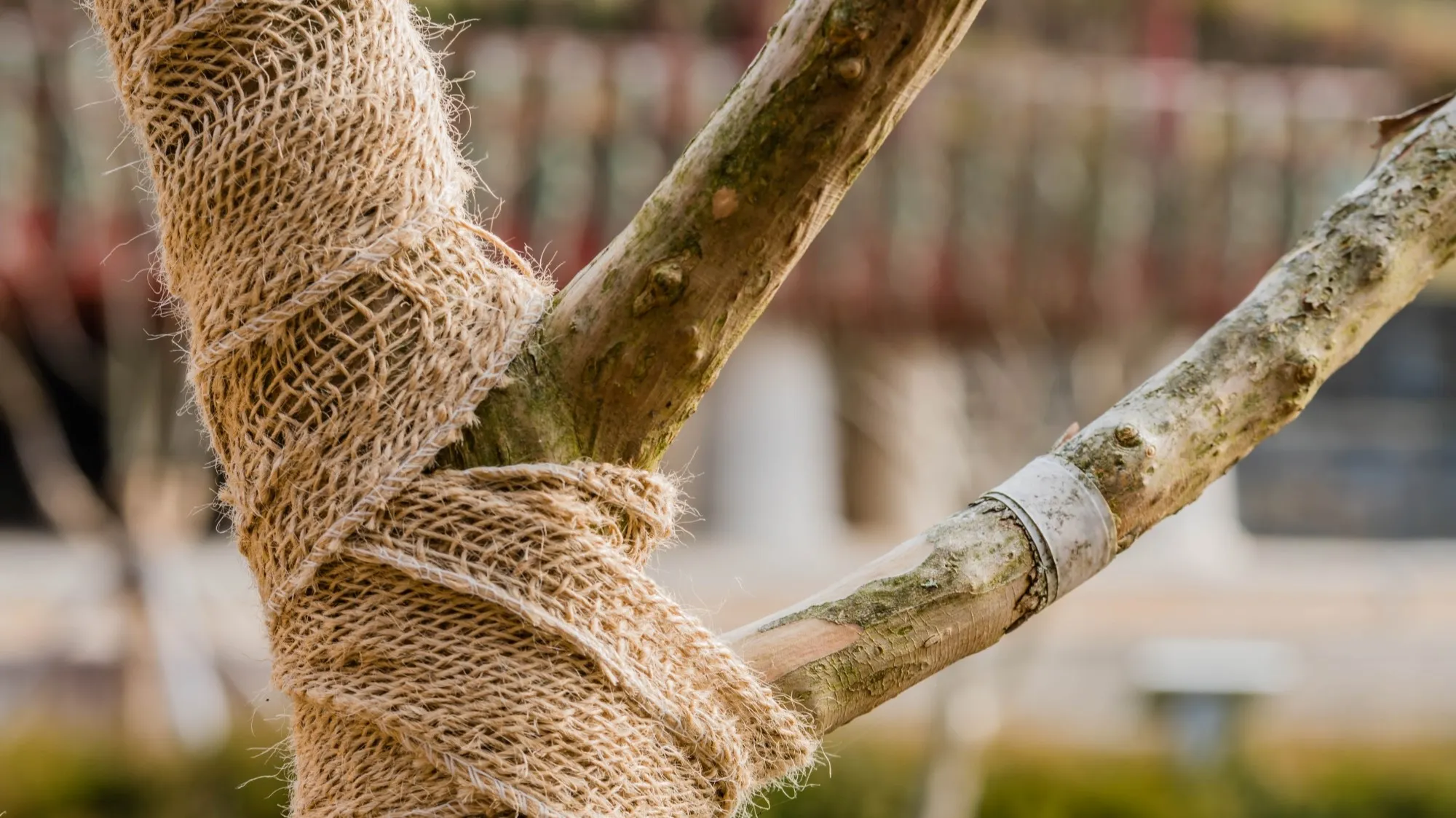
Use breathable, light-colored materials. These allow airflow and prevent moisture buildup.
Materials include poly or fabric tree wraps, plastic guards, or burlap—used carefully.
Never use wound paint or dressing on young trees. These do not prevent animal damage and may trap moisture.
- Clear debris around the trunk. Use a small trowel to scrape leaves and soil from the base of the trunk, about 1 inch below ground.
- Begin wrapping from the ground up. Each layer should overlap by at least one-third of the wrap’s width to cover all bark.
- Secure the wrap just below the lowest branches. Use heavy-duty tape or twine. Do not staple or puncture the trunk.
- If using a plastic guard, add a second guard above the first. Cut it to end just below the branches and secure it as directed.
- Check the wrap regularly. Ensure it remains tight and undamaged.
- Remove the wrap in spring. Carefully peel it off to avoid damaging the bark.
Protecting Shrubs and Evergreens
For shrubs, a burlap windbreak is often better than full wrapping.
Install stakes about 2 feet from the plant. Attach burlap or canvas to the stakes using staples or twine.
Leave a hole at the top to allow airflow and sunlight.
For extra protection, wrap chicken wire or hardware cloth around the stakes. This deters both wind and animals.
A deer fence should be at least 6 feet tall to prevent access.
Attach burlap to the fence with wire ties. Keep it close to the ground and leave the top open for airflow.
Protecting Against Animal Damage
To prevent small animals from chewing bark, dig a trench 2 to 3 inches below the soil.
Set hardware cloth or chicken wire into the trench. Wrap it around the trunk, overlapping at the ends.
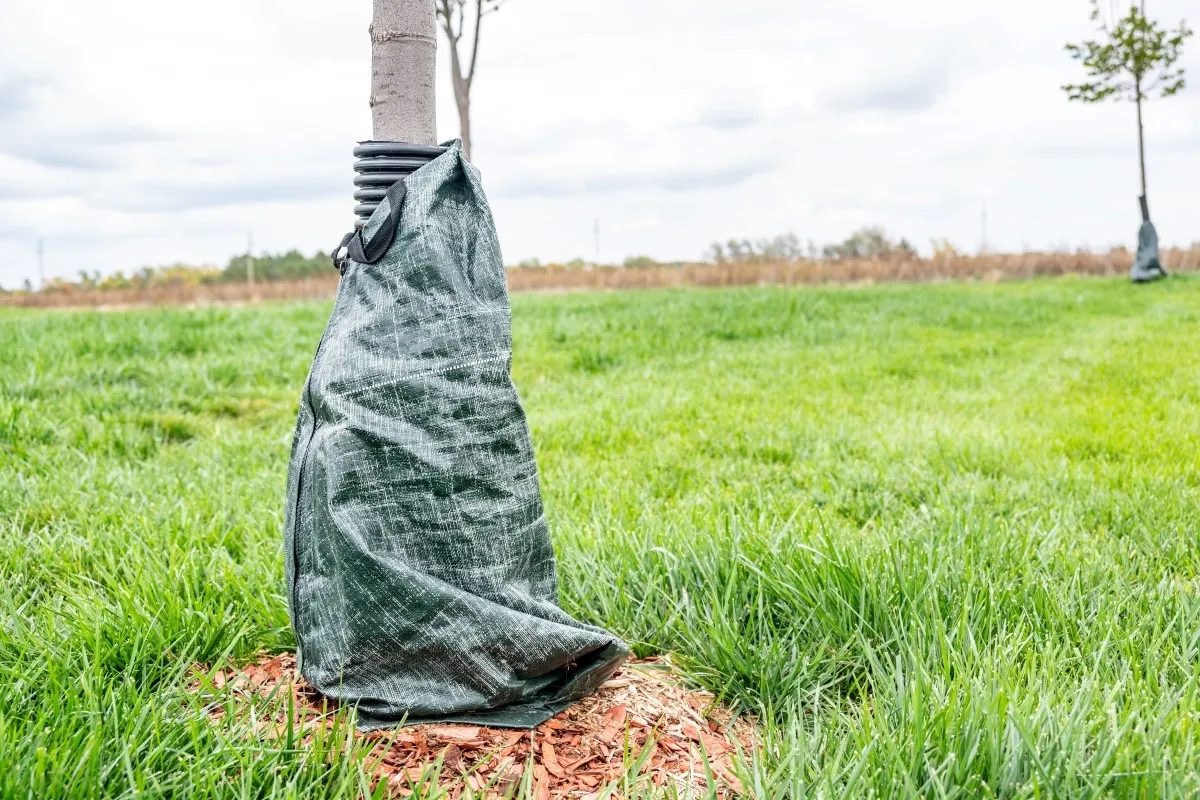
Snow can raise ground level and expose the trunk.
Remove the guard in early spring to prevent girdling—the damage that occurs when a barrier cuts off the tree’s growth.
Why This Matters
Proper winter protection helps young trees survive their first winters. It reduces the risk of damage that could lead to tree loss or replacement.
Healthy trees are more resilient. Good care in spring and summer—like consistent watering—helps trees enter winter stronger.
Tree wrapping is not a magic fix. It works best when combined with other care practices.
Limitations and Considerations
Tree wrapping is most effective for young or thin-barked trees. It does not protect mature trees from deep freeze damage.
Some materials, like burlap, can trap moisture and cause damage if used improperly. They are best used as screens or light wraps.
Wrapping does not prevent all animal damage. It is most effective when combined with fencing or other barriers.
There is no universal timing. The best time depends on local climate, tree species, and animal activity.
Wraps must be removed each spring. Failure to do so can harm the tree’s health.
Additional Winter Protection Methods
Other ways to protect trees include:
- Spreading 2 to 3 inches of mulch around the base—covering at least the root zone or canopy width.
- Using anti-dessicant sprays to reduce moisture loss from leaves and bark.
- Installing fencing to keep deer and other browsers away.
As Fred Breglia, a certified arborist, notes, placing winter-sensitive plants correctly can reduce damage risk. He also emphasizes that healthy trees are best equipped to survive winter.
For more on protecting plants from frost, visit how to protect plants from frost.
For more on tree care and winter survival, explore Big Trees: A Tour of the World’s Biggest Trees.
Always remove tree wraps in spring. Check trees for signs of damage—like split bark or discolored needles—when growth resumes.
Sources & further reading
Featured image: Photo: aminkorea via Adobe Stock. Via original publisher. Image source