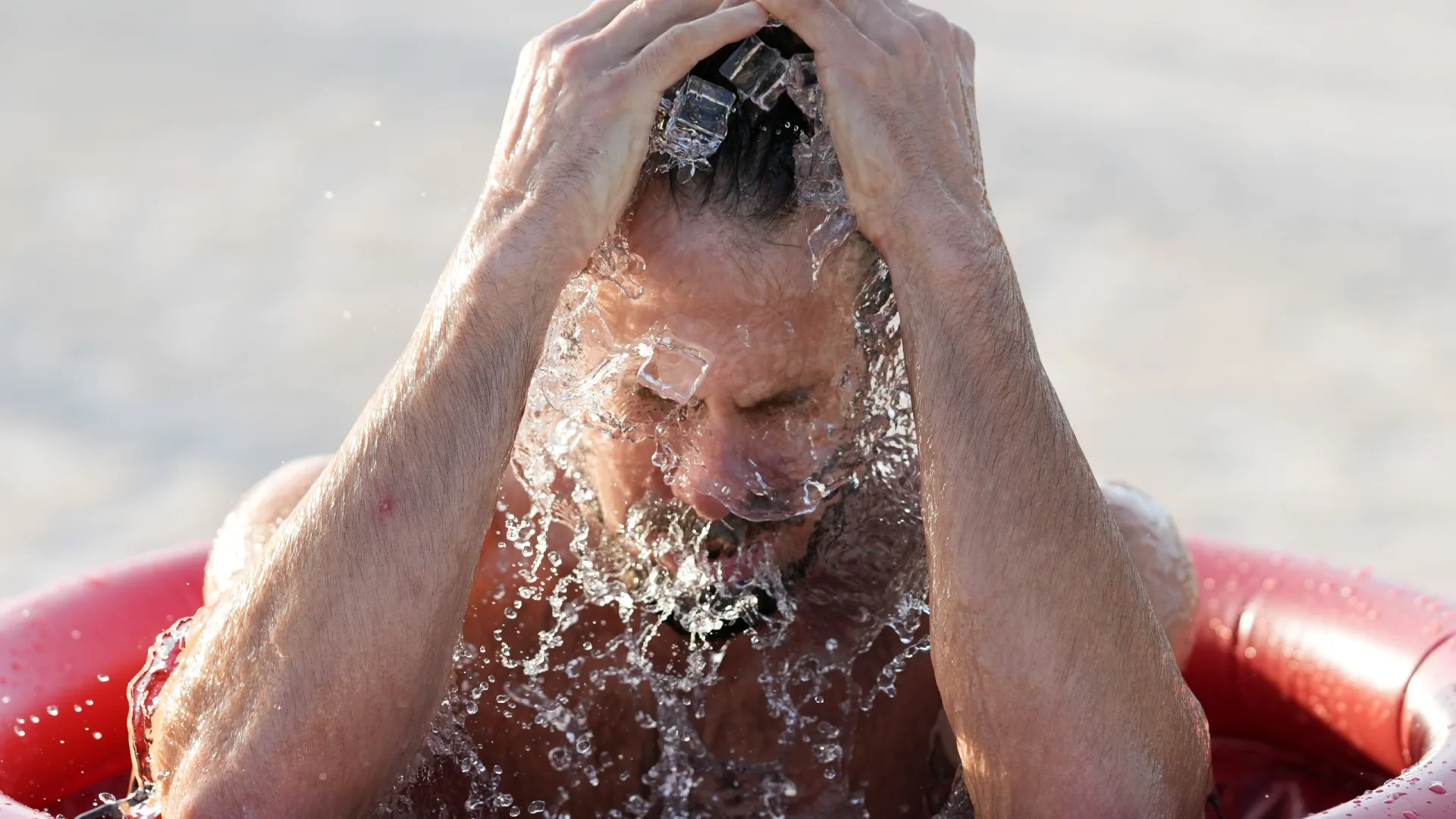
A new study shows ice baths can reduce muscle soreness — but with important limitations.
What the Study Found
Researchers at Edith Cowan University in Australia reviewed 15 scientific reviews and meta-analyses. These covered 161 individual studies and 3,210 participants across different sports and training levels.
The results show cold water immersion reduces muscle soreness, especially after intense workouts. This relief lasts up to four days, with the strongest effects after high-intensity or prolonged exercise.
How Ice Baths Affect the Body
Creatine kinase is a marker of muscle damage. The study found it drops between 24 and 72 hours after exercise when athletes use cold water immersion.
Heart-rate variability improves after immersion. This means the nervous system returns to rest faster. Athletes may feel more alert and ready for the next session.
However, the study found no consistent drop in key inflammation markers. So ice baths don’t reduce inflammation, even if soreness goes down.
Performance Benefits Are Time-Sensitive
Endurance performance improves only if the next workout happens within one hour after immersion. After that, the benefits disappear.
For athletes with tight schedules — like tournaments or back-to-back sessions — this window can be valuable. Ice baths may help maintain performance consistency.
Strength and power gains appear between 24 and 72 hours after training. This suggests ice baths support recovery between intense sessions.
A Hidden Cost: Muscle Growth
For those building muscle, ice baths after resistance training may reduce gains. Repeated use blunts increases in strength, endurance, and explosive performance.
Research shows this happens because cold immersion lowers muscle protein synthesis. Satellite cells — key to muscle repair and growth — show reduced activity.
These effects grow stronger after multiple resistance sessions. So ice baths may interfere with long-term muscle development.
What Experts Say
Lead researcher Erfan Berjisian says cold-water immersion isn’t a one-size-fits-all tool. “Its benefits depend heavily on the athlete’s goals, the type of exercise, and when the next session is scheduled,” he says.
Co-author Kristina Kendall adds: “If athletes need to perform high-speed or explosive movements soon after cooling, cold-water immersion may be counterproductive unless sufficient re-warming occurs.”
Key Takeaways
- Ice baths reduce muscle soreness and improve recovery in some cases.
- Benefits are strongest after high-intensity workouts and last up to four days.
- Endurance performance improves only if the next workout happens within one hour.
- Performance gains in strength and power appear 24 to 72 hours later.
- Repeated use after resistance training may reduce muscle growth.
- Ice baths should not be seen as universally beneficial or harmful.
Practical Recommendations
For best results, use 10 to 15 minutes in water at 10 to 15 °C (50 to 59 °F). This balances effectiveness and safety.
For greater muscle damage reduction and jump recovery, use colder water at 5 to 10 °C (41 to 50 °F). But only when recovery goals require it — not as a routine practice.
These guidelines depend on training type and goals. Athletes should assess their schedule and objectives before using ice baths.
Why This Matters
Many athletes rely on ice baths for recovery. This study offers a balanced view — showing both benefits and risks.
It challenges the idea that ice baths work for everyone. Knowing when and why they help — and when they don’t — is key to smart training.
For those building strength, ice baths may slow progress. For others with limited recovery time, they could still offer value.
More research is needed on how different training types interact with cold immersion. As of now, the findings are reported in Sports Medicine – Open.
For more on how the human body responds to extreme temperatures, see how early Earth may have favored fire over ice.
Original source: ScienceAlert
Fact-checked by Fiona MacDonald. If you spot a mistake, please let us know.
Sources & further reading
Featured image: Giant Study Finds Ice Baths Can Relieve Sore Muscles – But There's a Hidden Cost. Via original publisher. Image source