Victorian Christmas cards are not just festive greetings. Some of the earliest examples feature disturbing imagery—dead robins, frog murders, and fairies who kill rats. Source: theguardian.com.
Victorian Cards: A Darker Side of Festivity
The phrase ‘Victorian Christmas’ often evokes images of warmth, carols, and family togetherness. But the actual celebrations were more complex—and sometimes macabre.
A new set of historic Christmas cards, reproduced by English Heritage, reveals a festive culture that embraced absurdity and violence. These cards, made in the mid-19th century, show animals acting like humans in violent, surreal scenes.
Dead Robins and Religious Symbolism
One card shows a robin lying dead on the ground, with the message: ‘A Joyous Christmas to You.’ Another depicts a robin standing triumphantly on a turkey’s breast, wielding a knife and fork.
Robins were associated with Victorian postmen, whose red uniforms earned them the nickname ‘robins.’ Historians suggest the bird also carried religious symbolism—its red breast was once believed to be stained with Christ’s blood, a tradition tied to the story of Christ on the cross.
Frog Murders and Theatrical Violence
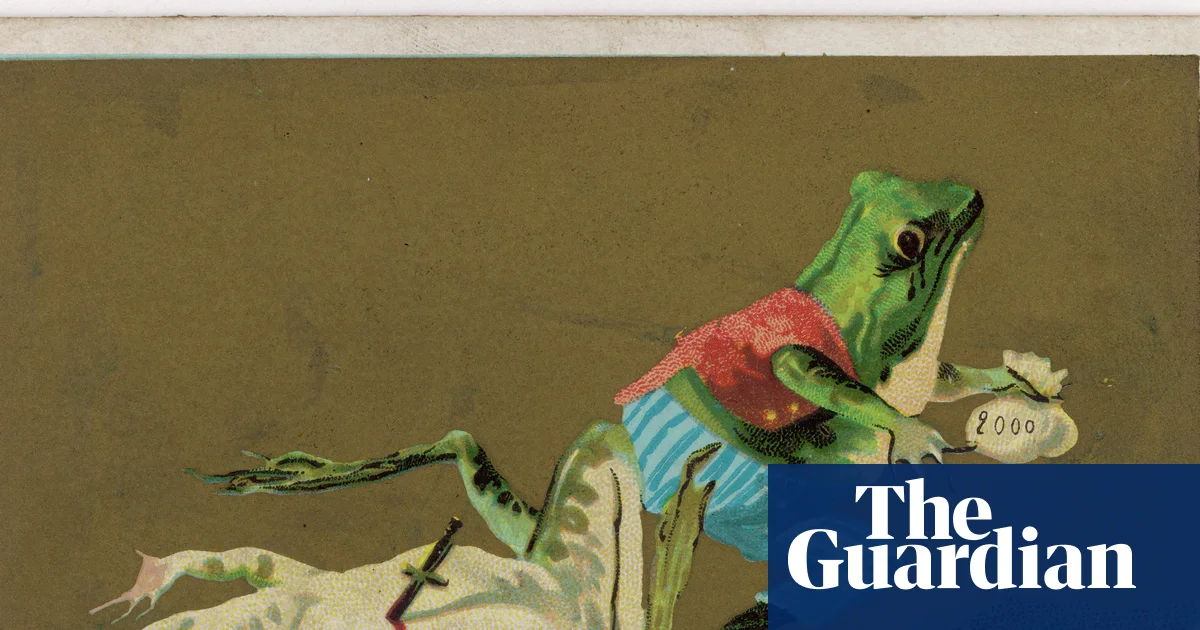
One of the most unusual cards shows a dead frog spreadeagled on the ground, pierced by a tiny dagger. A second frog, dressed in trousers and a waistcoat, escapes with a bag of loot.
While bizarre today, such imagery may have resonated more with 19th-century audiences. The scene has a theatrical quality—like a pantomime or a Shakespearean tragedy. Peter Moore, a curator at English Heritage, described the dagger as ‘very theatrical,’ suggesting it was meant to evoke drama rather than shock.
Moore could not identify a known folk tradition that inspired the frog scene. He speculated it was likely a satirical or comedic scene, not a literal story.
Rat-Murdering Fairies and Folk Traditions
Another image shows fairies suspended over a fire, with a dead rat hanging above them. The caption reads: ‘With the compliments of the season.’
Elves and pixies were common in Victorian culture. The idea of fairies killing rats would have been less alien to people who believed in folklore. These figures were often linked to winter rituals that celebrated death and rebirth.
Moore noted that many European winter festivals had dark, threatening themes. Examples include:
- Winter’s darkness in Roman Saturnalia
- Welsh Mari Lwyd, where wassailers carry horse heads to homes
- Catalan caganer, a figurine placed in nativity scenes that appears to defecate
These traditions reflect a cultural view of winter as a time of danger and transformation—when death and redemption are central themes.
Why These Cards Matter
These cards are not just oddities. They reflect how the Victorians saw the holiday season—not as a time of pure joy, but as a period of cultural tension, folklore, and subversion.
As print technology improved and postal services expanded, Christmas card production grew. Publishers competed to create unusual, eye-catching designs. The result was a range of images that blurred the line between humour and horror.
Moore said it’s difficult to know how people at the time responded to such imagery. ‘We’ll never really know how they made sense of it,’ he said. ‘I’d love to go back in time and ask people what they thought of it.’
What We Can Learn
The cards show that festive traditions are not static. They evolve through cultural memory, often shaped by local beliefs and historical anxieties.
These images challenge the modern ideal of Christmas as a warm, peaceful event. Instead, they reveal a deeper layer of human expression—one that embraces the strange, the violent, and the absurd.
The limited edition cards are now available at English Heritage gift shops, alongside more traditional festive greetings. They offer a rare glimpse into how the Victorians celebrated the holidays—through imagination, irony, and a willingness to embrace the unexpected.
For those interested in the cultural history of holidays, these cards provide a compelling reminder that celebration is not always about comfort. Sometimes, it’s about confronting the dark, the strange, and the unspoken.
Sources & further reading
Featured image: original publisher image. Via original publisher. Image source