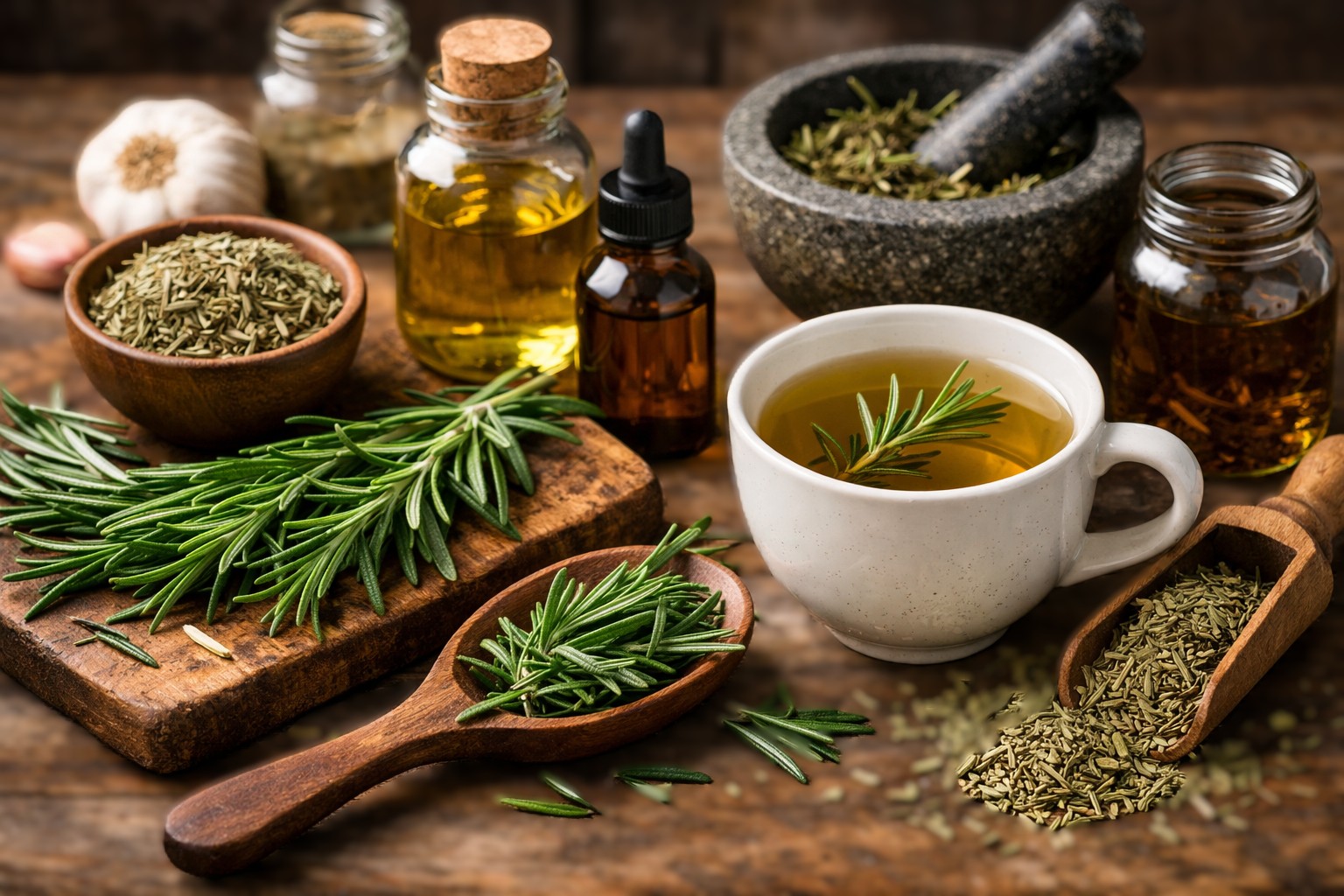
Rosemary (Rosmarinus officinalis) is far more than a fragrant kitchen herb. Used for centuries in Mediterranean cuisine and traditional medicine, rosemary is now widely recognised for its brain-boosting, anti-inflammatory, antioxidant, and digestive benefits. However, like all potent herbs, it also has possible side effects that should be understood.
This in-depth guide explores everything you need to know about rosemary, from its role in the kitchen to its medicinal applications, backed by modern research and traditional wisdom.
What Is Rosemary?
Rosemary is an evergreen herb native to the Mediterranean region. It belongs to the mint family (Lamiaceae) and is rich in bioactive compounds such as:
- Rosmarinic acid
- Carnosic acid
- Carnosol
- Essential oils (cineole, camphor, borneol)
These compounds are responsible for rosemary’s aroma, flavour, and health-promoting properties.
Health Benefits of Rosemary
1. Improves Brain Function and Memory
Rosemary is often called the “herb of remembrance.” Studies suggest that its aroma and extracts may:
- Improve concentration and alertness
- Enhance memory retention
- Support cognitive performance
The compound 1,8-cineole is believed to help prevent the breakdown of acetylcholine, a neurotransmitter essential for learning and memory.
2. Powerful Antioxidant and Anti-Inflammatory Effects
Rosemary contains strong antioxidants that help:
- Neutralise free radicals
- Reduce oxidative stress
- Lower chronic inflammation
These properties may support long-term health and reduce the risk of conditions such as heart disease and neurodegenerative disorders.
3. Supports Digestion and Gut Health
Traditionally used for digestive complaints, rosemary may help:
- Reduce bloating and gas
- Stimulate bile production
- Ease indigestion after heavy meals
Rosemary tea is commonly used after meals to promote digestive comfort.
4. Boosts Immune System
Thanks to its antimicrobial and antioxidant properties, rosemary may:
- Help the body fight infections
- Support immune response
- Inhibit certain bacteria and fungi
This makes rosemary particularly valuable during cold and flu seasons.
5. May Support Hair Growth and Scalp Health
Rosemary oil is widely used in natural hair care. Research suggests it may:
- Improve circulation to hair follicles
- Reduce dandruff
- Help with hair thinning and hair loss
It is often compared to minoxidil in effectiveness, with fewer side effects when diluted properly.
6. Supports Heart Health
Rosemary may contribute to cardiovascular health by:
- Improving blood circulation
- Reducing oxidative damage
- Helping regulate blood pressure
Its anti-inflammatory effects are especially beneficial for vascular health.
Rosemary in the Kitchen: Culinary Uses
Rosemary is a staple herb in European and Mediterranean cooking. Its bold, pine-like flavour pairs well with many dishes.
Popular Culinary Uses:
- Roasted potatoes and vegetables
- Lamb, chicken, and beef dishes
- Fish and seafood marinades
- Homemade bread and focaccia
- Olive oil and butter infusions
Cooking Tips:
- Use fresh rosemary for stronger aroma
- Chop finely to avoid woody texture
- Add early in cooking for deep flavour infusion
Rosemary also acts as a natural preservative, helping slow oxidation in foods.
Rosemary in Medicine and Natural Remedies
1. Rosemary Tea
Used to:
- Improve digestion
- Reduce headaches
- Enhance mental clarity
Preparation:
- 1 teaspoon dried rosemary
- Steep in hot water for 5–10 minutes
2. Rosemary Essential Oil
Used externally for:
- Muscle pain relief
- Aromatherapy for stress and fatigue
- Scalp massage for hair health
Always dilute essential oil before use.
3. Traditional Herbal Medicine
Historically used to:
- Improve circulation
- Relieve joint pain
- Support liver and gallbladder function
Modern herbalists still incorporate rosemary into detox and circulation blends.
Possible Side Effects of Rosemary
While rosemary is safe for most people in culinary amounts, medicinal doses require caution.
Potential Side Effects:
- Stomach irritation if consumed in large amounts
- Allergic reactions in sensitive individuals
- Skin irritation from undiluted essential oil
Who Should Be Careful:
- Pregnant or breastfeeding women
- People with epilepsy or seizure disorders
- Individuals on blood pressure or blood-thinning medication
High doses of rosemary extract may overstimulate the nervous system.
Important: Always consult a GP or qualified medical professional before using rosemary medicinally, especially if you have a medical condition or take medication.
How to Safely Use Rosemary
- Culinary use: Safe for daily consumption
- Tea: 1–2 cups per day
- Essential oil: External use only, diluted
- Supplements: Follow professional advice
Moderation is key to gaining benefits without unwanted effects.
Is Rosemary Good for You?
Rosemary is a powerful, versatile herb with impressive benefits for the brain, digestion, immunity, and overall well-being. Its role in both the kitchen and natural medicine makes it one of the most valuable herbs to keep at home.
When used responsibly, rosemary can enhance flavour, health, and daily vitality.
Always consult a GP or healthcare professional before using rosemary for medicinal purposes.