As autumn fades in Minnesota, a garden that once seemed bare begins to reveal quiet beauty. This is not a grand spectacle, but a series of small, overlooked details that emerge during the final weeks of the growing season. Source: finegardening.com.
What Happens in a Garden at Season’s End
By the time fall arrives, most gardeners have finished planting and are preparing for winter. Susan typically waits until mid-spring to begin cleanup, due to family commitments, unpredictable weather, and limited yard waste pickup services. Her cleanup process takes about ten weeks.
During this time, the garden appears bare and even grim on overcast days. But in the midst of this apparent emptiness, she noticed small moments of beauty that had previously gone unnoticed.
Visible Details in the Garden
- The underside of Korean maple leaves (Acer pseudosieboldianum, Zones 4–8) reveals a subtle, textured pattern when viewed closely. This texture shows how plant structures are designed for function and resilience.
- A ‘Northern Hi-Lights’ azalea (Rhododendron ‘Northern Hi-Lights’, Zones 4–7) displays bright fall color and buds that promise spring growth. The plant maintains biological activity throughout the year.
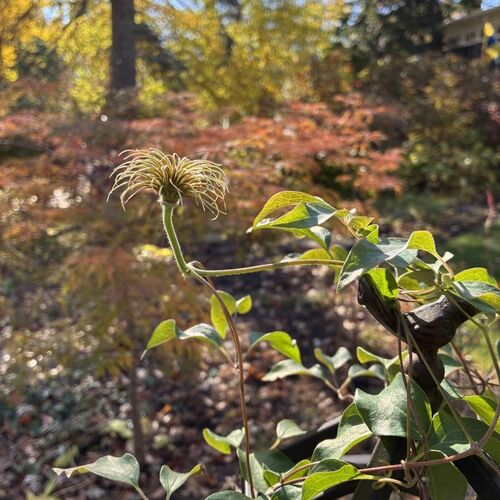
- The seed head of ‘Guernsey Flute’ clematis (Clematis ‘Guernsey Flute’, Zones 4–9) produced a second late flowering. This adaptability shows how some perennials extend blooming under favorable conditions.
- A final blossom on a ‘Max Frei’ bloody cranesbill (Geranium sanguineum ‘Max Frei’, Zones 3–8) marks one of the last blooms of the season. The plant continues to flower in late autumn.
- Raindrops on columbine (Aquilegia cvs., Zones 3–8) leaves catch light and reflect the interaction between water and plant surfaces. This interaction helps regulate temperature and nutrient uptake.
- The yellowed leaves of a bulblet fern (Cystopteris bulbifera, Zones 3–8) were overlooked during pruning. The yellowing signals the plant’s transition into dormancy.
- A bee visiting black cohosh (Actaea racemosa, Zones 3–8) shows that pollination continues into late autumn. This activity proves ecological processes don’t stop with visible growth.
- Evergreen Christmas fern (Polystichum acrostichoides, Zones -8) and moss provide texture and green contrast in winter. These plants retain foliage year-round.
- The bark of a blue beech (Carpinus caroliniana, Zones 3–9) appears taupe from a distance. Close inspection reveals subtle grain, showing the tree’s long growth history.
- Five minutes before taking a photo, Susan cleaned out a birdbath—the one she leaves available in winter, only on above-freezing days. The leaves found in it were from a ‘North Wind’ maple (Acer × pseudosieboldianum ‘IslNW’, Zones 4–7). This shows seasonal changes are gradual.
Why These Details Matter
Many gardeners focus on visible peaks—like spring blooms or summer color. But the end of the season offers a different kind of beauty. These small details reflect plant resilience and life continuity.
For instance, a bee on a black cohosh flower shows pollination continues in late autumn. A second bloom on clematis indicates some plants adapt to extend flowering. These are not signs of failure, but of adaptation. They challenge the idea that a garden must be vibrant to be meaningful.
Personal Experience and Garden Routine
Susan’s garden is large and complex. She manages it with practicality and care. She avoids cutting down perennials in the fall. This preserves plant structure and supports natural overwintering.
Her cleanup takes time. The yard waste service only picks up a limited number of bags at once. This means she spreads work over months, adjusting to weather and family needs.
What the Garden Reveals About Plant Life
Each element tells a story. The yellowed fern leaf shows the plant is still alive and responding to seasonal changes. Raindrops on columbine highlight how light and moisture interact with plant surfaces.
Even the bark of the blue beech, once seen as dull, reveals texture and depth when viewed closely. Susan only noticed this after a routine walk. This shows that slowing down and observing builds deeper connection with nature.
Limitations and Challenges in Observation
Not all gardeners have time or space to notice these details. Susan’s large garden and busy schedule make such observations possible only with dedication. Others may lack access to natural light, weather, or plant diversity.
The beauty described here is specific to Minnesota’s temperate, humid environment. The article focuses on one person’s experience. The principles of observation and patience, however, apply to any garden.
What Gardeners Can Learn from This
Small moments at season’s end teach patience and attention. They show that beauty is not always loud or obvious. By slowing down and looking closely, gardeners can see how plants live and grow beyond visible signs.
These details are not just about plants. They reflect a deeper connection between people and nature—one built on observation, consistency, and quiet appreciation. For gardeners, this moment reminds us that the work of gardening includes seeing, noticing, and honoring quiet life that continues beyond expectations.
Read more about autumn gardens in other regions: Autumn in a Montana Garden, Shrubs Steal the Show in Bonnie’s Colorado Garden, and Fall Color in Nancy’s Massachusetts Garden.
Share your own garden moments. Submit photos to the Garden Photo of the Day submission form or email to email@finegardening.com.
Sources & further reading
Featured image: THUMBNAIL-1×1. Via original publisher. Image source