
Engineers at the University of California, San Diego have developed a six-legged inflatable soft robot that is 100 times faster than its 2022 predecessor.
What Happened
The new soft robot, built by researchers at UC San Diego’s Jacobs School of Engineering, operates on inflatable pneumatic principles. It moves faster and with greater strength than the earlier version.
Unlike traditional robots that rely on rigid electronics and motors, this design uses pressurized air to power movement. The increase in speed comes from higher internal pressure, which allows the robot to respond more quickly to environmental changes.
How It Works
The robot is made of flexible materials that inflate and deflate to create motion. Each leg acts like a pneumatic joint, expanding and contracting to produce movement.
To achieve higher performance, the team increased air pressure within the structure. This presented engineering challenges, such as material stress and instability. To solve these, they borrowed design principles from steam engines—specifically, how pressure is managed in a controlled, expanding system.
The original version was developed in 2022. The new model builds on that foundation, improving responsiveness and mechanical strength without adding complex electronics.
Why It Matters
This advancement shows that soft robotics can outperform rigid systems in certain environments. The robot is designed to operate in unstable or unstructured terrain—like sand or loose soil—where traditional robots might fail.
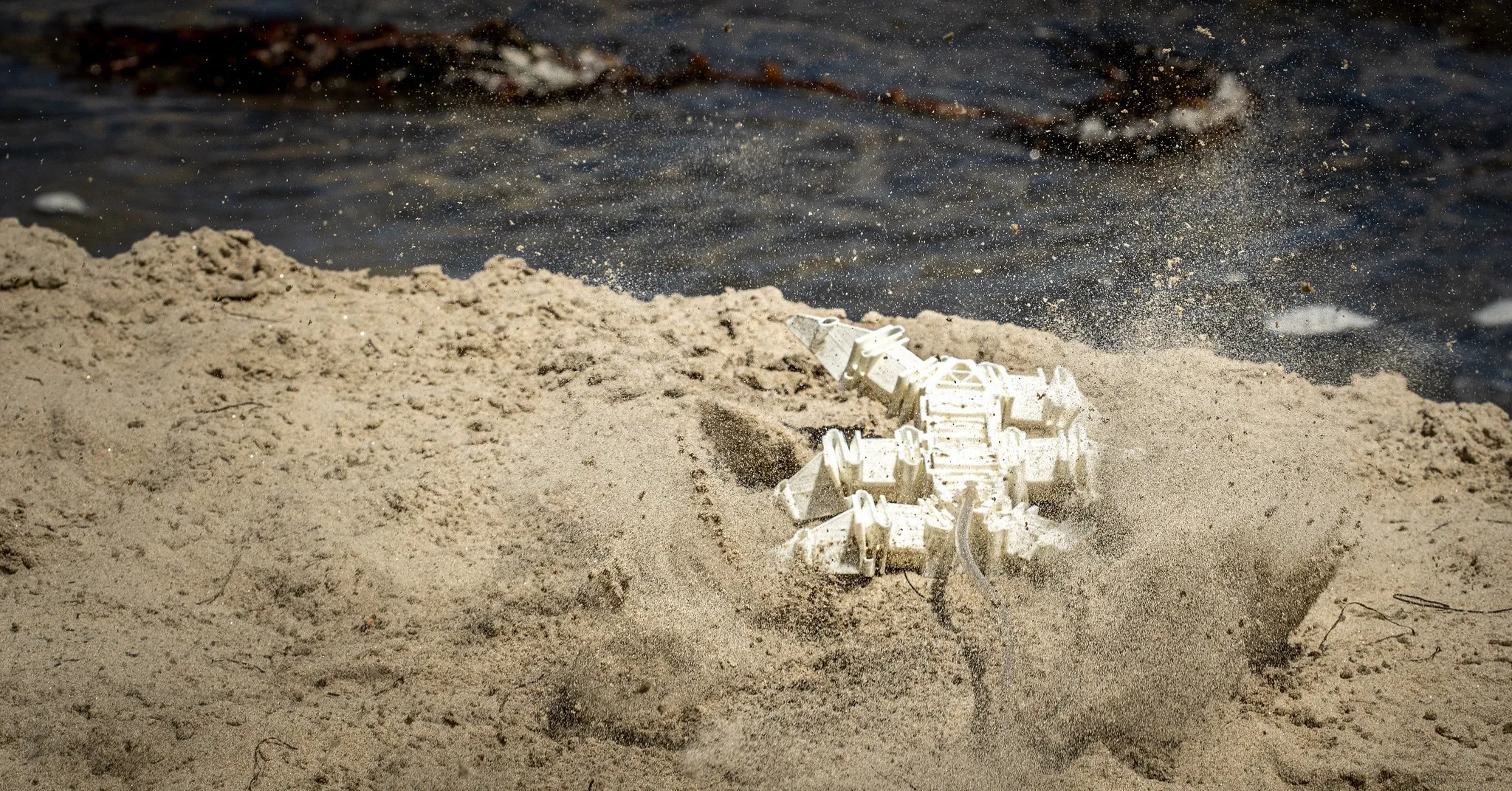
Its ability to move quickly and adapt to uneven surfaces makes it useful for search-and-rescue operations, environmental monitoring, or disaster response.
Limitations and Open Questions
The robot is still limited by the durability of its inflatable materials. High pressure can lead to material fatigue over time.
Researchers have not yet tested it in extreme conditions or for long-term operation. There is no public data on how long it can sustain performance under real-world stress.
While the speed improvement is significant, the robot does not yet match the precision or dexterity of electronic robots. Its applications are currently focused on physical mobility rather than manipulation.
Sam Freeman, the article’s author and online editor at Make, notes that the robot is part of a broader trend in DIY and maker communities. He emphasizes that such projects help demystify robotics and show how simple materials can produce complex behaviors.
For more on this project, see the original article at Make: DIY Projects and Ideas for Makers.
Sources & further reading
Featured image: Soft Robot is Faster, Stronger than Before. Via original publisher. Image source
