Chimpanzees often display behaviors that mirror human expressions of wonder and awe. These include drumming, rock-throwing rituals, and dramatic dances during rainstorms. Such actions are not random—they occur in response to specific environmental events, especially intense weather. Source: psychologytoday.com.
Chimpanzee Drumming: A Rhythm of Expression
Males in West Africa perform a ritual called ‘accumulative rock throwing.’ They choose fig trees with hollow, resonant trunks—trees that amplify sound. This selection is intentional, not accidental.
After choosing a tree, a chimp stands upright, picks up a melon-sized rock, and begins a buildup of vocalizations. The moaning grows louder and sharper, ending in a signature pant-hoot. This pattern follows a rhythm similar to human music—building in intensity and cadence.
At the peak of the call, the chimp throws the rock at the tree’s buttress. Then it climbs onto the trunk and beats it with its feet—drumming. Afterward, it sprints into the forest, often shouting. Biologist Caitlin O’Connell says this behavior goes beyond territorial marking. It shares emotional and structural traits with human music-making.
Dr. Marc Bekoff has noted that such actions may point to a shared emotional depth between humans and chimpanzees. If animals respond to nature with expressive, coordinated actions, it suggests a capacity for emotional richness—something we usually link to spiritual experiences.
Chimpanzee Rain Dances: A Ritual in the Storm
In the 1960s, Jane Goodall watched chimpanzees at Gombe National Park during a heavy rainstorm. The animals climbed from a fig tree to a ridge above the forest. As the storm broke, one male stood upright and swayed rhythmically from foot to foot.
He emitted a rising crescendo of pant-hoots, louder than the rain. Then he charged downhill, breaking branches and hurling them. As he ran, he swung into a tree to slow his momentum and sat motionless in the branches.
Other males followed, repeating the sequence. The group ran, broke branches, and swung into trees. Females and young watched from the ridge.
Each performance lasted about 20 minutes. The behavior is rare—only seen during intense storms. Goodall described it as a ritual that mirrors human celebrations of nature. The males often perform it in sync, showing a form of group unity beyond basic social interaction.
The timing is key. It happens only when the weather shifts dramatically—when thunder and rain burst suddenly. This suggests the behavior is not random. It responds to a threshold moment in nature, like how humans feel awe during a thunderstorm or solar eclipse.
Waterfall Dances: A Display of Nature’s Power
Goodall also saw a chimp approach a waterfall in a heightened state. As the roar grew, the chimp quickened its pace. Its hair stood fully erect, and it stood upright near the stream.
It swayed rhythmically, stamped in the rushing water, and picked up large rocks to hurl. In some cases, it climbed vines above the waterfall and swung into the spray. These displays last ten to fifteen minutes.
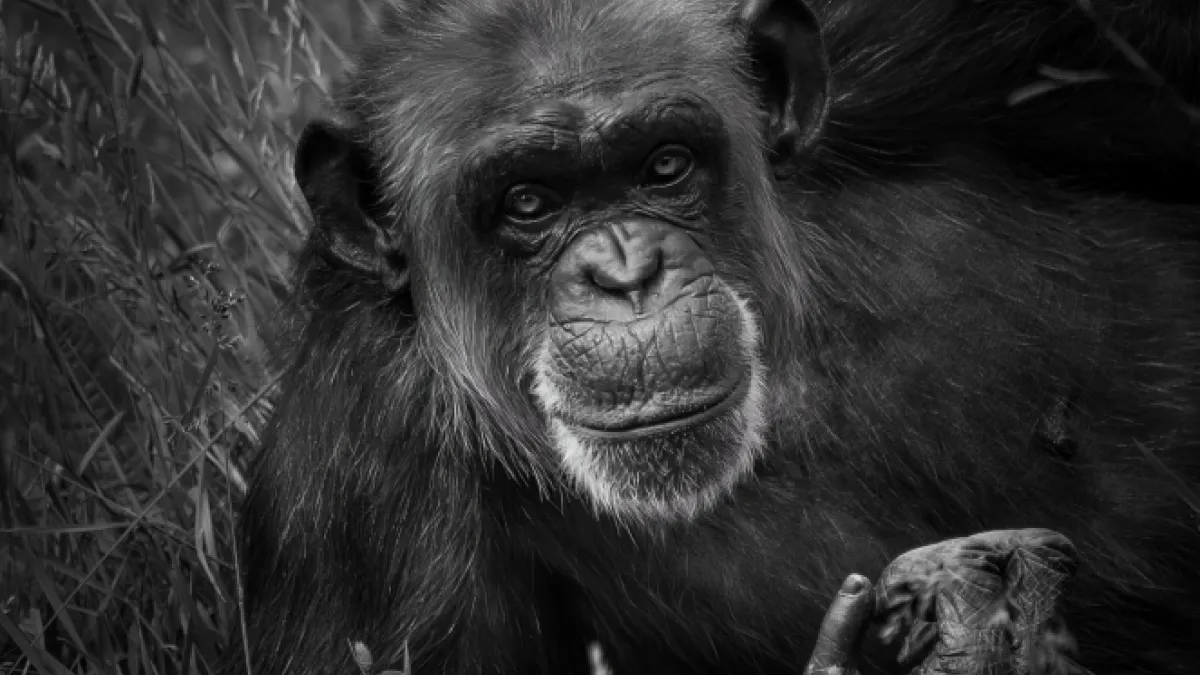
Afterward, the chimp sits on a rock and watches the water fall—gazing as if reflecting on its presence. Goodall has asked: ‘Is it not possible that these performances are stimulated by feelings akin to wonder and awe?’
The posture, movements, and stillness after the dance resemble human rituals of reverence—like bowing before a sacred site or pausing to watch a sunrise.
What Does This Mean for Animal Emotions?
These behaviors challenge the idea that only humans feel awe or connect spiritually to nature. Gestures like back-slapping, kissing, and drumming mirror human emotional expressions.
Dr. Marc Bekoff, who often receives questions about animal spirituality, says curiosity in animals may lead to deep questions about existence. He suggests animals may feel awe—something we associate with spiritual experiences—when responding to natural events.
These actions are not random. They are rhythmic, coordinated, and tied to dramatic shifts in nature. This pattern matches human rituals of celebration or reverence. The consistency across observers strengthens the idea that these are emotional expressions, not just survival behaviors.
Limitations and Open Questions
There is no scientific consensus on whether animals feel awe or spirituality. While the behaviors are consistent, interpreting them as emotional or spiritual experiences requires inference. We cannot directly know what animals feel internally.
Some researchers warn against assuming animals have emotions like humans. A male chimp might dance to assert dominance or attract a mate—not to feel awe.
Still, the ritualistic nature of these displays—especially during powerful natural events—suggests deeper emotional responses. Dr. Bekoff says we should not assume animals lack the capacity for wonder. Their behaviors may simply express it in forms we haven’t yet recognized.
These observations don’t prove animals feel awe. But they show nature can trigger behaviors that resemble human spiritual responses. As Goodall noted, one male paused at the end of a rain dance, placed his hand on a tree, and looked back. Then he vanished over the ridge. The moment feels like a quiet, powerful ritual—simple, profound, and deeply human.
For animal behavior researchers, these moments offer a glimpse into emotional lives beyond human boundaries. More study is needed to determine whether animals experience awe and how such moments might be recognized in the wild.
Until then, the rain dances of chimpanzees remain a powerful example of nature inspiring behavior that echoes our own.
Sources & further reading
Featured image: original publisher image. Via original publisher. Image source