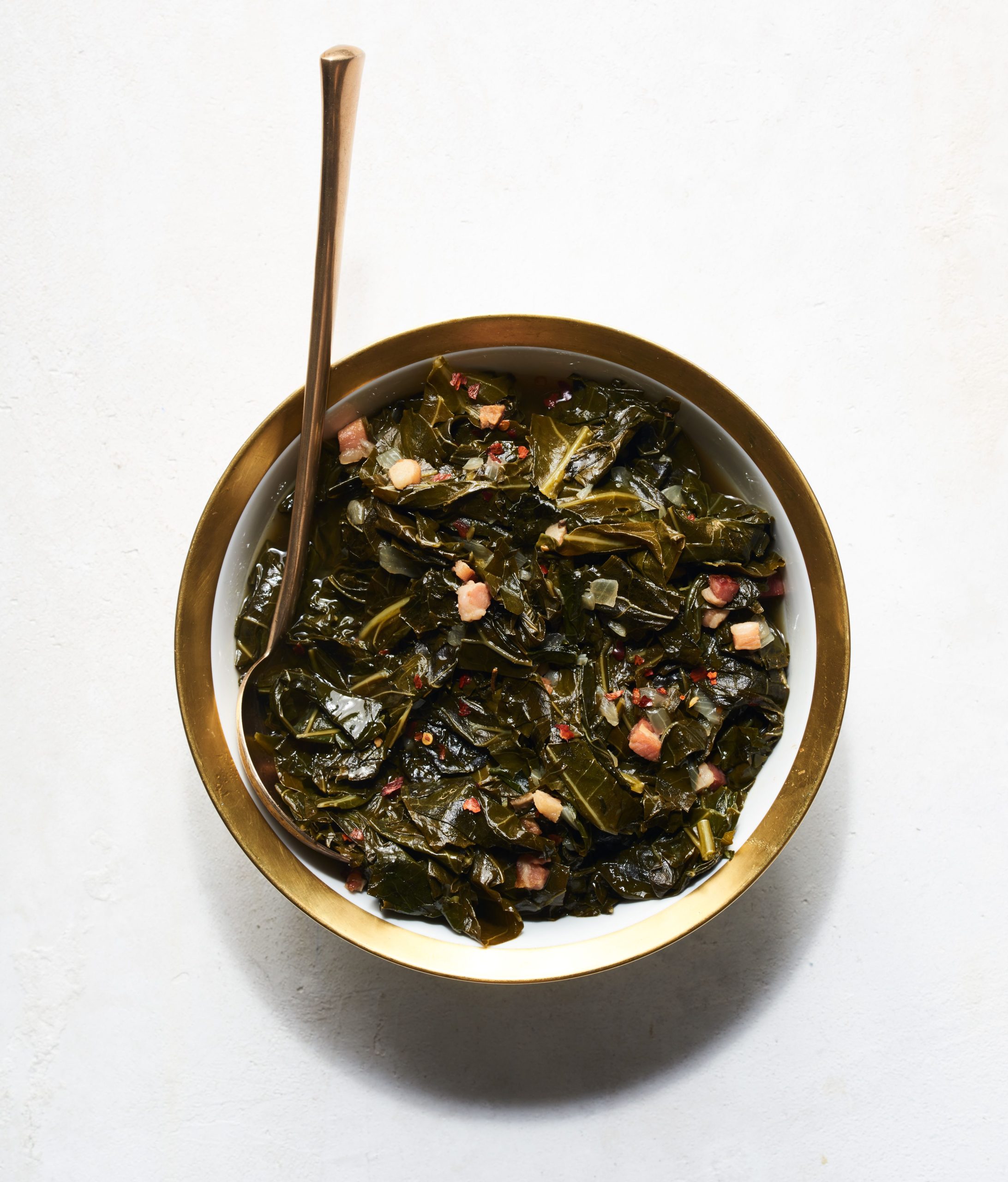
Collard greens have deep roots in Southern cooking. They’re a fixture on New Year’s Day, when eating greens is said to bring prosperity in the year ahead. Chef Julia Sullivan of Henrietta Red in Nashville serves them alongside black-eyed peas every January 1. “It’s something my mom has always done, and I think my grandparents, too,” she says. “It’s a superstitious thing.”
Sullivan’s collard greens get their savory, subtly smoky flavor from bacon, onion, garlic, and red pepper flakes. They simmer until silky-tender in just under an hour, then get a sweet-tart finish from apple cider vinegar and a little sugar. This recipe intentionally leans tangy. If you like your collard greens less acidic, start with 2 Tbsp. vinegar instead of the full ¼ cup, then add more to taste.
Collard greens FAQs
How do you clean and prep collard greens?
Remove the tough center ribs and stems. Next, stack the leaves, roll them up, and slice them crosswise into 1″-thick strips. Dunk the prepped collard greens into a large bowl (or sink!) filled with water. Swish the leaves around to loosen the grit and let them sit for a few minutes. Remove the greens from their container (don’t pour them out or the grit will get back on the leaves) and shake to remove excess liquid. There is no need to dry the collard greens for this recipe; a little bit of water helps them steam and wilt down.
Why do you add vinegar to collard greens?
Vinegar balances collard greens’ earthy, slightly bitter flavor and cuts through the richness of the bacon and broth. Adding it near the end of cooking keeps its flavor bright. This recipe calls for ¼ cup apple cider vinegar, but you can start with half that amount and adjust to taste.
Can I make these collard greens without bacon?
Yes. The bacon is optional, so you can simply leave it out, or trade it for beef or turkey bacon. For vegetarian collard greens, also swap the chicken broth for water or vegetable broth and add savory depth with a spoonful of miso paste.
What other types of greens work with this recipe?
Any sturdy cooking greens can work here, but expect differences in flavor and cooking time. Mustard greens and turnip greens are equally beloved in the South; either will make a slightly sharper, more peppery batch of greens. Kale is also a fine alternative. More delicate Swiss chard will become tender much faster, so reduce the cooking time accordingly.