Klafs is redefining the sauna not as a room, but as a design experience. The German company, based in Schwäbisch Hall, blends engineering with wellness rituals to create spaces that adapt to modern living.
From Bedroom to Spa: The Evolution of Sauna Design
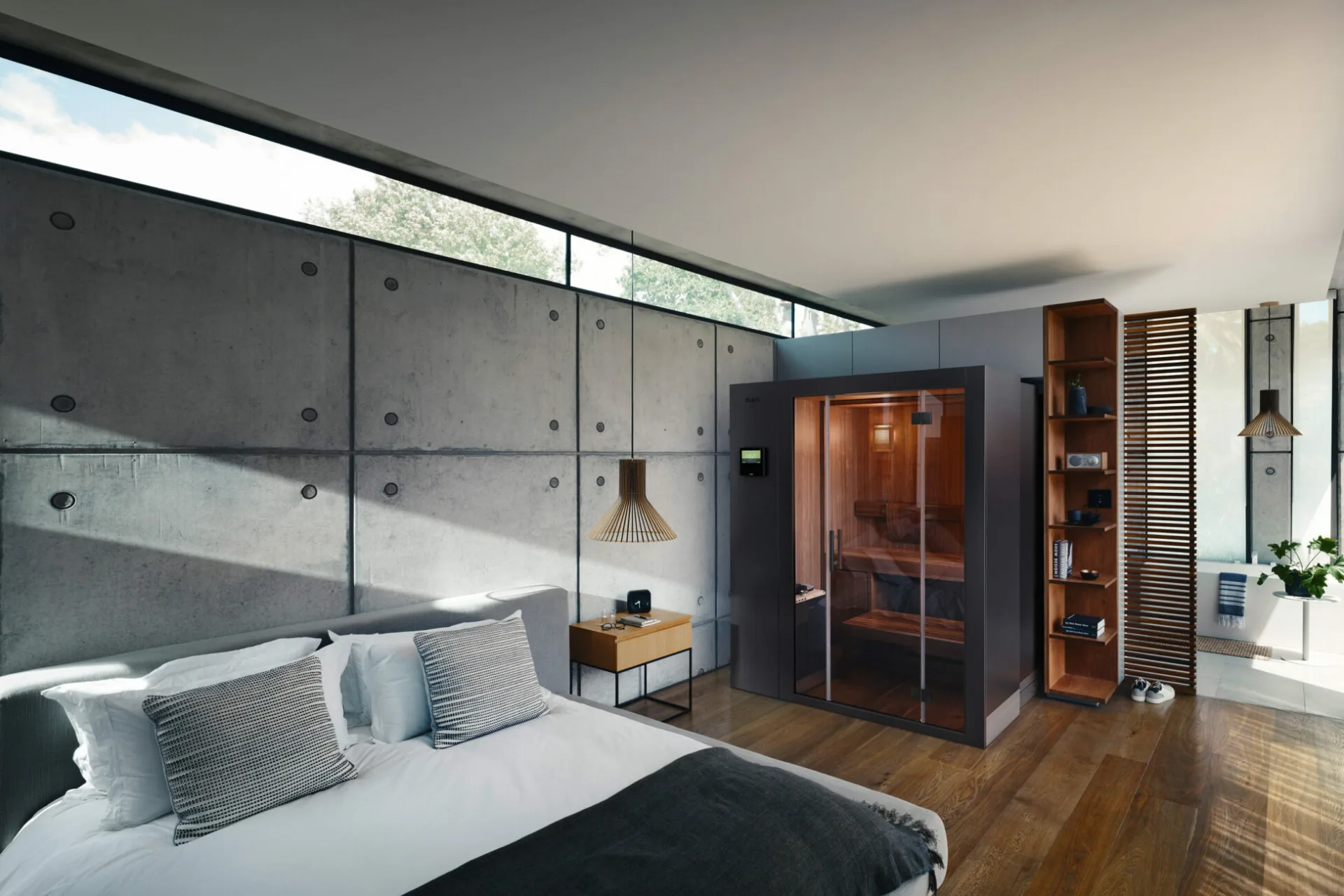
Klafs has introduced a retractable sauna, the S1, that integrates into a contemporary bedroom. It expands from a compact enclosure to a full-size sauna when needed.
This design addresses a common barrier to wellness: space. Many homes lack dedicated wellness rooms. The S1 allows users to enjoy a traditional sauna experience without requiring a separate room.
The product is part of a broader trend where wellness is being reimagined as a flexible, adaptable practice. Instead of a fixed ritual, the sauna now fits into daily life, often within a bedroom or living space.
By embedding the sauna into a bedroom, Klafs challenges the notion that wellness spaces must be isolated or large. This integration reflects a shift in how people perceive health and relaxation—no longer as separate activities, but as part of the daily environment.
Engineering the Ritual: Heat, Air, and Personalization
Klafs emphasizes the role of engineering in shaping wellness experiences. Its Vitality Boost system is described as the world’s first personalized heat-waving system.
It automates the traditional aufguss ritual—where water is poured over hot stones, and aromatic infusions are used—without requiring a guide or physical movement.
The system circulates heated air and delivers targeted warmth. Users can enjoy the ritual from a wooden bench without spinning towels or following a step-by-step guide.
Heinrich, a training manager at Klafs, demonstrates the system with a voice-activated command: ‘Hey, Klafs’. This reflects a growing integration of smart technology into wellness routines.
Such automation does not eliminate the sensory depth of a sauna; rather, it enhances accessibility. For users who may be new to sauna culture or who have mobility limitations, the system removes physical barriers while preserving the ritual’s core elements—warmth, breath, and presence.
Immersive Cooling: The Frimas Ice Steam Room
One of Klafs’s most innovative offerings is the Frimas ice steam room.
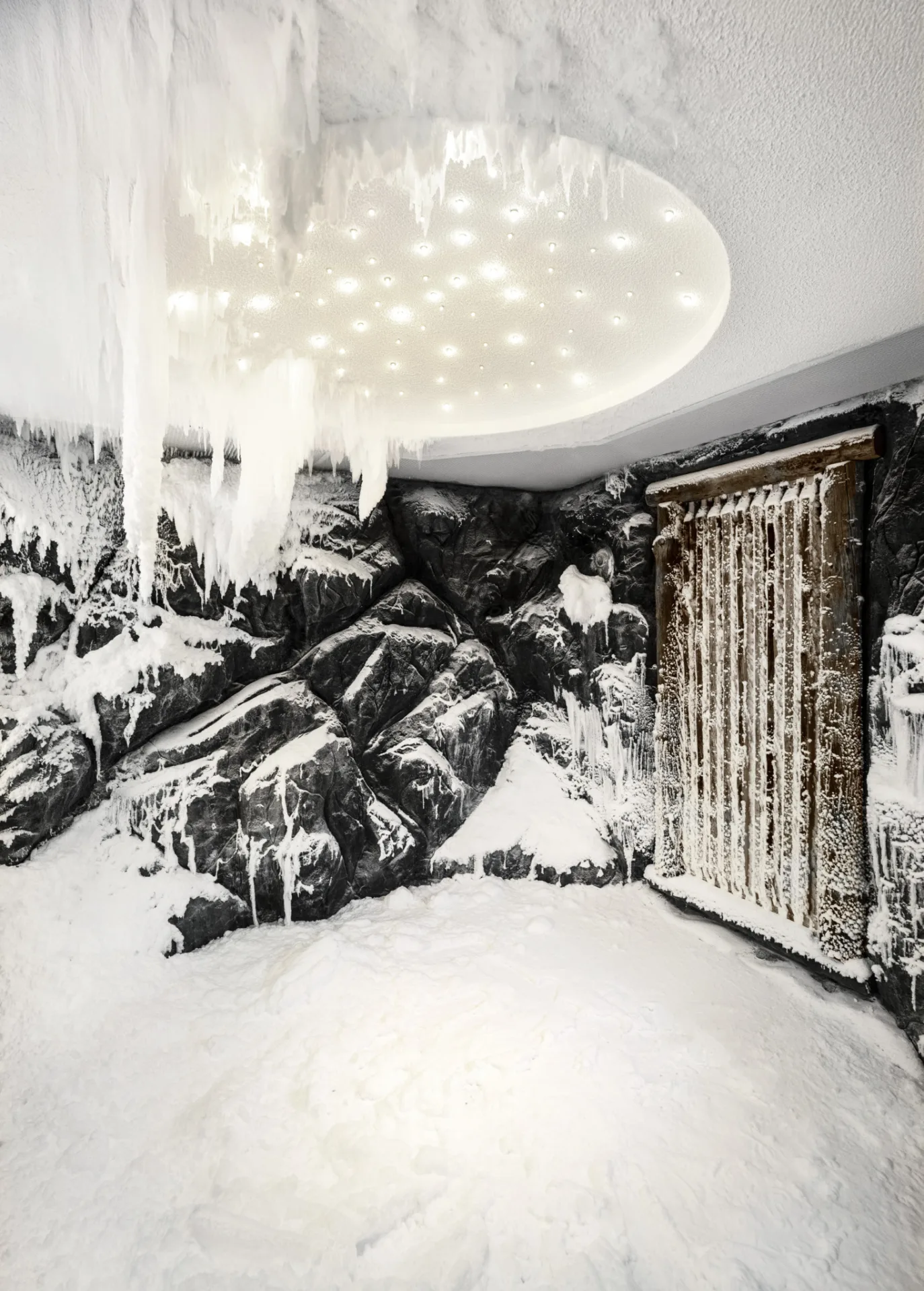
It features blue lighting, textured surfaces, and a sculptural ice fountain that grows delicate, flower-like formations.
Users enter a cool, blue-lit environment. The ice fountain evolves slowly, creating a dynamic, almost living surface.
A button labeled ‘snow’ triggers flurries from the ceiling. This mimics winter conditions and transforms the cooling phase into an immersive experience.
Traditional wellness routines often treat cold exposure as a necessary but dull step. Klafs reframes it as a sensory journey—one that invites slowing down and presence.
By using lighting, temperature gradients, and evolving visual elements, the Frimas room turns a physiological transition into a meditative experience. This approach aligns with contemporary wellness trends that prioritize mindfulness and sensory engagement over mechanical repetition.
Playful Steam: Foam Steam Baths and Skin Care
Klafs has also developed foam steam baths as an alternative to traditional steam or aufguss.
These baths replace the intensity of hot stone immersion with a tactile, playful experience. The steam is mixed with Espuro, a proprietary foam essence made from plant-based ingredients like coconut compounds.
These treatments are designed to care for skin exposed to heat. The foam brings back a sense of childhood wonder—like bubble baths and foam sculptures.
Such features are now being used in hotel and spa programming as scheduled group experiences, suggesting a shift from individual to shared wellness rituals.
For instance, in group settings, foam steam baths allow participants to engage in a social, interactive activity that fosters connection and shared joy. This reflects a broader trend in wellness: moving from solitary practices to communal, inclusive experiences that build community and emotional well-being.
Architectural Design: The S11 Sauna and Studio F.A. Porsche
The S11 sauna is a limited edition, designed in collaboration with Studio F.A. Porsche. Only 999 units will be produced.
It features continuous horizontal wood slats, curved corners, and concealed lighting. These elements emphasize materiality and form.
Inside, the interior is sculptural. The design blends smooth lines with natural textures, creating a space that feels both modern and organic.
At Hotel Sonne-Post in Waldau, Germany, a Klafs sauna features warm wood surfaces and tiered seating. Integrated lighting enhances the atmosphere, making it a functional and aesthetic space.
The collaboration with Studio F.A. Porsche underscores Klafs’s commitment to design excellence. The studio, known for its work in automotive and architectural design, brings a sense of craftsmanship and precision to the product. This partnership signals that sauna design is no longer just about function, but about artistry and emotional resonance.
Market Expansion and Brand Background
Klafs has long been established in Germany. Since its acquisition by Kohler in 2024, it has expanded into the American market.
For example, the premium Altea fitness club in the author’s city features Klafs installations, including the Sanarium and Polaris Ice Room.
These installations demonstrate how Klafs is adapting its offerings to fit within broader wellness environments—fitness centers, urban residences, and boutique spas.
While the company offers a range of products, what remains with users is not a specific product, but a shift in perspective.
It’s the willingness to question what a sauna, steam room, or cooling space can be. Klafs shows that even familiar rituals can be reinvented through design and technology.
Why This Matters in Modern Wellness
Wellness culture is evolving. Terms like ‘banya’ are now used broadly to describe spa visits, even when they refer to Russian-style baths.
Klafs brings a distinctly German engineering sensibility to these traditions. It doesn’t just replicate the past—it pushes it forward.
By integrating smart systems, immersive environments, and adaptive forms, Klafs demonstrates how wellness can be personalized, accessible, and integrated into everyday life.
Limitations and Open Questions
While Klafs offers innovative features, the long-term health impacts of foam steam baths or automated heat-waving remain unverified.
There is no independent research on how these systems compare to traditional sauna practices in terms of physiological benefits.
Additionally, the high cost of limited editions like the S11 may restrict access for many consumers.
Accessibility remains a concern, especially in homes without space or infrastructure for such installations.
What to Watch Next
As wellness becomes more integrated into home design, Klafs’s approach may influence how other brands rethink traditional spaces.
Future developments could include more modular systems, AI-driven personalization, or expanded availability of foam and ice rooms in residential settings.
Its collaboration with Studio F.A. Porsche suggests a deeper exploration of design as a form of craftsmanship and innovation.
Bianca Weeko Martin is a writer and researcher whose work explores the intersection of architectural practice, theory, and personal narrative. She is the author of Architectural Guide Manila.
For more on Klafs’s products, visit klafs.com or explore the retractable S1 sauna at design-milk.com/klafs-sauna-design/klafs_s1-sauna.
Sources & further reading
Featured image: Klafs’s retractable S1 sauna integrates into a contemporary bedroom, bringing the traditional sauna experience into a residential setting without requiring a dedicated wellness room. Photography courtesy of Klafs.. Via original publisher. Image source