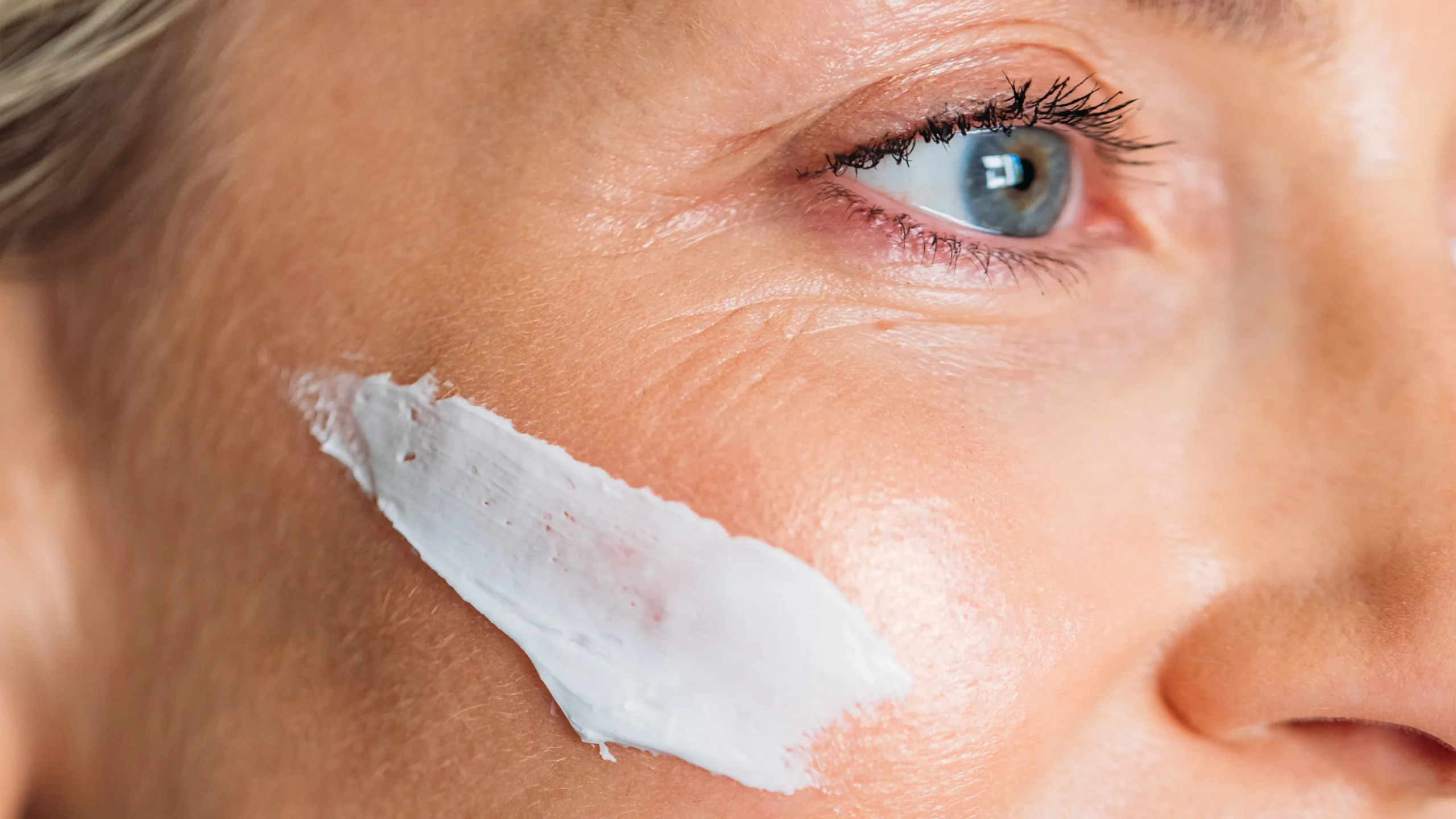
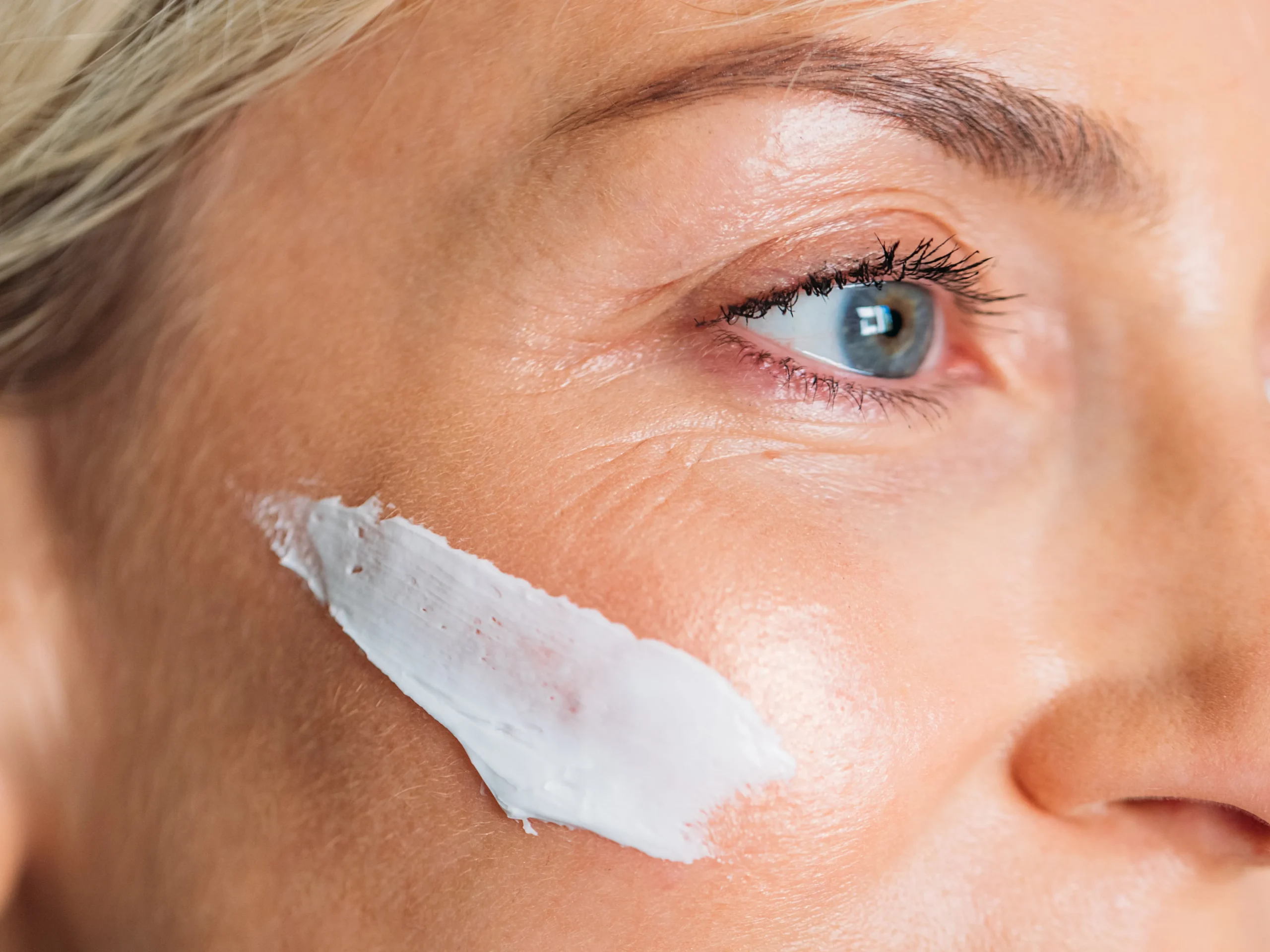
Estrogen creams are growing in popularity among women going through perimenopause. These products contain estriol or estradiol and are marketed as solutions to dryness, sagging, and loss of firmness. But the scientific evidence for their safety and effectiveness remains limited and debated.
What Is Estrogen Skin Cream?
Estrogen skin creams deliver low-dose estrogens—mainly estriol—topically to the skin. Estriol is weaker than estradiol and is more commonly used in facial products. Estradiol is typically used in vaginal creams for treating vaginal dryness and thinning.
These creams are not FDA-approved for treating wrinkles or age-related skin changes. The FDA classifies estrogen as a drug. Hormone therapy for menopause symptoms is approved, but facial use falls outside those indications. Most products are obtained through compounding pharmacies or telehealth platforms, without pre-market safety testing.
How Estrogen Affects Skin
Estrogen helps fibroblasts produce collagen, which gives skin strength and elasticity. As estrogen drops during perimenopause, collagen levels decline gradually, starting in the 30s or 40s.
This loss leads to thinner, drier, and more wrinkled skin. Dr. Jacqueline Marecheau notes estrogen also helps skin retain moisture. When levels drop, skin becomes flaky and dull, especially in combination skin types.
How Do These Creams Work?
Estriol in facial creams binds to estrogen receptors in the skin. Theoretically, this could stimulate collagen production and improve firmness. However, large-scale human studies are lacking.
Dr. Viktoryia Kazlouskaya says the science behind estrogen’s role in skin is solid, but topical applications are still speculative. Most research is microscopic, not reflecting real-world results.
Vaginal estrogen creams (0.01% estradiol) are well-studied and safe. Facial estriol creams (0.3%) are applied over a larger area. Facial skin is the thinnest, so it may absorb more estrogen than other areas.
What Do Experts Say?
Dr. Corinne Erickson coined ‘pilocutaneous syndrome of menopause’ (PSM) to describe skin and hair changes linked to low estrogen. She hopes this name helps doctors recognize and treat these symptoms earlier.
Dr. Justine Park prescribes estrogen creams only twice a week. She screens patients for age, medical history, and skin conditions. She avoids prescribing them to women under 40 or those with breast cancer or hormone-sensitive conditions.
Dr. Debra Jaliman receives questions weekly but does not prescribe them due to safety concerns. She stresses that long-term risks and absorption levels are not well understood.
Key Concerns About Safety
A major concern is systemic absorption—estrogen entering the bloodstream. Facial skin is thin, so absorption may be higher than in other areas. This raises questions about hormone balance and risks like breast cancer.
Long-term, high-dose estrogen use has a rare, low-risk link to breast cancer—similar to other common medications. But topical use over years is not well studied.
Compounded creams skip FDA pre-market approval and safety testing. A 2025 Journal of Cosmetic Dermatology paper says peer-reviewed data on facial estriol creams is limited. Experts advise caution in recommending them.
What About Efficacy?
Results vary. Keenya Kelly, 45, says her skin improved after one year of nightly use. Chalene Johnson, 57, reports her skin looks younger after six months.
Laura Pucker, a content creator, saw no improvement after two months and stopped using it. She attributes changes to lifestyle shifts, like cutting back on alcohol.
A study found 88% of participants reported improved elasticity after 12 weeks. No significant rise in blood estriol levels was found. A slight estradiol increase was likely due to a lab error.
Dr. Kelly Dobos says improvements may come from non-hormonal ingredients like hyaluronic acid or bakuchiol, not estrogen. She questions whether estriol penetrates deeply enough to affect collagen.
What Do the Ingredients Actually Do?
Most creams include hyaluronic acid, glycerin, and ceramides—proven moisturizers that plump skin and strengthen the barrier.
Bakuchiol, a plant-based retinol alternative, improves texture and reduces fine lines without irritation. Tretinoin, a prescription retinoid, is found in some creams like Cottonball’s VX.1 and VX.2.
Dr. Debra Jaliman recommends Neutrogena Collagen Bank for over-the-counter use. Dr. Kazlouskaya suggests SkinBetter Science AlfaRet or Avène Retrinal. Dr. Lebowitz recommends ROC Retinol Correxion, especially with hyaluronic acid.
Who Should Avoid These Creams?
Estrogen levels are stable during reproductive years.
Women with breast cancer or hormone-sensitive conditions should not use them. Estrogen can stimulate breast tissue growth.
Estrogen may worsen acne, melasma, and rosacea. It can also cause flushing due to blood vessel dilation. Dr. Park prescribes them only after full evaluation and when safer options are ruled out.
What Are Better Alternatives?
Non-hormonal options are proven, safer, and widely supported by research.
Retinoids like retinol and tretinoin boost collagen and reduce wrinkles. Dr. Kazlouskaya recommends SkinBetter Science AlfaRet or Avène Retrinal.
Peptides, especially micro-peptides, signal skin cells to produce more collagen. Neutrogena Collagen Bank combines peptides with bakuchiol.
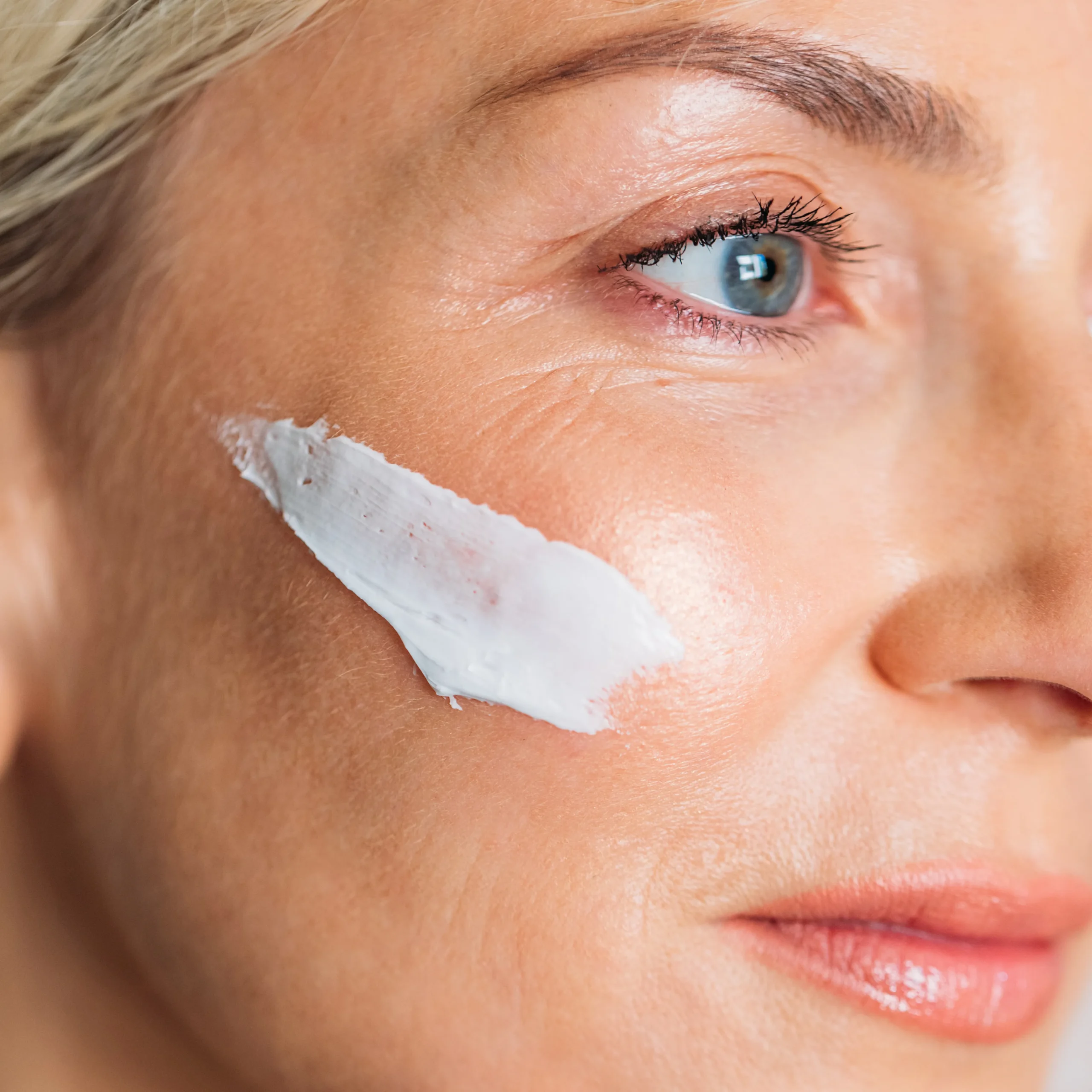
Vitamin C and niacinamide improve tone and protect against damage. These ingredients are accessible and well-studied.
Dr. Erickson says it’s not ‘estrogen or nothing’—many effective, non-hormonal strategies exist. ‘There are so many things that make the skin look better,’ she says.
Why the Hype?
Telehealth platforms like Musely, Alloy, and Midi saw a 490% increase in traffic from 2023 to 2026. These platforms don’t accept insurance and charge up to $200 per month for custom hormone therapy.
Influencers often share before-and-after photos, promoting estrogen creams as ‘miracle solutions.’ This resonates with women feeling isolated during perimenopause.
Many influencers are paid to promote products. Their results may reflect lifestyle changes—like better hydration or sleep—rather than the cream itself.
What to Watch For
Many claims are not backed by independent, large-scale studies. Most research is small, short-term, or lacks peer review.
Compounded creams are not FDA-approved and lack transparent ingredient disclosure. Consumers may face unknown components.
Companies may overstate benefits. For example, Alloy claims 88% elasticity improvement, but no long-term follow-up or real-life translation data exists.
Conclusion
Estrogen creams are popular among perimenopausal women, driven by social media and influencer culture. But scientific evidence for their efficacy and safety is limited.
Experts agree benefits are not yet proven in broad populations. Systemic absorption and long-term risks—especially for those with medical histories—cannot be ignored.
Many improvements may come from non-hormonal ingredients or lifestyle changes. For safe, effective results, non-hormonal treatments like retinoids, peptides, and vitamin C are better supported by science.
Before trying estrogen-infused products, consult a doctor—ideally a gynecologist or dermatologist—especially if you have hormone-sensitive conditions. Decisions should be based on medical advice, not trends or marketing.
Perimenopause is a personal journey. While estrogen creams may offer some relief, they are not a solution. A balanced, informed approach is best.
Source: Allure
Sources & further reading
Featured image: original publisher image. Via original publisher. Image source