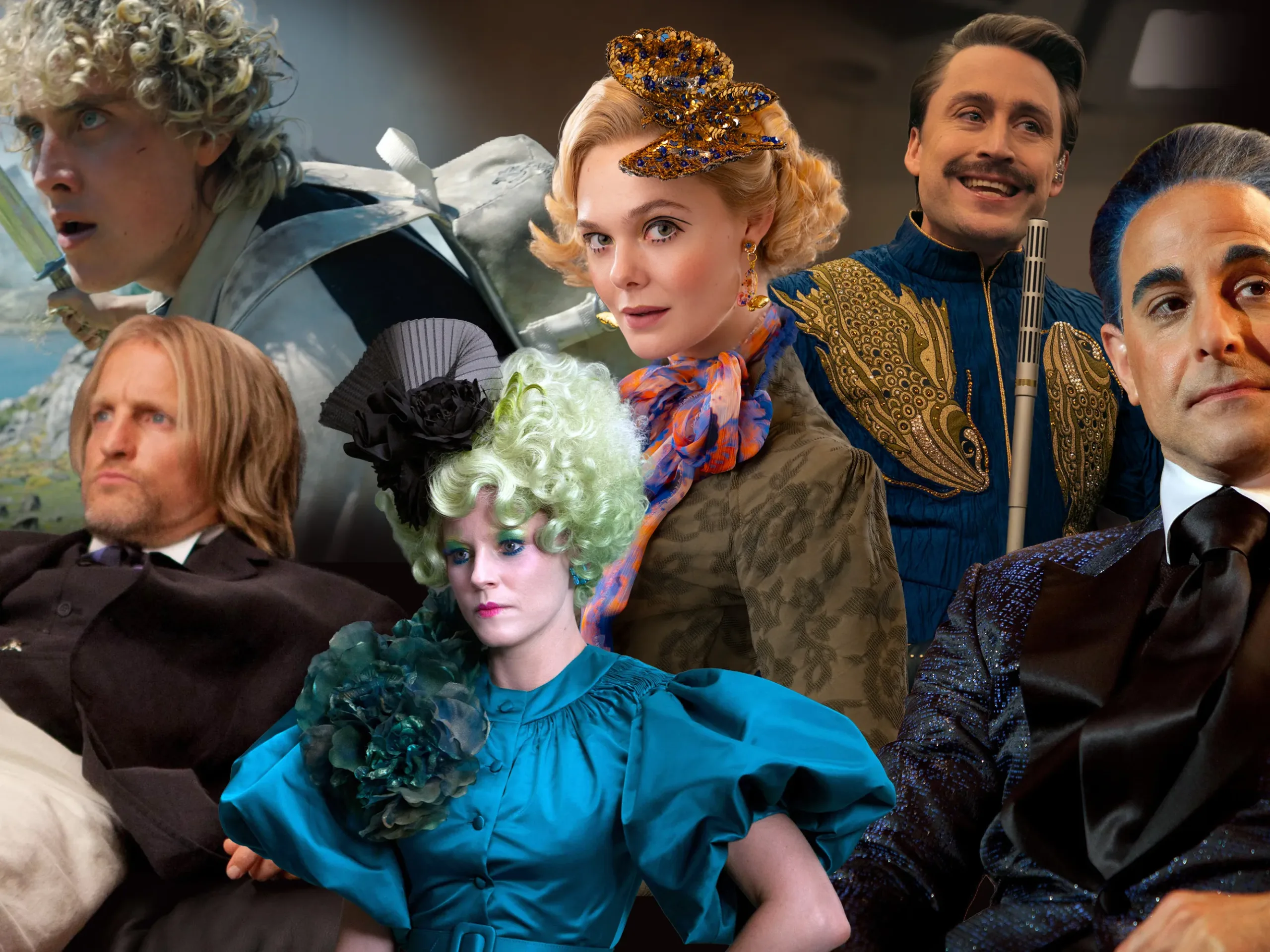
Natalie MacGowan-Spencer, the hair, makeup, and prosthetics designer for The Hunger Games: Sunrise on the Reaping, reveals how subtle and extreme beauty transformations connect younger versions of beloved characters to their adult counterparts. Her work is a masterclass in visual storytelling—where every brushstroke, hairline, and prosthetic detail serves both aesthetic and narrative purpose. Source: allure.com.
Glenn Close as Drusilla Sickle: Face Tape and a Predatory Headdress
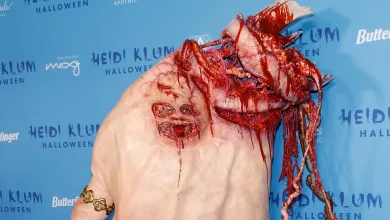
Glenn Close’s portrayal of Drusilla Sickle in the film draws heavily from Suzanne Collins’s description of the character in the book: skin pulled back with thumbtacks, suggesting cosmetic surgery gone wrong. This grotesque aesthetic is not merely a stylistic choice—it reflects the character’s psychological depth and the Capitol’s obsession with performance and control.
Instead of using full facial prosthetics, MacGowan-Spencer used Hollywood face tape to achieve the exaggerated, taut effect. The tape stretched Close’s skin, especially around the nose and lips, creating a visibly strained appearance. This method was both practical and efficient, allowing for quick adjustments during fittings without the time and cost of full prosthetics.
Close was deeply involved in the process, requesting more tension in specific areas during fittings. These requests helped determine where the skin would pull and buckle, resulting in a face that appears both unnerving and powerful. The effect is not just physical—it communicates a sense of instability and power, central to Drusilla’s character.
Initially, small stars adorned Drusilla’s temples. But the day before filming, Close asked to change the look to match the source material. MacGowan-Spencer sent a team member to a hardware store for upholstery pins, which were then spray-painted and modified to remove sharp points. These were glued onto the skin, creating a subtle, yet striking, decorative element that echoes the character’s cold, detached demeanor.
Close also wanted fake teeth and a headdress. The headdress is a 3D-printed raven with feathers and claws, designed to look taxidermied. MacGowan-Spencer estimates it took three days to create. She describes it as deliberately predatory, signaling Drusilla’s pride and lack of empathy. The raven is not just a prop—it is a symbol of the Capitol’s ability to turn nature into artifice, and to use animal imagery as a tool of intimidation.
The orange hue of Drus-than’s hair was chosen to stand out against her yellow costume and the gray, muddy backdrop of District 12. It combines references to 1970s London with a nod to 1920s fashion, emphasizing her sense of superiority. This color choice was not random—it was a deliberate nod to the era’s fashion, where bold, vibrant hues were used to signal status and power.
Elle Fanning’s Effie Trinket: A Younger Version of a Fashion Icon
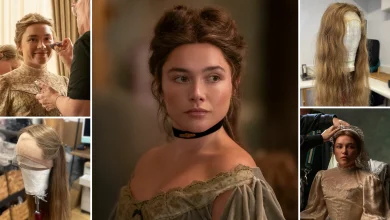
Before Effie Trinket became the flamboyant figure audiences know, MacGowan-Spencer imagined a version with limited resources but strong creative ambition. She envisioned Effie with just one wig she deeply loves, rather than a full wardrobe of elaborate styles. This backstory informed the design of her blonde hair and violet wash.
MacGowan-Spencer wanted the shapes of Fanning’s wigs to carry that connection to the older Effie’s memorable wigs, without simply reproducing Banks’s looks on a younger actor. This approach ensures continuity while allowing for authentic character evolution. The design avoids cliché and instead emphasizes personal identity and aspiration.
The makeup draws on the 1960s British model Twiggy, known for her spiky lashes. MacGowan-Spencer added graphic lines and arches around Fanning’s eyes, with a small daisy detail. A soft blush and lips balanced the look, keeping it tender despite the boldness. This balance is crucial—Effie is not just a fashion icon; she is a young girl who dreams of a future where style and self-expression matter.
Fanning had about four bespoke wigs, hand-knotted by wigmaker Alex Rouse in London. Each wig was custom-designed to reflect different moods and moments in the character’s journey. MacGowan-Spencer says Effie is likely the most expensive character to design, but that it was worth every cent. The investment reflects the importance of authenticity in character design—every detail must feel lived-in and believable.
Iris Apatow’s Proserpina: A Magenta Touch of Youth
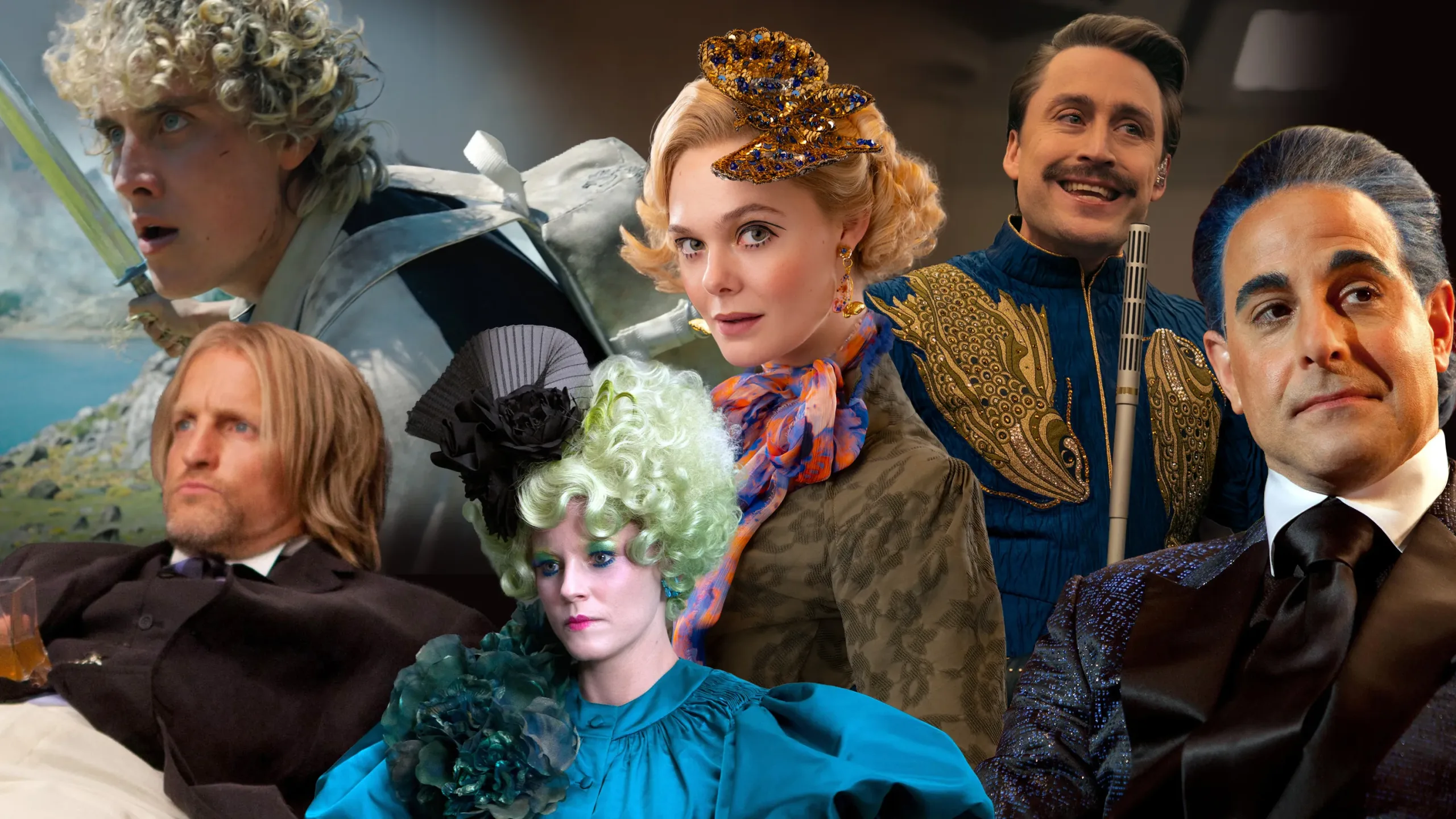
Proserpina, Effie’s sister, is described in the book as having magenta and puffy hair. MacGowan-Spencer started there, then considered the shapes in the film’s mood boards. Her look is more playful than her sister’s, reflecting a different tone in the character’s development. The design still fits the film’s 1970s-inspired aesthetic, but with a lighter, more whimsical edge.
While Proserpina is not as central to the narrative as Effie, her appearance serves as a contrast—showing how different characters interpret the same aesthetic world. The magenta color is not just a fashion choice; it represents a different kind of identity—one that is less polished, more spontaneous, and rooted in youthful energy.
Joseph Zada’s Haymitch: A Transformation Through Small Details
MacGowan-Spencer began with a strong visual foundation: the resemblance between Joseph Zada and Woody Harrelson. From there, she identified key differences to make the evolution believable. Zada’s hair color was adjusted to better match Harrelson’s. His curls suggest innocence, a quality not yet stripped away by the harsh realities of the arena.
Harrelson’s Roman nose has a prominent bridge and a slight bump. Zada’s nose lacks this feature. After Haymitch fights in the arena, a small prosthetic is applied to mimic the bump. A subtle scar and indentation are also added. These changes are not dramatic—they are incremental, reflecting how trauma and experience shape a person over time.
Harrelson has a natural gap between his front teeth. Zada does not. This difference is resolved in a fight scene, after which a dental prosthetic is applied to match the gap. MacGowan-Spencer found her dental collaborator, Dominic Mombrun of Bitemakers in London, who had recently worked with Harrelson. This existing reference made the process efficient and accurate.
The transformation of Haymitch is not just about physical changes—it is about emotional evolution. The small details, like the scar or the gap in teeth, mirror the internal struggles of a man who has survived violence and loss. These features become visible only in moments of vulnerability, reinforcing the idea that identity is not static but shaped by experience.
Kieran Culkin as Caesar Flickerman: A Rockabilly Persona
Culkin wanted to keep his natural hair color and avoid dental prosthetics. MacGowan-Spencer found a visual link through the shape of his hair. She developed a rockabilly-inspired style with a back-combed shape, suggesting the character’s future look. A 1970s mustache was added. Culkin initially resisted, but a fitting helped convince him. The look gives Caesar a game show host presence.
His appearance is restrained compared to Capitol residents, yet effective. MacGowan-Spencer believes Culkin pulls off the role with just hair and mustache. This minimalism is intentional—it reflects Caesar’s role as a figure of authority who maintains a veneer of charm while operating within a system that values performance over authenticity.
Whitney Peak’s Lenore Dove: Natural Curls and Soft Beauty
For Lenore Dove, MacGowan-Spencer and director Francis Lawrence wanted to preserve Peak’s natural curls. They discussed her hair type, condition, and preferences before filming. The team trimmed and conditioned her hair in advance to ensure it was ready for filming.
The makeup is soft: dewy skin, a touch of bronze on the eyes, a soft lip, and subtle blush. It gives Lenore a different kind of beauty from the Capitol’s elaborate designs. This look is not about extravagance—it is about authenticity. In a world where beauty is often weaponized, Lenore’s natural appearance stands as a quiet rebellion.
Mckenna Grace’s Maysilee Donner: Bardot Bangs and a Braid
MacGowan-Spencer noticed Mckenna Grace often wore a side part. For Maysilee, she wanted a middle part and bangs. The initial reference was Brigitte Bardot, known for her fringe and volume at the back. Instead of a haircut, custom fringe pieces were made for Grace.
These pieces helped avoid repeated heat application to her hair. The finished look combines the custom bangs with a braid, a nod to Katniss Everdeen’s style. The braid is not just a fashion choice—it is a symbolic link to the series’ core themes of identity, resilience, and legacy.
MacGowan-Spencer notes that the characters themselves do not see the unsettling nature of their appearances. To them, the looks are subtle and elegant. But to the viewer, the Capitol’s obsession with beauty is disturbing. The film shows how power can turn even morbid objects—like a dead bird—into symbols of pride.
MacGowan-Spencer says the beauty in the film is part of that discomfort. It reflects how the Capitol can transform anything into something to admire, even when it is grotesque. The film uses beauty not as a celebration, but as a lens through which to examine power, class, and survival.
The design choices reflect the era’s fashion and culture—1970s music, styles, and aesthetics. MacGowan-Spencer studied mood boards and music from the time to ensure authenticity. The Rolling Stones, Blondie, the Jackson 5, and Studio 54 disco were key influences. These artists defined a cultural moment where fashion and music were inseparable from identity and rebellion.
Her work demonstrates how hair and makeup can serve as both artistic expression and narrative device. These details are not just about appearance—they shape how audiences see the characters’ evolution and how the world functions. From Drusilla’s predatory headdress to Haymitch’s evolving face, the film uses beauty as a narrative tool.
Each transformation is grounded in the source material and the actors’ performances. The result is a film that feels both authentic and emotionally resonant. These details are not just behind-the-scenes—they are part of the story’s emotional core.
For viewers, the film’s beauty is unsettling—because it mirrors real-world dynamics where appearance is used to assert dominance. MacGowan-Spencer’s work shows how design can deepen character development and world-building without relying on dialogue.
The film’s success lies in how seamlessly these transformations connect to the original series, making the audience feel the passage of time and the weight of history. Each character’s look is a reflection of their journey—both personal and societal.
From Drusilla’s predatory headdress to Haymitch’s evolving face, the film uses beauty as a narrative tool. These details are not just about aesthetics—they are about how identity is constructed and performed in a world of inequality.
The film’s design choices are a powerful reminder that appearance is not neutral—it is shaped by power, history, and culture. For audiences, the beauty in Sunrise on the Reaping is both striking and deeply unsettling.
It is a testament to the power of visual storytelling in shaping how we see characters and worlds. As MacGowan-Spencer says: ‘The beauty is part of that discomfort.’ And that discomfort is exactly what makes the film memorable.
Sources & further reading
Featured image: original publisher image. Via original publisher. Image source