Human hands remain one of the most difficult challenges in robotics. Despite decades of progress, no machine has yet matched the dexterity of a human hand. The complexity of a human hand—its 27 bones, intricate muscles, nerves, and sensory feedback systems—has proven to be a formidable barrier to replication. This challenge, often referred to as the ‘hands problem,’ is not merely about mimicking the physical structure of a hand, but about capturing the seamless integration between sensory perception, motor control, and real-time brain processing that allows humans to interact with the world in a fluid, adaptive, and intuitive manner. Source: theguardian.com.
What Is the ‘Hands Problem’ in Robotics?
At the core of the hands problem lies the biological design of the human hand. It is not just a collection of bones and joints, but a highly sophisticated sensory and motor interface. The hand contains 27 bones—more than any other limb—arranged in a way that allows for a vast range of motion and fine manipulation. These bones are connected by tendons and ligaments that transmit force from muscles in the forearm to the fingers, enabling both power and precision.
What makes the hand truly remarkable is the density of nerve endings. These receptors detect subtle changes in pressure, texture, temperature, and vibration. For instance, when a person picks up a raspberry, the fingertips sense its softness, slipperiness, and shape. The brain immediately processes this sensory data and adjusts the grip in real time to avoid crushing the fruit. This feedback loop occurs in about one-tenth of a second, a fraction of a second that is critical for delicate manipulation.
Moreover, humans possess a feed-forward mechanism—a predictive model of how an object will feel before it is touched. A child, before learning proper hand control, often crushes objects because their brain has not yet developed the internal model of how to handle delicate items. This predictive ability is built through years of experience and interaction with the physical world. It is this combination of sensory input, real-time feedback, and learned prediction that makes human dexterity so effective and adaptable.
Why Hands Are Hard to Replicate
Replicating the human hand in robotics requires solving three interdependent challenges: sensory perception, motor control, and neural coordination. First, a robotic hand must be able to sense its environment with the same precision as a human hand. This means detecting fine textures, detecting the shape of an object through tactile feedback, and interpreting how an object will behave under different pressures.
Second, the robot must be capable of executing precise motor actions—such as curling a finger to grasp a small object or adjusting grip strength based on the object’s resistance. Unlike pre-programmed robots that perform fixed tasks, a dexterous hand must adapt its movements in response to changing conditions. This requires not just mechanical design, but also real-time decision-making.
Third, the hand must be integrated with a brain-like system that can process sensory data and generate appropriate motor responses. In humans, this coordination occurs in the brain’s motor cortex and somatosensory cortex, which work in tandem to interpret sensory input and plan movements. Current robotic systems often rely on external sensors and pre-programmed algorithms, which lack the dynamic, adaptive nature of human neural processing.
For example, when a human reaches for a tool, the brain sends signals to the muscles in the forearm and hand to prepare for movement. Simultaneously, the hand sends sensory feedback to the brain about the object’s weight, shape, and texture. This closed-loop system allows for smooth, coordinated actions. In contrast, most robot hands today operate in a linear fashion—performing a sequence of pre-defined motions without real-time adaptation or sensory feedback.
Historical Development of Robot Hands
The journey of robot hand development began in the 1980s with grassroots efforts in London. A group of hobbyists, initially meeting in a north London attic, began experimenting with salvaged materials to build a full humanoid robot. Their first commercial order came in 1997—a leg—for a small-scale project. This marked the beginning of what would become Shadow Robot, Europe’s leading manufacturer of dexterous hands.
Initially, the team focused on building a lifelike, human-shaped hand. They studied anatomy textbooks, admired the self-lubricating joints and regenerative skin of the human body, and sought to replicate those features in mechanical form. However, they quickly realized that no existing materials could match the biological properties of human tissue. As a result, they shifted focus from aesthetics to functionality—developing hands that could perform useful tasks in real-world environments.
Over the years, Shadow Robot evolved from a hobbyist project into a serious engineering enterprise. The company began to recognize that the most valuable applications for robot hands would not be in entertainment or humanoid robots, but in industrial, medical, and manufacturing settings where precision and adaptability are critical. This pivot allowed them to develop hands that could be used in nuclear decommissioning, medical care, and production line automation.
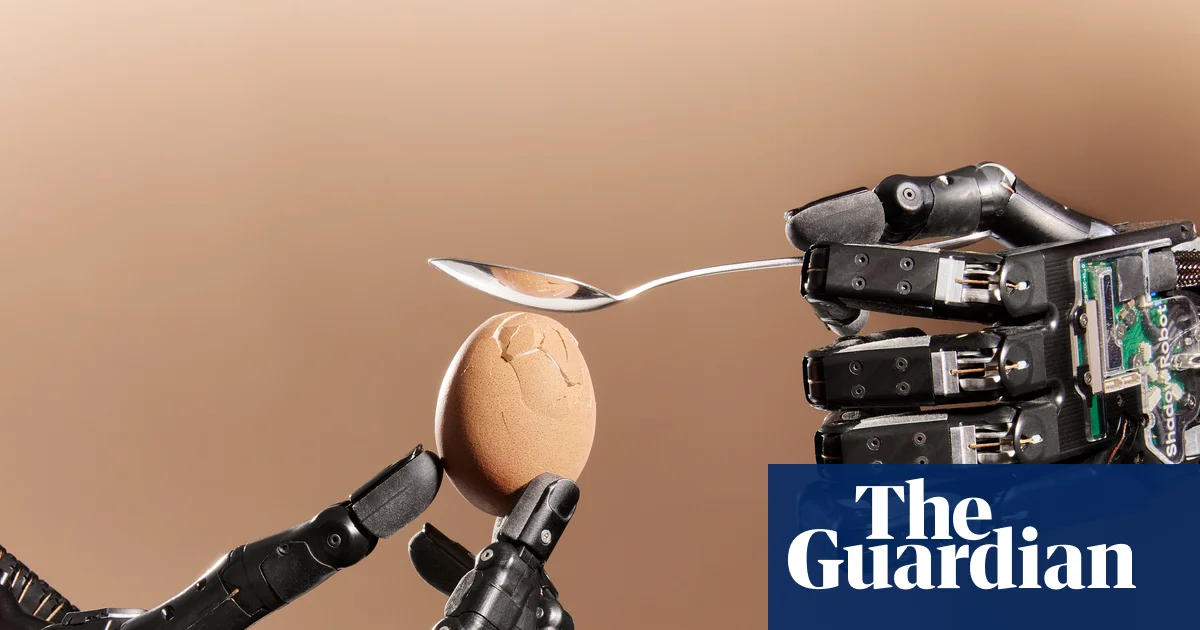
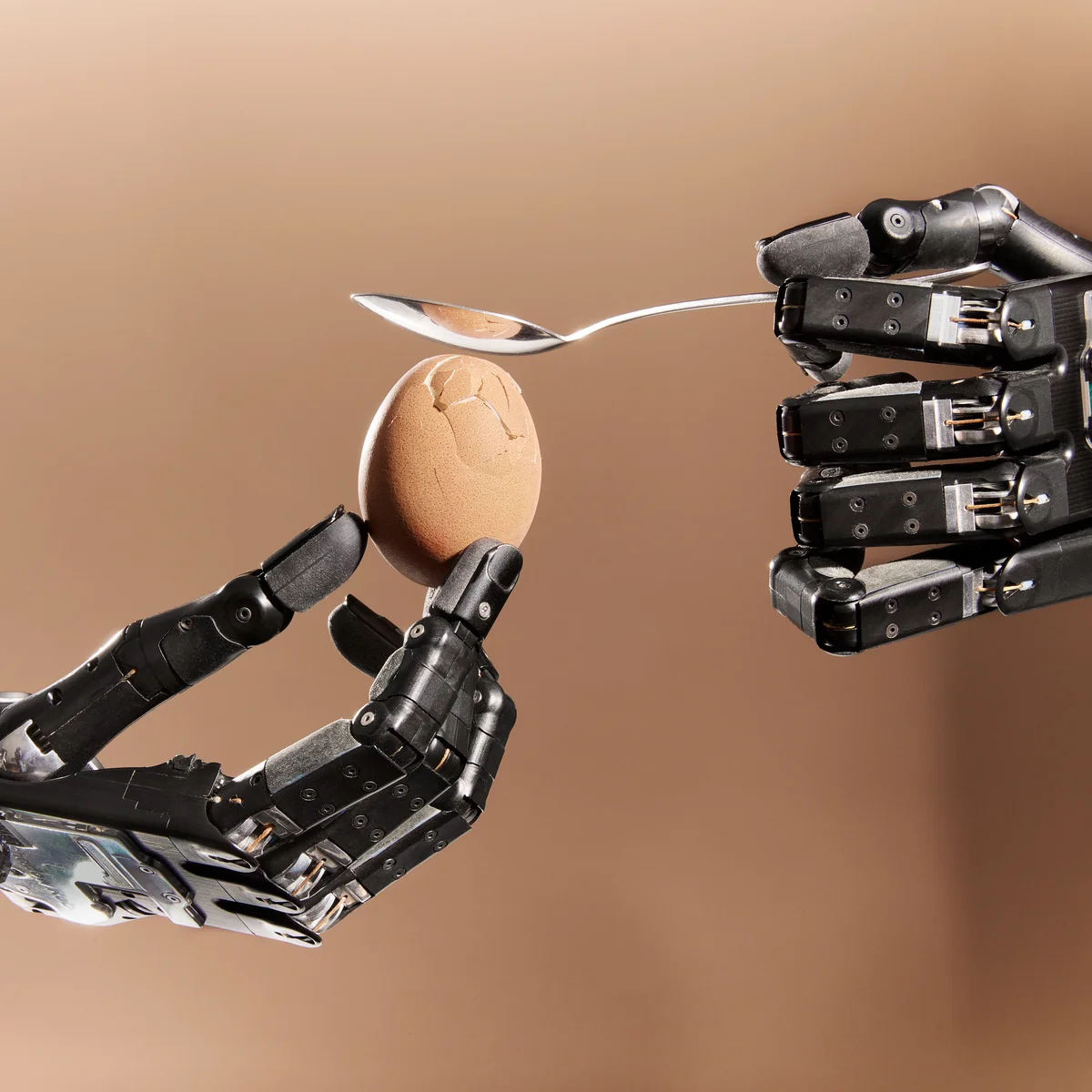
One of the key milestones in the evolution of robot hands was the development of the Shadow Dexterous Hand. This prototype features a palm that opens and closes with natural, expressive movements. Its fingers are designed to mimic the way a human hand curls and spreads, with textured magnetic sensors on the fingertips that allow it to detect contact and pressure.
The operation works through teleoperation—where a human operator wears gloves equipped with sensors that track their finger movements. These movements are then mirrored in real time by the robot hand. This method allows engineers and technicians to train the robot by demonstrating tasks, such as picking up a grape or stacking cups. Over time, machine learning algorithms analyze these demonstrations and begin to replicate the motion autonomously, reducing the need for human oversight.
Breakthroughs in Sensory and Motor Design
While the Shadow Dexterous Hand excels in fine manipulation, it still lacks the sensory depth of a human hand. It cannot detect the subtle differences between textures or feel the softness of a fruit with the same precision. To address this, Shadow Robot collaborated with Google DeepMind to develop the DEX-EE hand—a prototype with only three digits and no wrist. The DEX-EE looks like a claw, with optical sensors on each fingertip, designed not to mimic human appearance, but to withstand physical impact.
Unlike the Shadow Dexterous Hand, the DEX-EE is built for durability. It is designed to endure repeated collisions with work surfaces—much like how a child learns to use their hands through trial and error. The DEX-EE can be used in industrial environments where physical wear and tear are common. DeepMind has used this model to teach robots how to tie shoelaces, hang shirts on hangers, and perform basic repairs on other robots. These tasks, once considered beyond the reach of machines, now demonstrate that robots can learn through physical interaction and repeated mistakes.
The DEX-EE hand is not intended for delicate tasks but for robust, high-volume applications. However, the price point is rapidly changing. In China, where the dexterous hand industry has seen explosive growth, some models now cost less than £2,000. This dramatic drop in cost reflects a broader trend: increased competition, mass production, and innovation in materials science.
Market Expansion and Global Competition
China has emerged as the global leader in robot hand development. Chinese companies are not only producing hands at lower prices but also developing them for a wide range of applications—from automated assembly lines to disaster response and medical robotics.
There are now over 110 robot hand models in China alone, a dramatic increase from just a few decades ago. This level of support has enabled rapid prototyping, scale-up of manufacturing, and integration of robot hands into existing industrial processes.
Other global players are also advancing. Psyonic, based in San Diego, specializes in prosthetic hands for amputees and has expanded into industrial automation, offering hands with ‘human-level stability.’ Sharpa, a Singapore-based company, claims its models can perform complex tasks such as screwing, clipping, and fastening—demonstrating capabilities that were once thought to require human dexterity. Boston Dynamics’ Atlas humanoid, though not yet commercially available, has shown the ability to use drills and nail guns, including changing a fine drill bit in a demonstration video—indicating early progress in tool manipulation.
Despite this global competition, the field remains fragmented. There is no single standard for robot hand design, and each company develops its own proprietary systems. This lack of standardization means that integration across industries is still challenging. However, it also allows for rapid innovation and experimentation, as companies can tailor their hands to specific applications.
Implications for the Workplace
Amazon’s fulfilment centres provide a real-world example of how human and robotic systems work in tandem. In these warehouses, yellow shelving units move in a choreographed dance along conveyor belts. Items such as Lego kits, dishwasher tablets, and protein powder are delivered to human workers who are responsible for stacking the units. The system uses digital guidance to tell workers where to place each item, and even determines the size of the box and amount of tape needed to seal it.
While the warehouse appears to be a symphony of human and machine collaboration, the reality is that most decision-making is done by computers. The human workers are not engaged in cognitive tasks—they are performing physical tasks that require fine motor skills. This model suggests that automation is already underway in logistics and manufacturing, with robots handling the ‘cognitive’ aspects and humans handling the ‘physical’ ones.
Experts predict that Amazon workers are among the last to be automated. Professor Nathan Lepora of the University of Bristol has stated that such roles are ‘the last bits that haven’t yet been automated.’ He believes that Amazon is already working on replacing these workers with robotic systems. The company’s operations are already aligned with full automation, as seen in China’s ‘dark factories’—automated plants that operate 24/7 with no lights on, demonstrating that full production line automation is now feasible.
Will Robots Replace Human Workers?
Some professions face greater risk of automation than others. Plumbing, for instance, is often cited as a job that may not be replaced by robots in the near future. Alistair Hunter, a hand and wrist surgeon at University College London, notes that surgical skill is built on years of experience and real-time sensory feedback. A robot would need to learn this through vast experience—something not yet possible at scale. He believes that even if a robot could mimic the physical movements of a surgeon, it would lack the intuitive judgment and adaptability that comes from years of practice.
Similarly, plumbers work in unpredictable environments—under sinks, in tight spaces, and in varied conditions. Their skill comes not from following a fixed procedure, but from adapting to unique problems. As Walker of Shadow Robot puts it, ‘If you’ve ever seen a plumber get under your bath and do something to the tap at the back, you’ll realise that’s going to be a job for a humanoid robot at best.’ This suggests that while robots may take over routine tasks, complex, adaptive jobs will remain human-dominated.
Shadow Robot’s stated mission is to help robots enter ‘extreme environments’—those that are too dull, dirty, difficult, dexterous, dangerous, or dear for humans. This includes jobs such as cleaning hazardous waste sites, working in high-temperature environments, or performing maintenance in deep mines. These roles are currently filled by humans due to risk and physical limitations. If robot hands become capable of operating in such environments, they could significantly reduce human exposure to danger and improve safety.
However, Walker cautions that such a transformation would require hundreds of years of development and hundreds of major breakthroughs in materials, sensing, and machine learning. He dismisses claims of ‘doom of humanity’ as marketing. ‘If I wanted to increase my share value, I’d probably say, yes,’ he adds—indicating that the company may use such language to attract investment, not to reflect a realistic assessment of societal impact.
Self-Improving Robot Hands: The Future of Autonomous Development
Professor Lepora suggests that one of the most transformative developments in robotics could be when robot hands begin to build other robot hands. This would create a self-improving loop—where robots design, produce, and refine their own hands, leading to exponential growth in dexterity and efficiency.
Currently, robot hand development is a human-led process. Engineers design the hardware, program the software, and test the systems. However, once a robot can autonomously design and produce a new hand, it could iterate faster than any human team. This would allow for rapid innovation, with new models being developed and tested in real time without human intervention.
Such a development would not happen overnight. It would require breakthroughs in materials science—such as self-healing polymers or synthetic skin that mimics human tissue—and in machine learning—systems that can interpret sensory data and generate new designs. It would also require scalable manufacturing processes that can produce robot hands at low cost and high volume.
Lepora emphasizes that this pivot point is still far off. He believes it would take multiple decades of research and development before robot hands could achieve true autonomy in design and manufacturing. However, the potential implications are profound. If robots can build themselves, they may eventually surpass human engineers in speed and efficiency, leading to a future where human involvement in robotics is reduced or eliminated.
Limitations and Ethical Considerations
Despite rapid progress, current robot hands still face significant limitations. They lack the sensory depth of human hands—unable to detect fine textures or feel the difference between soft and hard objects with the same precision. They rely heavily on human demonstration to learn tasks, and true autonomy—learning through experience without guidance—is still rare.
Even if hands become dexterous, they may not replace human roles in complex, adaptive jobs such as surgery or plumbing. These professions require not just physical dexterity, but judgment, emotional intelligence, and experience—qualities that are difficult to replicate in machines.
Moreover, the rise of robot hands raises ethical and social questions. What happens to workers whose jobs are automated? How will society respond to mass job displacement? What policies will be needed to support retraining and economic transition?
There is no evidence that robot hands will soon replace all manual labour. Most tasks still require human judgment, adaptability, and experience. The future of work will likely involve a hybrid model—where humans and robots collaborate, with each playing a distinct role based on their strengths.
What to Watch Next
Key developments to follow include:
- Progress in machine learning models that allow robots to learn from sensory feedback and adapt in real time.
- Expansion of affordable, dexterous hands in manufacturing, healthcare, and emergency response sectors.
- Public demonstrations of robots performing complex, unscripted tasks in real-world settings—such as assembling a product without a blueprint or repairing a damaged machine.
- Policy responses to automation in employment, including retraining programs, job guarantees, and social safety nets.
While robot hands are advancing rapidly, their full impact on work remains uncertain. For now, human workers remain essential in many roles—especially those that require adaptability, emotional intelligence, and years of hands-on experience.
For more on flexible working in tech, see British Bosses Must Meet Employees Requesting Flexible Working.
For discussions on pay transparency in the workplace, see UK Workers Should Have Right to Know Colleagues’ Pay.
For insights on how automation affects jobs, see When Tech Workers Have to Quit Their Jobs to Raise the Alarm, It’s Time to Worry.
For more on Amazon’s operations, see Inside Amazon’s Tilbury FC: Is the Controversy Justified?.
Sources & further reading
Featured image: original publisher image. Via original publisher. Image source