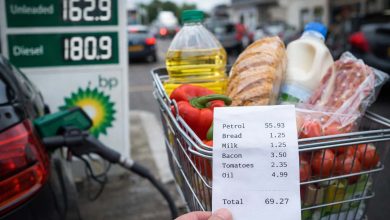
Gasoline and diesel prices in the U.S. have soared as the cost of living emerges as a key issue for millions of Americans. Source: bbc.co.uk.
What Happened
As the U.S. heads into the midterm elections, President Donald Trump has announced a series of actions aimed at lowering fuel prices.
- He announced a deal with Russian President Vladimir Putin to release over 300,000 tonnes of Russian diesel to the U.S. and global markets.
- He pledged 500,000 tonnes in November and a further million tonnes after that.
- Trump said a further amount of Russian diesel would be delivered within a short period, depending on refinery conditions.
Trump also proposed allowing tax-free red dye diesel—used off-road—to be used on highways. This would remove a federal tax on diesel fuel.
Earlier, the G7 countries released 100 million barrels of oil and diesel from stockpiles under pressure from Trump. This move has helped ease prices slightly, though analysts say it is only temporary.
Key Facts
Prices for diesel have risen from about $3 to $6 per gallon—60% of that increase is tied to the Strait of Hormuz, 40% to the Russia-Ukraine conflict.
David Ruisard, pricing manager at Argus, says the supply disruptions have directly contributed to higher fuel prices and inflation.
Michael Pearce, chief U.S. economist at Oxford Economics, says energy price increases are a major driver of inflation, which in turn pushes up interest rates.
Patrick De Haan of GasBuddy says recent price drops are likely due to Trump’s policy actions, but prices remain elevated overall.
How It Works
Red dye diesel is not taxed because it is used off-road. If used on highways, it would technically violate federal tax rules.
Experts warn that once the temporary tax relief ends, trucking companies could face high fines for having dyed fuel in their tanks.
Many businesses, including rail operators, have set aside specific amounts of fuel. A sudden shift to using more of this fuel could deplete reserves.
Trump has also suggested suspending the federal gasoline tax. But this would require congressional approval—a major political hurdle.

He has previously supported a ban on U.S. diesel exports. However, experts say this would backfire by causing stockpiling and reducing refinery output, raising prices for other fuels.
Why It Matters
Fuel prices are a key issue in the midterms. Voters are concerned about affordability, especially for farmers, truckers, and families.
Trump has tied fuel prices to his economic performance. Polls show a majority of Americans disapprove of his handling of the economy and the Iran conflict.
High fuel costs are part of a broader inflation trend that affects household budgets and business operations.
Limitations and Open Questions
Experts agree that Trump has used most of the available policy levers.
Patrick De Haan says meaningful price reductions are only possible if the underlying geopolitical issues are resolved—such as the Iran conflict or the Ukraine-Russia war.
Even if those conflicts end, it would take four to six months for Middle East oil production to return to normal after military strikes.
There is no immediate path to lower prices through domestic policy alone.
What to Watch Next
U.S. officials will need to monitor the flow of oil through the Strait of Hormuz.
Any progress on resolving the Iran conflict could impact fuel prices.
Trump’s plan to release Russian diesel has drawn diplomatic pushback. Read more about the diplomatic concerns.
For now, fuel prices remain high due to global supply chains and geopolitical tensions. Domestic tax changes may offer short-term relief, but not long-term solutions.
Sources & further reading
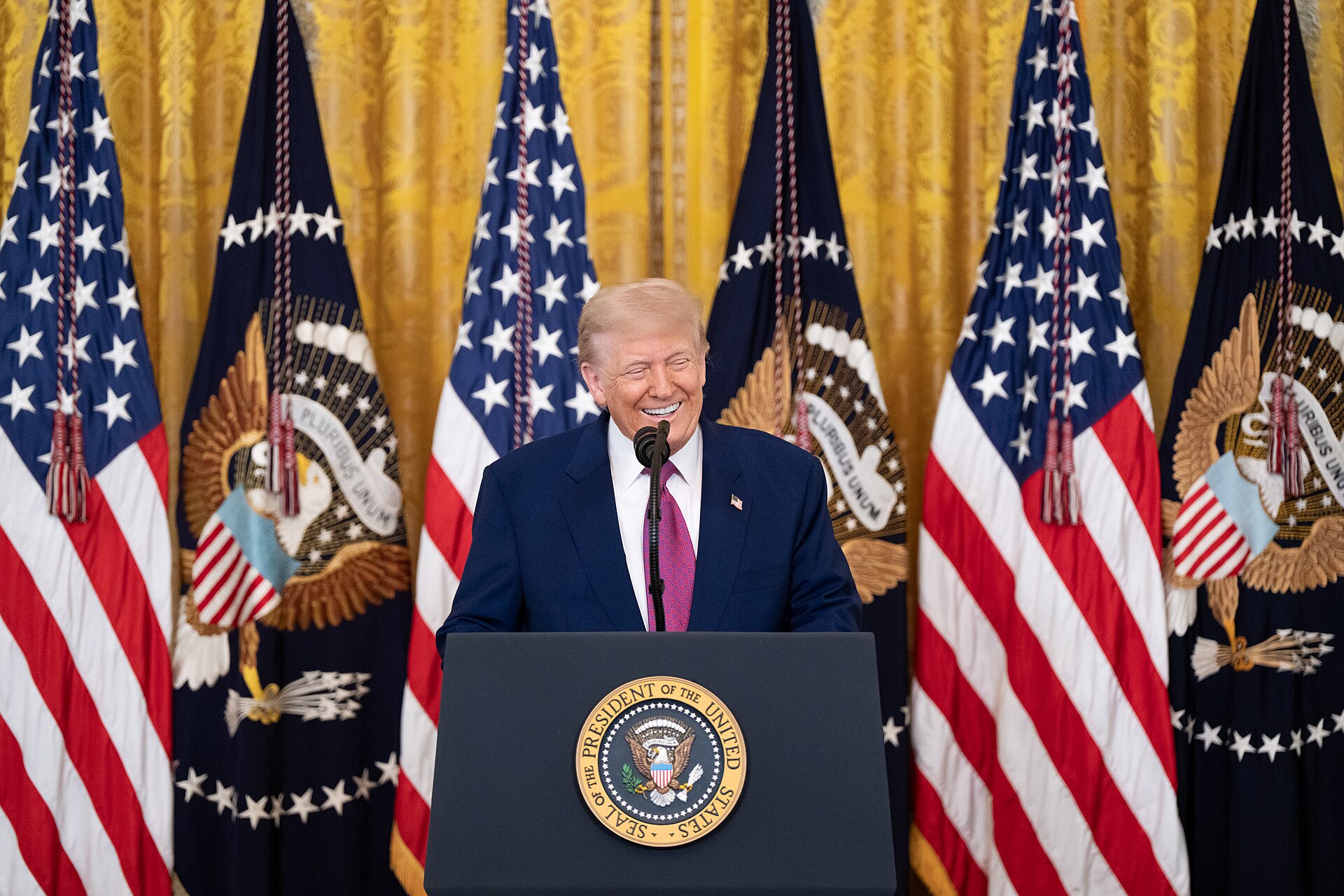
Featured image: P20250612AM-0188 President Donald Trump delivers remarks at a bill signing… by The White House, Public domain, via Wikimedia Commons. Image source