During the Great Depression, American families adapted their Thanksgiving traditions to survive economic hardship. Celebrations were not abandoned, but they looked very different from today’s festive meals.
What Americans Ate on Thanksgiving During the Great Depression
Thanksgiving in the 1930s was shaped by scarcity. With unemployment soaring and incomes collapsing, most families could not afford a traditional turkey dinner. The holiday remained a source of hope, but food choices were practical, not extravagant.
Main Dishes: Substituting for Turkey
Actual turkey was rare and expensive. Many families skipped it entirely. Instead, they used whatever meat they had available.
- Old hen: A chicken no longer laying eggs was sometimes used. According to historical accounts, families would cook it slowly to prevent the meat from becoming tough, ensuring it remained palatable.
- Mock duck: This dish was made by wrapping flank steak around stuffing and roasting it. As one 1930s home economist noted, ‘It looked like duck and tasted surprisingly good—just not quite as fancy, but it did make the table feel more complete.’
- Porcupine meatballs: These were not made from real porcupine. Instead, rice was mixed into ground beef to increase volume and make the meat feel fuller. A recipe shared in a home magazine described how the addition of rice helped ‘give the meat a more substantial texture, like a real meatball, without needing to buy extra meat.’
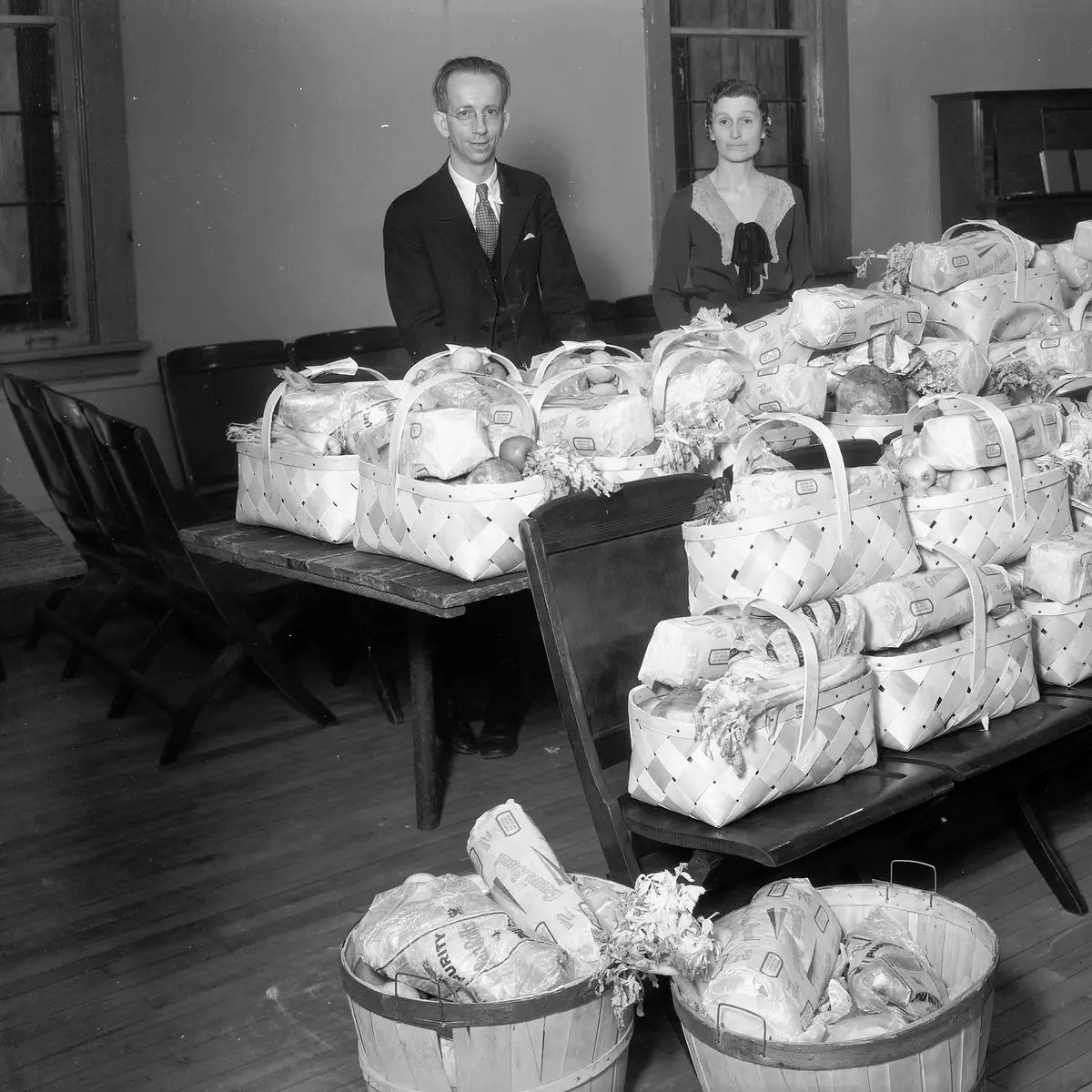
Some of the poorest families received turkey through soup kitchens or charitable programs. These services offered Thanksgiving dinners, helping to bridge the gap in access to meat.
Sides: Simple and Inexpensive
Stuffing was one of the most accessible side dishes. It required only stale bread and herbs. Families often added foraged ingredients like apples, raisins, or chestnuts.
Dandelion salads were popular. The plants grew easily in backyards and required no purchase. As a rural cook from Ohio wrote in a diary, ‘We gathered dandelions in the spring and summer, and by fall, they were a staple in our meals. They tasted fresh and had a mild, earthy flavor that made the table feel more alive.’
Canned vegetables were widely used. The radio show Aunt Sammy’s Homemaker’s Half Hour featured recipes that transformed canned foods into appealing dishes. Popular options included creamed pearl onions and candied sweet potatoes. One listener reported that after hearing the show, she began using canned vegetables in her Thanksgiving meal, saying, ‘It made the meal feel more complete, even if it wasn’t fancy.’
Mashed potatoes were also common. Potatoes were affordable and easy to prepare, making them a reliable side.
Dessert: Sweet Treats with Limited Ingredients
Pumpkin pie was not widely available. Canned pumpkin purée was rare and often out of reach for many families. Families made do with other desserts made from accessible ingredients. Sweetened condensed milk allowed them to make sugar cream pie. A home economics teacher from Kansas noted that ‘a small amount of condensed milk could turn a simple mix into something that tasted like dessert, even if it wasn’t traditional.’
Tomato soup cake was a common dessert. Made from canned tomato soup and a bit of sugar, it was surprisingly rich and sweet. It used ingredients most families already had. As a woman from Illinois recalled, ‘We didn’t have any real cake, but when we made the tomato soup cake, it tasted like something special. We shared it with everyone, and it made the day feel like a celebration.’
If nothing else was available, a can of B & M Brown Bread could be opened and eaten as a sweet, dense treat. It was not a dessert in the traditional sense, but it provided a sense of celebration. One family member described it as ‘a small victory—a can of bread that tasted like something sweet and warm, like a holiday treat.’
These food choices show how families balanced survival with tradition. They did not abandon the spirit of Thanksgiving. Instead, they adapted it to reflect their realities.
The story of what Americans ate on Thanksgiving during the Great Depression illustrates resilience. It reminds us that celebrations can still matter—even when resources are scarce. As one historian observed, ‘The act of gathering around a table—whether with a simple meal or a modest dish—was a powerful affirmation of community and belonging. These adaptations were not just about food, but about preserving identity and hope. The holiday became a symbol of perseverance, not just a meal. Families used creativity to turn scarcity into celebration, proving that joy and togetherness are not dependent on wealth or abundance.’
For more on how families managed daily life during tough times, see our original source.
Sources & further reading
Featured image: original publisher image. Via original publisher. Image source