It’s the biggest ever month for video games — yet Dominik Diamond finds himself playing a title from 2006. While the gaming world celebrates the release of new titles like The Legend of Zelda: Ocarina of Time and Grand Theft Auto VI, Diamond reflects on his personal disconnect from the current gaming trends.
Why a 2006 Game?
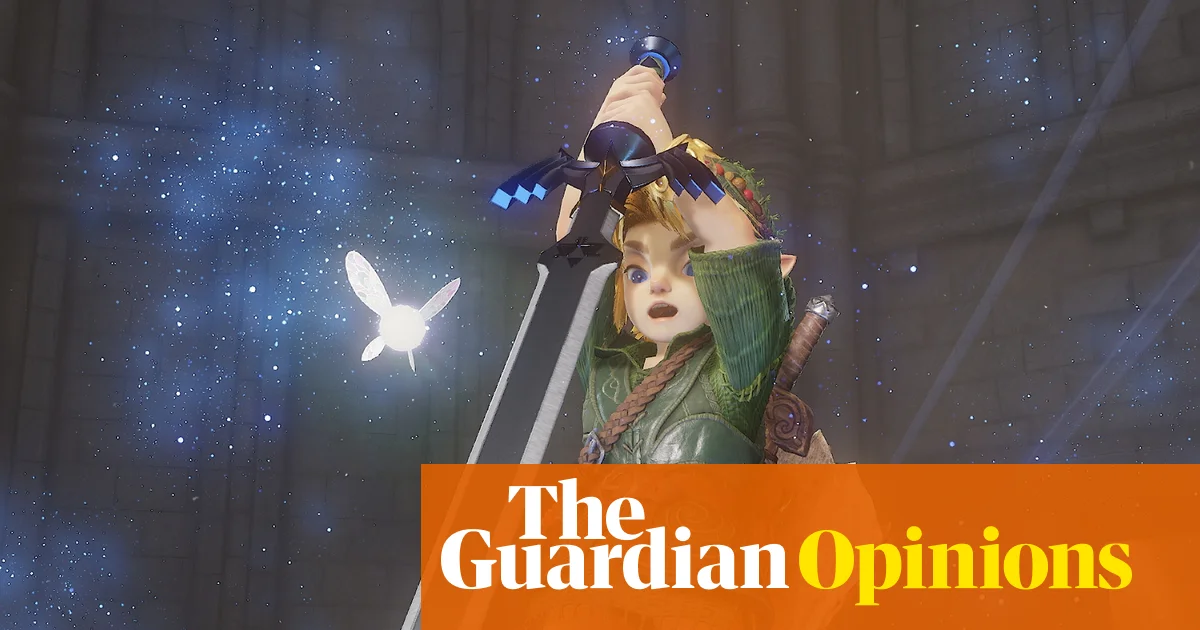
Diamond admits he has zero cultural alignment with the current gaming trends. He describes his tastes as ‘as fresh as something found at the rear of the fridge’ — a metaphor for being out of step with mainstream excitement. This month, the gaming industry is flooded with new releases, each generating massive social media buzz and community engagement. Yet for Diamond, the excitement feels distant, almost surreal. He doesn’t share the enthusiasm for the Ocarina of Time remake or the anticipated launch of Grand Theft Auto VI. Instead, he turns to a title from 2006 — The Legend of Zelda: Twilight Princess — not because it’s innovative, but because it represents a personal, nostalgic anchor.
While others are enthralled by the Ocarina of Time remake, Diamond has never liked the Zelda franchise. He compares it to a movie critic who dislikes Disney or a vegan shark — a sentiment rooted in personal taste rather than technical merit. His aversion isn’t born of malice, but of a deep-seated discomfort with the game’s narrative structure and gameplay mechanics. He sees the world of Zelda as one of rigid progression and linear challenges, which clashes with his preference for open-ended, player-driven experiences.
Personal History with Zelda
He did play Zelda games as a child, driven by his son’s interest. But the experience was shallow. He recalls his teenage self viewing the games as ‘for little kids’ and worried about ‘testosterone leaking’ every time Link cut grass with a sword instead of slicing a head off. That skepticism persisted into adulthood. The idea of a hero navigating a world of puzzles and dungeons felt outdated, even absurd. It was a world where every action had to be perfectly executed, with no room for improvisation or creative deviation.
That skepticism was reinforced when he rediscovered his Nintendo Wii during a move. In the disc slot lurked Twilight Princess — a cheaper alternative to a Switch 2 — hoping to finally understand the appeal. It wasn’t about nostalgia; it was about a desire to participate in the cultural moment, to feel like he belonged in a community that celebrates these games.
The Gameplay Experience
The opening level of Twilight Princess confirmed his fears. Link runs around searching for fish to give to cats. The Wii’s control scheme makes even simple tasks difficult. Walking on thin ledges with a nunchuk and no 360-degree view is like being drunk on a tightrope, riding a unicycle. After 10 hours, he still struggled to press the right button among what feels like an ocean of options.
Despite the graphics — which he calls ‘beautiful’ — and the emotional impact of the Twilight World and lycanthropy, the experience remains frustrating. The reveal of the Twilight World, with its eerie transformation of animals into wolves and the haunting presence of the moonlit forest, is visually stunning. But the emotional resonance is undercut by the gameplay. The game demands precision, and any deviation — a misstep, a wrong input — leads to failure. There’s no room for error, no second chance, no flexibility.
Why He Hates Dungeons
He identifies dungeons as ‘mazey mental torture prisons’ filled with switches, locked doors, and repetitive puzzles. He insists on open-world freedom — wanting multiple ways to solve a problem, including using a sledgehammer. In the Goron Mines, he attempts to leap over lava platforms to pull a chain, only to find the platform retracts. This fails, and he dies. After multiple deaths, he finally reaches the boss door — only to discover he hasn’t collected all three key shards.
He insists he collected them, but the game insists otherwise. After backtracking, he tries to save the game — only to accidentally select ‘quit’ instead of ‘save’. When he reloads, he returns to the dungeon’s entrance. The experience leaves him ‘profoundly depressed’.
Why He Keeps Playing
He doesn’t enjoy Zelda — not this version. But he continues because of community. He wants to belong to the global community that finds joy in these games. He notes that gaming is about connection — from global Fortnite Discord servers to niche groups like the Norwich Amiga Group. Belonging is a core driver in digital culture. The shared language, the inside jokes, the collective celebrations of victories — these elements create a sense of identity that transcends individual preferences.
When he launches Grand Theft Auto VI, he feels ‘home’. The game aligns with his preferences — open-ended, freedom-driven, and deeply immersive. It reflects his worldview. The open world, the freedom to explore, the ability to make choices without consequence — these are the elements that resonate with him. In that moment, he is not just playing a game; he is participating in a cultural experience that mirrors his own values.
He concludes that two massive games dominate global culture: one rooted in fantasy and exploration, the other in open-world freedom. Both foster large, vibrant communities. That’s rare — and valuable. For many, gaming is not just about gameplay. It’s about shared experiences, emotional resonance, and belonging. This month, that sense of connection is visible across the industry.
He may never join the Zelda crowd. But right now, he has two major games that feel like home — one for each side of his identity.
For many, gaming is not just about gameplay. It’s about shared experiences, emotional resonance, and belonging. This month, that sense of connection is visible across the industry.
Read the full article from The Guardian.
Sources & further reading
Featured image: original publisher image. Via original publisher. Image source