Zohran Mamdani, the new mayor of New York City, soared to victory last year on a handful of ambitious promises. Among them was a pledge to open a city-owned grocery store in every borough to address the twin problems of food deserts and rising grocery prices.
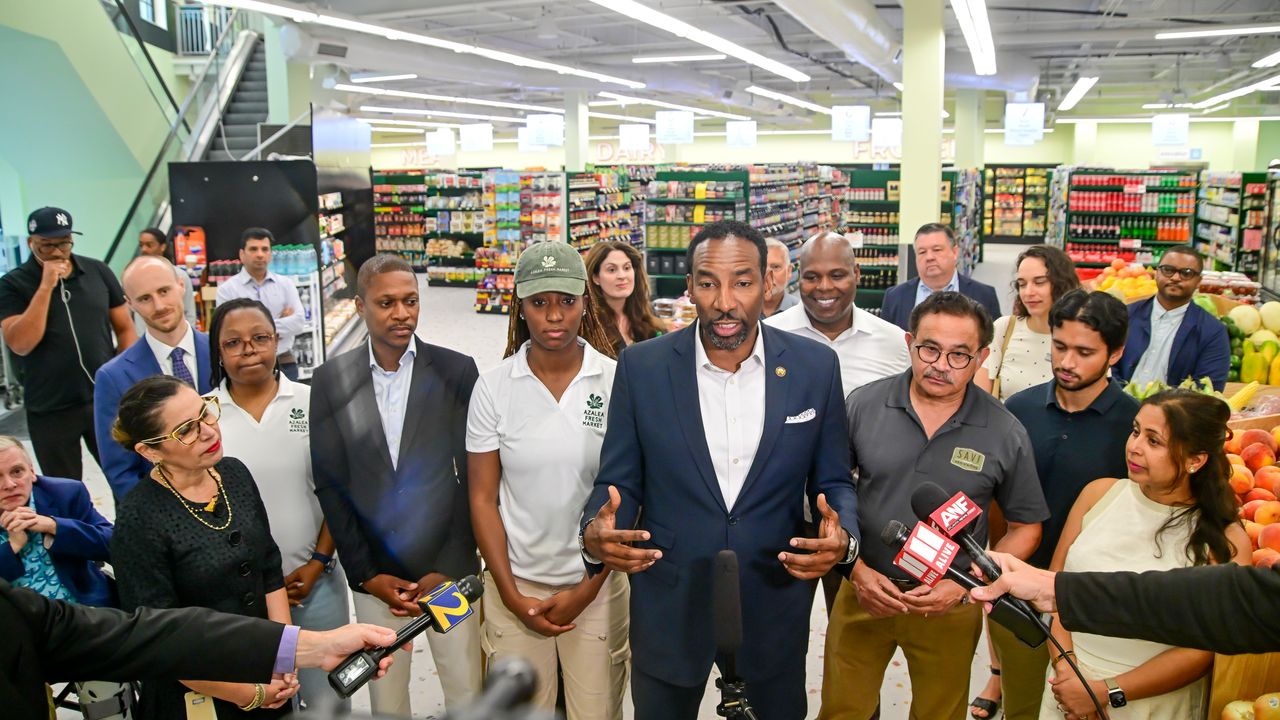
His idea hasn’t yet evolved into an actual plan. Atlanta beat him: Last summer the city opened Azalea Fresh Market in the city’s downtown neighborhood, a municipal grocery store backed by city funding.
“People need access to fresh food,” Atlanta Mayor Andre Dickens said. “Food is a critical part of a healthy community.” Backing a grocery store is personal: As a high school student employed by Kroger, he had to take the bus or drive from his low-income neighborhood to get to work.
The store is operated by Savi Provisions, a private company, and stocks the full range of products found in other grocery stores.
Azalea Fresh Market has implemented what it calls “Paul’s Promise,” 50 to 60 essential items like eggs and bread offered at “the lowest price possible,” Nair said. Through supplier deals with the help of the Independent Grocers Alliance and higher profits from things like prepared food, the store prices items closer to cost. The store also accepts SNAP and WIC benefits.
.jpg)
As the Trump administration cuts food programs, community-driven organizations keep people fed and cared for.
So far the store is going well, according to Dickens and Paul Nair, CEO of Savi Provisions. Between 600 and 700 customers shop daily, with an average basket costing $13, demonstrating that people aren’t coming for big monthly trips, but shopping frequently. While Nair aims to be doing “much better,” he said it’s “on target.” Savi has a second location in the Campbelltown Road neighborhood in the works, which is currently being constructed with the city’s financial help.
In Fulton County, where Atlanta is located, nearly 14 percent of residents are food insecure. The area where Azalea Fresh Market is located is “disadvantaged, disinvested,” Dickens said. There hadn’t been a supermarket in the downtown neighborhood in two decades. “Grocers have historically avoided these neighborhoods due to low profit margins and perceived risks,” he said.
At first, Dickens tried to use the traditional approach of luring an established grocery chain to open up a location in both neighborhoods. He went to major brands and offered a potpourri of incentives: tax breaks, free land, help constructing the building. “They still didn’t want to take it,” he said. “I got frustrated and was like, ‘We’re going to do it ourselves.’”
Savi Provisions answered the city’s request for proposal. The city kicked in $8 million in tax credits, grants, and loans, buying the land and demolishing the building that had stood on it. Savi put in $1 million of its own equity, and the two partnered with the Independent Grocers Alliance to tap into its purchasing power and technical assistance.
The partnership with the IGA is meant to get around what has become a huge hurdle for small grocery stores: the power large retailers like Walmart and Kroger exert to extract pricing deals from suppliers. Through its larger footprint, the IGA can ink deals with distributors and suppliers to secure some of those lower prices for Azalea Fresh Market.
The grocery business is challenging. Fresh food spoils quickly. Stores deal with things like theft and goods that arrive damaged. The margins come out quite thin—between 1 to 3 percent for big box stores, and as much as 5 percent for smaller ones. It typically takes a new store three to four years to reach profitability.
The idea behind Atlanta’s investment is that it will support Savi in those early years so it can reach a point of self-sustainability. Dickens said the city is willing to back the store for three to five years; Nair wants to be sustainable within one or two.
“Our business plan is not for subsidies forever. We want to be self-sustainable as soon as possible,” Nair said. After that, the city would act as a “backstop,” Dickens said. The hope is also that by establishing an attractive new grocery store, one with a sushi bar and coffee shop upstairs, more economic development in the surrounding area will follow.
“This is investment in people, which is a city thing, that’s what cities do,” Dickens said. Failing to provide healthy food can lead to other costs in higher disease and student underperformance at school.
“It seems like every mayor in the nation is asking me, ‘How are you doing it?’” Dickens said. Nair said he’s also gotten a lot of other inquiries from other cities and has even spoken to the Mamdani administration. “By the time we get done with this, I think this is going to prove an exact model for every city, county, and state that has food deserts,” Nair said.
The concept of municipal grocery stores can really run the gamut, said Nevin Cohen, the director of the Urban Food Policy Institute at the City University of New York, encompassing everything from something wholly owned and operated by a local government—such as a commissary run by the Department of Defense—to city subsidies to attract private stores.
Mamdani may opt for a different approach in New York City. In early 2025, he said he was planning to redirect the $140 million the city spends on tax breaks and incentives for private grocery stores instead toward city-owned properties that wouldn’t charge stores any rent or property taxes. The city would buy products at wholesale prices and use centralized warehousing to keep costs low to “ensure every New Yorker can afford the groceries that they need,” he said.
It may make sense for Mamdani to have the city build and run a store on its own to ensure the food is actually affordable in neighborhoods that don’t currently have access to cheap goods, Cohen said. Such heavily subsidized offerings are something that a private operator “either wouldn’t want to do or don’t know how to do well or be able to justify financially.”
But Atlanta is “a straightforward model” that avoids having a city government get involved in the complexities of what it takes to make a profit in the sector. “It’s very difficult for cities to do it on their own,” Cohen said.
Dickens chalks the success of Azalea Fresh Market up to the fact that the city isn’t directly owning and operating the store itself. He remains focused on alleviating food insecurity and the patience to see it through. “I got a whole city to run, but this is my baby.”